


Key Insights
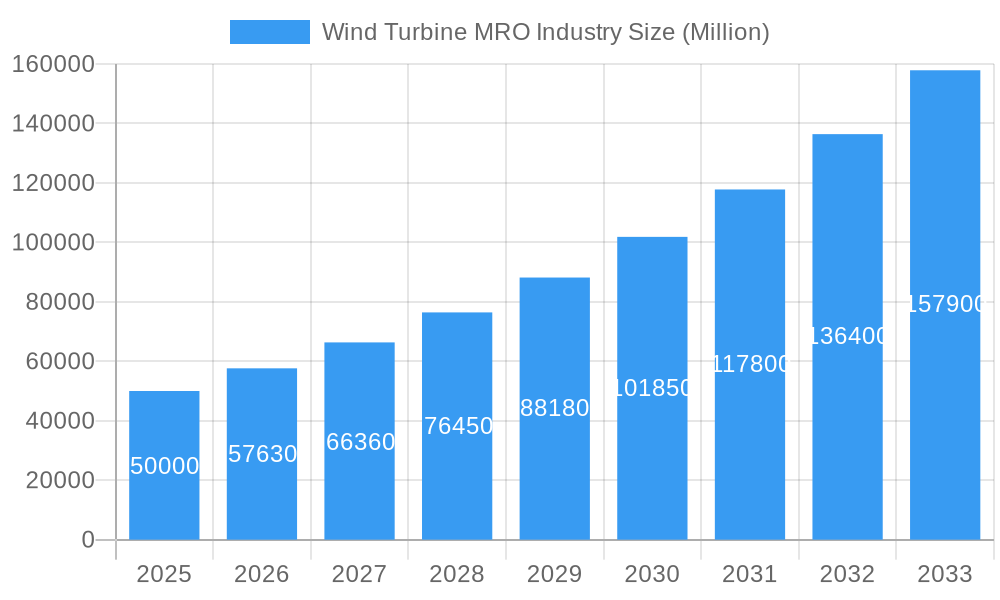
The global wind turbine maintenance, repair, and overhaul (MRO) market is experiencing robust growth, driven by the increasing age of existing wind turbine installations and the expanding global wind energy capacity. A 15.86% compound annual growth rate (CAGR) indicates a significant expansion projected through 2033. This growth is fueled by several key factors. Firstly, the operational lifespan of wind turbines necessitates regular maintenance to ensure optimal performance and minimize downtime. Secondly, the increasing prevalence of older turbines requires more frequent and extensive MRO services. Thirdly, technological advancements are leading to more sophisticated and efficient MRO techniques, driving demand for specialized services and skilled technicians. The market is segmented by service type (maintenance, repair, overhaul), component (gearbox, generators, rotor blades, and other components), and location of deployment (onshore and offshore). The offshore segment is expected to witness particularly strong growth due to the higher complexity and specialized requirements of offshore wind farms. Key players like ABB, Vestas, Siemens Gamesa, and GE are investing heavily in R&D and strategic acquisitions to strengthen their market positions and capture a larger share of this expanding market. Competition is intense, with companies focusing on providing comprehensive service packages and developing innovative solutions to improve turbine reliability and reduce operational costs. Geographic distribution reveals strong growth across North America, Europe, and Asia Pacific, reflecting the significant wind energy investments in these regions.
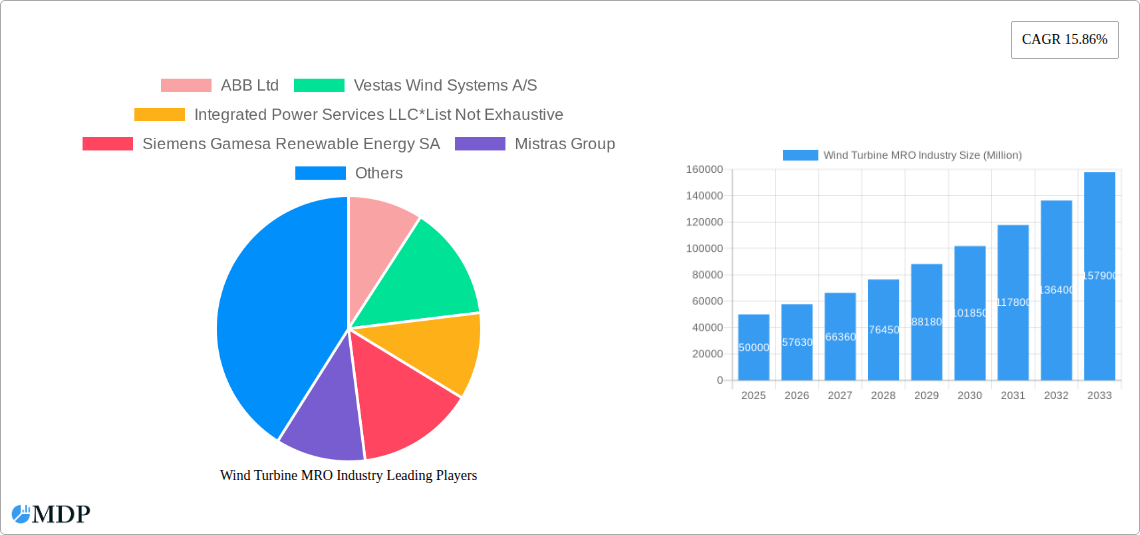
Wind Turbine MRO Industry Market Size (In Billion)

The market's growth trajectory is influenced by several factors. While the increasing demand for MRO services is a primary driver, challenges such as the high cost of offshore maintenance, the shortage of skilled technicians, and the need for advanced technological solutions present potential restraints. However, the overall outlook remains positive, with continuous technological innovation and supportive government policies expected to offset these challenges. The forecast period (2025-2033) will likely witness a significant increase in the adoption of predictive maintenance and remote monitoring technologies, further optimizing operations and reducing downtime. This ongoing evolution emphasizes the importance of proactive maintenance strategies and skilled workforce development to support the continued expansion of the wind energy sector. The market's future success hinges on effectively addressing the logistical and technological complexities inherent in maintaining large-scale wind farms, especially those located offshore.
Wind Turbine MRO Industry Company Market Share
Wind Turbine MRO Industry Market Report: 2019-2033
This comprehensive report provides a detailed analysis of the Wind Turbine MRO (Maintenance, Repair, and Overhaul) industry, offering invaluable insights for stakeholders across the value chain. With a focus on the period 2019-2033, including a base year of 2025 and a forecast period of 2025-2033, this report examines market dynamics, leading players, and future growth opportunities. The market is projected to reach xx Million by 2033, exhibiting a CAGR of xx% during the forecast period.
Wind Turbine MRO Industry Market Dynamics & Concentration
The global wind turbine MRO market is characterized by a moderately concentrated landscape, with a few major players holding significant market share. ABB Ltd, Vestas Wind Systems A/S, Siemens Gamesa Renewable Energy SA, and General Electric Company are among the key players, collectively accounting for an estimated xx% of the market in 2025. However, the market is also witnessing increased participation from smaller, specialized MRO providers catering to niche segments.
Market concentration is influenced by factors such as technological advancements, regulatory frameworks mandating stringent maintenance standards, and the increasing adoption of long-term service agreements (LTSAs). The substitution of older wind turbine components with newer, more efficient ones drives demand for MRO services. End-user trends toward larger wind farms and offshore deployments are also significantly impacting the market, increasing the complexity and scale of maintenance requirements. M&A activity in the sector remains moderate, with an estimated xx deals recorded in the historical period (2019-2024), suggesting ongoing consolidation efforts among players seeking to expand their service offerings and geographical reach.
Wind Turbine MRO Industry Industry Trends & Analysis
The wind turbine MRO market is experiencing robust growth, fueled by the expanding global wind energy capacity. The increasing age of existing wind turbines, coupled with the stringent operational requirements for maximizing energy yield and minimizing downtime, is driving demand for proactive and preventative maintenance services. Technological advancements, such as the use of advanced diagnostics and predictive maintenance technologies, are enhancing operational efficiency and reducing overall maintenance costs. Consumer preference for sustainable energy solutions continues to underpin market growth, while the competitive landscape is characterized by a mix of established players and emerging innovative companies vying for market share. The market's CAGR is expected to remain robust at xx% during the forecast period, driven by increasing demand for both onshore and offshore wind farm maintenance. Market penetration of advanced maintenance technologies is projected to increase from xx% in 2025 to xx% by 2033.
Leading Markets & Segments in Wind Turbine MRO Industry
Dominant Region: Europe and North America currently dominate the wind turbine MRO market, owing to the extensive existing wind energy infrastructure and supportive regulatory environments. Asia-Pacific is expected to witness significant growth in the coming years, driven by substantial investments in renewable energy and supportive government policies.
Dominant Service Type: Maintenance services account for the largest segment of the market, followed by repair and overhaul services. The increasing focus on preventive maintenance is driving growth in this segment.
Dominant Component: Gearboxes, generators, and rotor blades constitute the major components requiring MRO services, reflecting their high failure rates and associated maintenance costs.
Dominant Location of Deployment: Onshore wind farms currently dominate the market in terms of MRO services, however the offshore segment is poised for significant growth in the coming years driven by cost reductions in offshore wind technologies and rising energy security concerns.
Key Drivers for Regional Dominance:
- Europe: Established renewable energy policies, substantial investments in wind energy infrastructure, and technological expertise.
- North America: Significant wind energy capacity, supportive regulatory framework, and a large number of established MRO service providers.
- Asia-Pacific: Rapidly expanding wind energy sector, ambitious renewable energy targets, and increasing government support.
Wind Turbine MRO Industry Product Developments
Recent years have witnessed significant innovations in wind turbine MRO, focusing on improving efficiency, reducing downtime, and lowering maintenance costs. This includes the development of advanced diagnostic tools, predictive maintenance software, and specialized repair and overhaul techniques. These innovations improve the operational reliability and lifespan of wind turbines. Companies are also focusing on modular designs and the use of advanced materials to facilitate easier maintenance and reduce repair times. The integration of IoT sensors and data analytics allows for remote monitoring and proactive identification of potential issues.
Key Drivers of Wind Turbine MRO Industry Growth
The growth of the wind turbine MRO industry is driven by several factors:
Increasing Wind Energy Capacity: The global shift toward renewable energy sources is driving a substantial increase in wind energy capacity, directly leading to higher demand for MRO services.
Aging Wind Turbine Fleets: As existing wind farms age, the need for maintenance, repair, and overhaul services increases significantly.
Technological Advancements: Innovative technologies like predictive maintenance and remote diagnostics are improving efficiency and reducing operational costs.
Government Regulations: Stringent regulations related to safety and performance standards further drive demand for consistent and high-quality MRO services.
Challenges in the Wind Turbine MRO Industry Market
Several factors pose challenges to the wind turbine MRO market:
Supply Chain Disruptions: Global supply chain disruptions can impact the availability of spare parts and specialized equipment, leading to delays and increased costs.
Specialized Expertise: The complexity of wind turbine technology necessitates highly skilled technicians and specialized expertise, leading to potential labor shortages.
Competitive Pressures: A growing number of MRO providers is increasing competition, pressuring pricing and margins. The market is also susceptible to fluctuations in commodity prices, particularly those of raw materials used in component manufacturing.
Emerging Opportunities in Wind Turbine MRO Industry
The future of the wind turbine MRO industry presents several significant opportunities:
Offshore Wind Farm Growth: The rapid expansion of offshore wind energy presents a substantial growth opportunity, requiring specialized MRO services and technologies.
Digitalization and Automation: The increasing adoption of digital technologies like IoT, AI, and machine learning will optimize maintenance strategies, reducing operational costs and improving efficiency.
Strategic Partnerships and Acquisitions: Strategic collaborations and acquisitions among MRO providers and wind turbine manufacturers are expected to drive innovation and enhance service offerings.
Leading Players in the Wind Turbine MRO Industry Sector
- ABB Ltd
- Vestas Wind Systems A/S
- Integrated Power Services LLC
- Siemens Gamesa Renewable Energy SA
- Mistras Group
- Moventas Gears Oy
- Suzlon Energy Ltd
- Dana SAC UK Ltd
- General Electric Company
- Nordex SE
- Stork (a Fluor Company)
- ZF Friedrichshafen AG
Key Milestones in Wind Turbine MRO Industry Industry
February 2021: Siemens Gamesa Renewable Energy extended its O&M agreement for the 600 MW Gemini offshore wind farm until 2036, highlighting the increasing importance of long-term service contracts.
May 2021: GE Renewable Energy secured a 15-year O&M contract for an 88 MW wind farm in Vietnam, demonstrating the growing market for comprehensive service packages.
Strategic Outlook for Wind Turbine MRO Industry Market
The wind turbine MRO market is poised for significant long-term growth, driven by the global transition to renewable energy and the increasing need for efficient and reliable maintenance services. Strategic opportunities exist in developing advanced diagnostic tools, leveraging digital technologies, and expanding service offerings to cater to the growing offshore wind energy sector. Companies focusing on innovation, strategic partnerships, and efficient service delivery will be best positioned to capitalize on this market's growth potential.
Wind Turbine MRO Industry Segmentation
-
1. Location of Deployment
- 1.1. Onshore
- 1.2. Offshore
-
2. Service Type
- 2.1. Maintenance
- 2.2. Repair
- 2.3. Overhaul
-
3. Component
- 3.1. Gearbox
- 3.2. Generators
- 3.3. Rotor Blades
- 3.4. Other Components
Wind Turbine MRO Industry Segmentation By Geography
- 1. North America
- 2. Europe
- 3. Asia Pacific
- 4. South America
- 5. Middle East and Africa
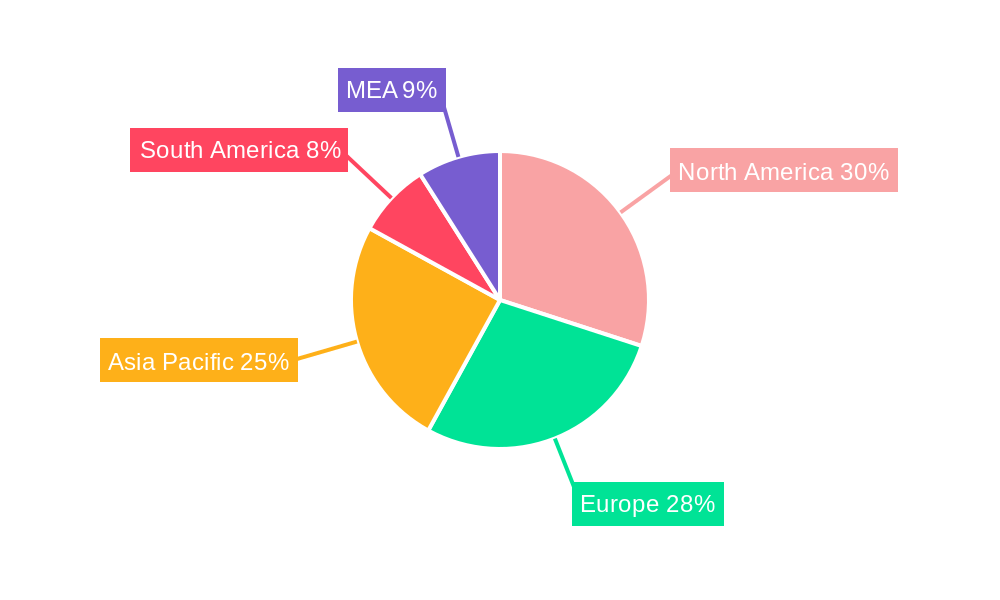
Wind Turbine MRO Industry Regional Market Share
Geographic Coverage of Wind Turbine MRO Industry
Wind Turbine MRO Industry REPORT HIGHLIGHTS
| Aspects | Details |
|---|---|
| Study Period | 2020-2034 |
| Base Year | 2025 |
| Estimated Year | 2026 |
| Forecast Period | 2026-2034 |
| Historical Period | 2020-2025 |
| Growth Rate | CAGR of 15.09% from 2020-2034 |
| Segmentation |
|
Table of Contents
- 1. Introduction
- 1.1. Research Scope
- 1.2. Market Segmentation
- 1.3. Research Methodology
- 1.4. Definitions and Assumptions
- 2. Executive Summary
- 2.1. Introduction
- 3. Market Dynamics
- 3.1. Introduction
- 3.2. Market Drivers
- 3.2.1. 4.; Growing Environmental Concerns4.; Supportive Government Policies
- 3.3. Market Restrains
- 3.3.1. 4.; High Initial Capital Investment
- 3.4. Market Trends
- 3.4.1. Offshore Wind Installations Expected to Witness Signifcant Growth
- 4. Market Factor Analysis
- 4.1. Porters Five Forces
- 4.2. Supply/Value Chain
- 4.3. PESTEL analysis
- 4.4. Market Entropy
- 4.5. Patent/Trademark Analysis
- 5. Global Wind Turbine MRO Industry Analysis, Insights and Forecast, 2020-2032
- 5.1. Market Analysis, Insights and Forecast - by Location of Deployment
- 5.1.1. Onshore
- 5.1.2. Offshore
- 5.2. Market Analysis, Insights and Forecast - by Service Type
- 5.2.1. Maintenance
- 5.2.2. Repair
- 5.2.3. Overhaul
- 5.3. Market Analysis, Insights and Forecast - by Component
- 5.3.1. Gearbox
- 5.3.2. Generators
- 5.3.3. Rotor Blades
- 5.3.4. Other Components
- 5.4. Market Analysis, Insights and Forecast - by Region
- 5.4.1. North America
- 5.4.2. Europe
- 5.4.3. Asia Pacific
- 5.4.4. South America
- 5.4.5. Middle East and Africa
- 5.1. Market Analysis, Insights and Forecast - by Location of Deployment
- 6. North America Wind Turbine MRO Industry Analysis, Insights and Forecast, 2020-2032
- 6.1. Market Analysis, Insights and Forecast - by Location of Deployment
- 6.1.1. Onshore
- 6.1.2. Offshore
- 6.2. Market Analysis, Insights and Forecast - by Service Type
- 6.2.1. Maintenance
- 6.2.2. Repair
- 6.2.3. Overhaul
- 6.3. Market Analysis, Insights and Forecast - by Component
- 6.3.1. Gearbox
- 6.3.2. Generators
- 6.3.3. Rotor Blades
- 6.3.4. Other Components
- 6.1. Market Analysis, Insights and Forecast - by Location of Deployment
- 7. Europe Wind Turbine MRO Industry Analysis, Insights and Forecast, 2020-2032
- 7.1. Market Analysis, Insights and Forecast - by Location of Deployment
- 7.1.1. Onshore
- 7.1.2. Offshore
- 7.2. Market Analysis, Insights and Forecast - by Service Type
- 7.2.1. Maintenance
- 7.2.2. Repair
- 7.2.3. Overhaul
- 7.3. Market Analysis, Insights and Forecast - by Component
- 7.3.1. Gearbox
- 7.3.2. Generators
- 7.3.3. Rotor Blades
- 7.3.4. Other Components
- 7.1. Market Analysis, Insights and Forecast - by Location of Deployment
- 8. Asia Pacific Wind Turbine MRO Industry Analysis, Insights and Forecast, 2020-2032
- 8.1. Market Analysis, Insights and Forecast - by Location of Deployment
- 8.1.1. Onshore
- 8.1.2. Offshore
- 8.2. Market Analysis, Insights and Forecast - by Service Type
- 8.2.1. Maintenance
- 8.2.2. Repair
- 8.2.3. Overhaul
- 8.3. Market Analysis, Insights and Forecast - by Component
- 8.3.1. Gearbox
- 8.3.2. Generators
- 8.3.3. Rotor Blades
- 8.3.4. Other Components
- 8.1. Market Analysis, Insights and Forecast - by Location of Deployment
- 9. South America Wind Turbine MRO Industry Analysis, Insights and Forecast, 2020-2032
- 9.1. Market Analysis, Insights and Forecast - by Location of Deployment
- 9.1.1. Onshore
- 9.1.2. Offshore
- 9.2. Market Analysis, Insights and Forecast - by Service Type
- 9.2.1. Maintenance
- 9.2.2. Repair
- 9.2.3. Overhaul
- 9.3. Market Analysis, Insights and Forecast - by Component
- 9.3.1. Gearbox
- 9.3.2. Generators
- 9.3.3. Rotor Blades
- 9.3.4. Other Components
- 9.1. Market Analysis, Insights and Forecast - by Location of Deployment
- 10. Middle East and Africa Wind Turbine MRO Industry Analysis, Insights and Forecast, 2020-2032
- 10.1. Market Analysis, Insights and Forecast - by Location of Deployment
- 10.1.1. Onshore
- 10.1.2. Offshore
- 10.2. Market Analysis, Insights and Forecast - by Service Type
- 10.2.1. Maintenance
- 10.2.2. Repair
- 10.2.3. Overhaul
- 10.3. Market Analysis, Insights and Forecast - by Component
- 10.3.1. Gearbox
- 10.3.2. Generators
- 10.3.3. Rotor Blades
- 10.3.4. Other Components
- 10.1. Market Analysis, Insights and Forecast - by Location of Deployment
- 11. Competitive Analysis
- 11.1. Global Market Share Analysis 2025
- 11.2. Company Profiles
- 11.2.1 ABB Ltd
- 11.2.1.1. Overview
- 11.2.1.2. Products
- 11.2.1.3. SWOT Analysis
- 11.2.1.4. Recent Developments
- 11.2.1.5. Financials (Based on Availability)
- 11.2.2 Vestas Wind Systems A/S
- 11.2.2.1. Overview
- 11.2.2.2. Products
- 11.2.2.3. SWOT Analysis
- 11.2.2.4. Recent Developments
- 11.2.2.5. Financials (Based on Availability)
- 11.2.3 Integrated Power Services LLC*List Not Exhaustive
- 11.2.3.1. Overview
- 11.2.3.2. Products
- 11.2.3.3. SWOT Analysis
- 11.2.3.4. Recent Developments
- 11.2.3.5. Financials (Based on Availability)
- 11.2.4 Siemens Gamesa Renewable Energy SA
- 11.2.4.1. Overview
- 11.2.4.2. Products
- 11.2.4.3. SWOT Analysis
- 11.2.4.4. Recent Developments
- 11.2.4.5. Financials (Based on Availability)
- 11.2.5 Mistras Group
- 11.2.5.1. Overview
- 11.2.5.2. Products
- 11.2.5.3. SWOT Analysis
- 11.2.5.4. Recent Developments
- 11.2.5.5. Financials (Based on Availability)
- 11.2.6 Moventas Gears Oy
- 11.2.6.1. Overview
- 11.2.6.2. Products
- 11.2.6.3. SWOT Analysis
- 11.2.6.4. Recent Developments
- 11.2.6.5. Financials (Based on Availability)
- 11.2.7 Suzlon Energy Ltd
- 11.2.7.1. Overview
- 11.2.7.2. Products
- 11.2.7.3. SWOT Analysis
- 11.2.7.4. Recent Developments
- 11.2.7.5. Financials (Based on Availability)
- 11.2.8 Dana SAC UK Ltd
- 11.2.8.1. Overview
- 11.2.8.2. Products
- 11.2.8.3. SWOT Analysis
- 11.2.8.4. Recent Developments
- 11.2.8.5. Financials (Based on Availability)
- 11.2.9 General Electric Company
- 11.2.9.1. Overview
- 11.2.9.2. Products
- 11.2.9.3. SWOT Analysis
- 11.2.9.4. Recent Developments
- 11.2.9.5. Financials (Based on Availability)
- 11.2.10 Nordex SE
- 11.2.10.1. Overview
- 11.2.10.2. Products
- 11.2.10.3. SWOT Analysis
- 11.2.10.4. Recent Developments
- 11.2.10.5. Financials (Based on Availability)
- 11.2.11 Stork (a Fluor Company)
- 11.2.11.1. Overview
- 11.2.11.2. Products
- 11.2.11.3. SWOT Analysis
- 11.2.11.4. Recent Developments
- 11.2.11.5. Financials (Based on Availability)
- 11.2.12 ZF Friedrichshafen AG
- 11.2.12.1. Overview
- 11.2.12.2. Products
- 11.2.12.3. SWOT Analysis
- 11.2.12.4. Recent Developments
- 11.2.12.5. Financials (Based on Availability)
- 11.2.1 ABB Ltd
List of Figures
- Figure 1: Global Wind Turbine MRO Industry Revenue Breakdown (undefined, %) by Region 2025 & 2033
- Figure 2: North America Wind Turbine MRO Industry Revenue (undefined), by Location of Deployment 2025 & 2033
- Figure 3: North America Wind Turbine MRO Industry Revenue Share (%), by Location of Deployment 2025 & 2033
- Figure 4: North America Wind Turbine MRO Industry Revenue (undefined), by Service Type 2025 & 2033
- Figure 5: North America Wind Turbine MRO Industry Revenue Share (%), by Service Type 2025 & 2033
- Figure 6: North America Wind Turbine MRO Industry Revenue (undefined), by Component 2025 & 2033
- Figure 7: North America Wind Turbine MRO Industry Revenue Share (%), by Component 2025 & 2033
- Figure 8: North America Wind Turbine MRO Industry Revenue (undefined), by Country 2025 & 2033
- Figure 9: North America Wind Turbine MRO Industry Revenue Share (%), by Country 2025 & 2033
- Figure 10: Europe Wind Turbine MRO Industry Revenue (undefined), by Location of Deployment 2025 & 2033
- Figure 11: Europe Wind Turbine MRO Industry Revenue Share (%), by Location of Deployment 2025 & 2033
- Figure 12: Europe Wind Turbine MRO Industry Revenue (undefined), by Service Type 2025 & 2033
- Figure 13: Europe Wind Turbine MRO Industry Revenue Share (%), by Service Type 2025 & 2033
- Figure 14: Europe Wind Turbine MRO Industry Revenue (undefined), by Component 2025 & 2033
- Figure 15: Europe Wind Turbine MRO Industry Revenue Share (%), by Component 2025 & 2033
- Figure 16: Europe Wind Turbine MRO Industry Revenue (undefined), by Country 2025 & 2033
- Figure 17: Europe Wind Turbine MRO Industry Revenue Share (%), by Country 2025 & 2033
- Figure 18: Asia Pacific Wind Turbine MRO Industry Revenue (undefined), by Location of Deployment 2025 & 2033
- Figure 19: Asia Pacific Wind Turbine MRO Industry Revenue Share (%), by Location of Deployment 2025 & 2033
- Figure 20: Asia Pacific Wind Turbine MRO Industry Revenue (undefined), by Service Type 2025 & 2033
- Figure 21: Asia Pacific Wind Turbine MRO Industry Revenue Share (%), by Service Type 2025 & 2033
- Figure 22: Asia Pacific Wind Turbine MRO Industry Revenue (undefined), by Component 2025 & 2033
- Figure 23: Asia Pacific Wind Turbine MRO Industry Revenue Share (%), by Component 2025 & 2033
- Figure 24: Asia Pacific Wind Turbine MRO Industry Revenue (undefined), by Country 2025 & 2033
- Figure 25: Asia Pacific Wind Turbine MRO Industry Revenue Share (%), by Country 2025 & 2033
- Figure 26: South America Wind Turbine MRO Industry Revenue (undefined), by Location of Deployment 2025 & 2033
- Figure 27: South America Wind Turbine MRO Industry Revenue Share (%), by Location of Deployment 2025 & 2033
- Figure 28: South America Wind Turbine MRO Industry Revenue (undefined), by Service Type 2025 & 2033
- Figure 29: South America Wind Turbine MRO Industry Revenue Share (%), by Service Type 2025 & 2033
- Figure 30: South America Wind Turbine MRO Industry Revenue (undefined), by Component 2025 & 2033
- Figure 31: South America Wind Turbine MRO Industry Revenue Share (%), by Component 2025 & 2033
- Figure 32: South America Wind Turbine MRO Industry Revenue (undefined), by Country 2025 & 2033
- Figure 33: South America Wind Turbine MRO Industry Revenue Share (%), by Country 2025 & 2033
- Figure 34: Middle East and Africa Wind Turbine MRO Industry Revenue (undefined), by Location of Deployment 2025 & 2033
- Figure 35: Middle East and Africa Wind Turbine MRO Industry Revenue Share (%), by Location of Deployment 2025 & 2033
- Figure 36: Middle East and Africa Wind Turbine MRO Industry Revenue (undefined), by Service Type 2025 & 2033
- Figure 37: Middle East and Africa Wind Turbine MRO Industry Revenue Share (%), by Service Type 2025 & 2033
- Figure 38: Middle East and Africa Wind Turbine MRO Industry Revenue (undefined), by Component 2025 & 2033
- Figure 39: Middle East and Africa Wind Turbine MRO Industry Revenue Share (%), by Component 2025 & 2033
- Figure 40: Middle East and Africa Wind Turbine MRO Industry Revenue (undefined), by Country 2025 & 2033
- Figure 41: Middle East and Africa Wind Turbine MRO Industry Revenue Share (%), by Country 2025 & 2033
List of Tables
- Table 1: Global Wind Turbine MRO Industry Revenue undefined Forecast, by Location of Deployment 2020 & 2033
- Table 2: Global Wind Turbine MRO Industry Revenue undefined Forecast, by Service Type 2020 & 2033
- Table 3: Global Wind Turbine MRO Industry Revenue undefined Forecast, by Component 2020 & 2033
- Table 4: Global Wind Turbine MRO Industry Revenue undefined Forecast, by Region 2020 & 2033
- Table 5: Global Wind Turbine MRO Industry Revenue undefined Forecast, by Location of Deployment 2020 & 2033
- Table 6: Global Wind Turbine MRO Industry Revenue undefined Forecast, by Service Type 2020 & 2033
- Table 7: Global Wind Turbine MRO Industry Revenue undefined Forecast, by Component 2020 & 2033
- Table 8: Global Wind Turbine MRO Industry Revenue undefined Forecast, by Country 2020 & 2033
- Table 9: Global Wind Turbine MRO Industry Revenue undefined Forecast, by Location of Deployment 2020 & 2033
- Table 10: Global Wind Turbine MRO Industry Revenue undefined Forecast, by Service Type 2020 & 2033
- Table 11: Global Wind Turbine MRO Industry Revenue undefined Forecast, by Component 2020 & 2033
- Table 12: Global Wind Turbine MRO Industry Revenue undefined Forecast, by Country 2020 & 2033
- Table 13: Global Wind Turbine MRO Industry Revenue undefined Forecast, by Location of Deployment 2020 & 2033
- Table 14: Global Wind Turbine MRO Industry Revenue undefined Forecast, by Service Type 2020 & 2033
- Table 15: Global Wind Turbine MRO Industry Revenue undefined Forecast, by Component 2020 & 2033
- Table 16: Global Wind Turbine MRO Industry Revenue undefined Forecast, by Country 2020 & 2033
- Table 17: Global Wind Turbine MRO Industry Revenue undefined Forecast, by Location of Deployment 2020 & 2033
- Table 18: Global Wind Turbine MRO Industry Revenue undefined Forecast, by Service Type 2020 & 2033
- Table 19: Global Wind Turbine MRO Industry Revenue undefined Forecast, by Component 2020 & 2033
- Table 20: Global Wind Turbine MRO Industry Revenue undefined Forecast, by Country 2020 & 2033
- Table 21: Global Wind Turbine MRO Industry Revenue undefined Forecast, by Location of Deployment 2020 & 2033
- Table 22: Global Wind Turbine MRO Industry Revenue undefined Forecast, by Service Type 2020 & 2033
- Table 23: Global Wind Turbine MRO Industry Revenue undefined Forecast, by Component 2020 & 2033
- Table 24: Global Wind Turbine MRO Industry Revenue undefined Forecast, by Country 2020 & 2033
Frequently Asked Questions
1. What is the projected Compound Annual Growth Rate (CAGR) of the Wind Turbine MRO Industry?
The projected CAGR is approximately 15.09%.
2. Which companies are prominent players in the Wind Turbine MRO Industry?
Key companies in the market include ABB Ltd, Vestas Wind Systems A/S, Integrated Power Services LLC*List Not Exhaustive, Siemens Gamesa Renewable Energy SA, Mistras Group, Moventas Gears Oy, Suzlon Energy Ltd, Dana SAC UK Ltd, General Electric Company, Nordex SE, Stork (a Fluor Company), ZF Friedrichshafen AG.
3. What are the main segments of the Wind Turbine MRO Industry?
The market segments include Location of Deployment, Service Type, Component.
4. Can you provide details about the market size?
The market size is estimated to be USD XXX N/A as of 2022.
5. What are some drivers contributing to market growth?
4.; Growing Environmental Concerns4.; Supportive Government Policies.
6. What are the notable trends driving market growth?
Offshore Wind Installations Expected to Witness Signifcant Growth.
7. Are there any restraints impacting market growth?
4.; High Initial Capital Investment.
8. Can you provide examples of recent developments in the market?
In February 2021, Siemens Gamesa Renewable Energy signed an agreement with Gemini Consortium to extend the operation and maintenance service agreement for 600 MW Gemini's offshore wind energy farm in the Dutch North Sea until 2036. Furthermore, the original 15-year long-term plan (LTP) has been extended by five years and covers different upgrades and new services, providing more control over O&M.
9. What pricing options are available for accessing the report?
Pricing options include single-user, multi-user, and enterprise licenses priced at USD 4750, USD 5250, and USD 8750 respectively.
10. Is the market size provided in terms of value or volume?
The market size is provided in terms of value, measured in N/A.
11. Are there any specific market keywords associated with the report?
Yes, the market keyword associated with the report is "Wind Turbine MRO Industry," which aids in identifying and referencing the specific market segment covered.
12. How do I determine which pricing option suits my needs best?
The pricing options vary based on user requirements and access needs. Individual users may opt for single-user licenses, while businesses requiring broader access may choose multi-user or enterprise licenses for cost-effective access to the report.
13. Are there any additional resources or data provided in the Wind Turbine MRO Industry report?
While the report offers comprehensive insights, it's advisable to review the specific contents or supplementary materials provided to ascertain if additional resources or data are available.
14. How can I stay updated on further developments or reports in the Wind Turbine MRO Industry?
To stay informed about further developments, trends, and reports in the Wind Turbine MRO Industry, consider subscribing to industry newsletters, following relevant companies and organizations, or regularly checking reputable industry news sources and publications.
Methodology
Step 1 - Identification of Relevant Samples Size from Population Database



Step 2 - Approaches for Defining Global Market Size (Value, Volume* & Price*)

Note*: In applicable scenarios
Step 3 - Data Sources
Primary Research
- Web Analytics
- Survey Reports
- Research Institute
- Latest Research Reports
- Opinion Leaders
Secondary Research
- Annual Reports
- White Paper
- Latest Press Release
- Industry Association
- Paid Database
- Investor Presentations

Step 4 - Data Triangulation
Involves using different sources of information in order to increase the validity of a study
These sources are likely to be stakeholders in a program - participants, other researchers, program staff, other community members, and so on.
Then we put all data in single framework & apply various statistical tools to find out the dynamic on the market.
During the analysis stage, feedback from the stakeholder groups would be compared to determine areas of agreement as well as areas of divergence