

Key Insights
The Submarine Electricity Transmission Systems (SETS) market is experiencing robust growth, projected to maintain a Compound Annual Growth Rate (CAGR) exceeding 14% from 2025 to 2033. This expansion is driven primarily by the burgeoning offshore renewable energy sector, particularly offshore wind power, which necessitates efficient and reliable long-distance power transmission solutions. The increasing demand for inter-country and island grid connections, coupled with the rising need for stable electricity supply in remote areas, further fuels market growth. Technological advancements in High-Voltage Direct Current (HVDC) systems, offering superior efficiency and long-distance transmission capabilities compared to High-Voltage Alternating Current (HVAC) systems, are also significant drivers. While initial investment costs remain a restraint, the long-term benefits of reduced energy loss and enhanced grid stability outweigh this factor, attracting substantial investments from both public and private sectors. The market is segmented by end-user (offshore wind turbines, oil & gas platforms, intercountry/island connectors) and system type (HVDC, HVAC), with HVDC projected to capture a larger market share due to its technological advantages. Key players, including ABB, LS Cable & System, Nexans, NKT, Prysmian, Siemens, and Sumitomo Electric, are actively involved in research and development, driving innovation and competition. Geographical expansion is notable, with North America, Europe, and Asia Pacific leading the market, followed by growing interest in South America and the Middle East & Africa as these regions invest in renewable energy infrastructure and grid modernization.
The future of the SETS market is bright, fueled by supportive government policies promoting renewable energy integration and grid modernization initiatives globally. The focus on reducing carbon emissions and ensuring energy security further strengthens the market outlook. Continued innovation in cable technology, including advancements in materials and installation techniques, is expected to enhance efficiency and reduce costs, thereby further accelerating market growth. However, challenges such as the complex installation process, stringent environmental regulations, and geopolitical considerations must be addressed for sustainable market expansion. Nonetheless, the long-term growth trajectory remains positive, driven by the increasing demand for reliable and efficient electricity transmission across vast distances, both onshore and offshore. We anticipate significant advancements in areas such as grid integration technologies and smart grids, which will further propel the industry’s progress in the coming years.
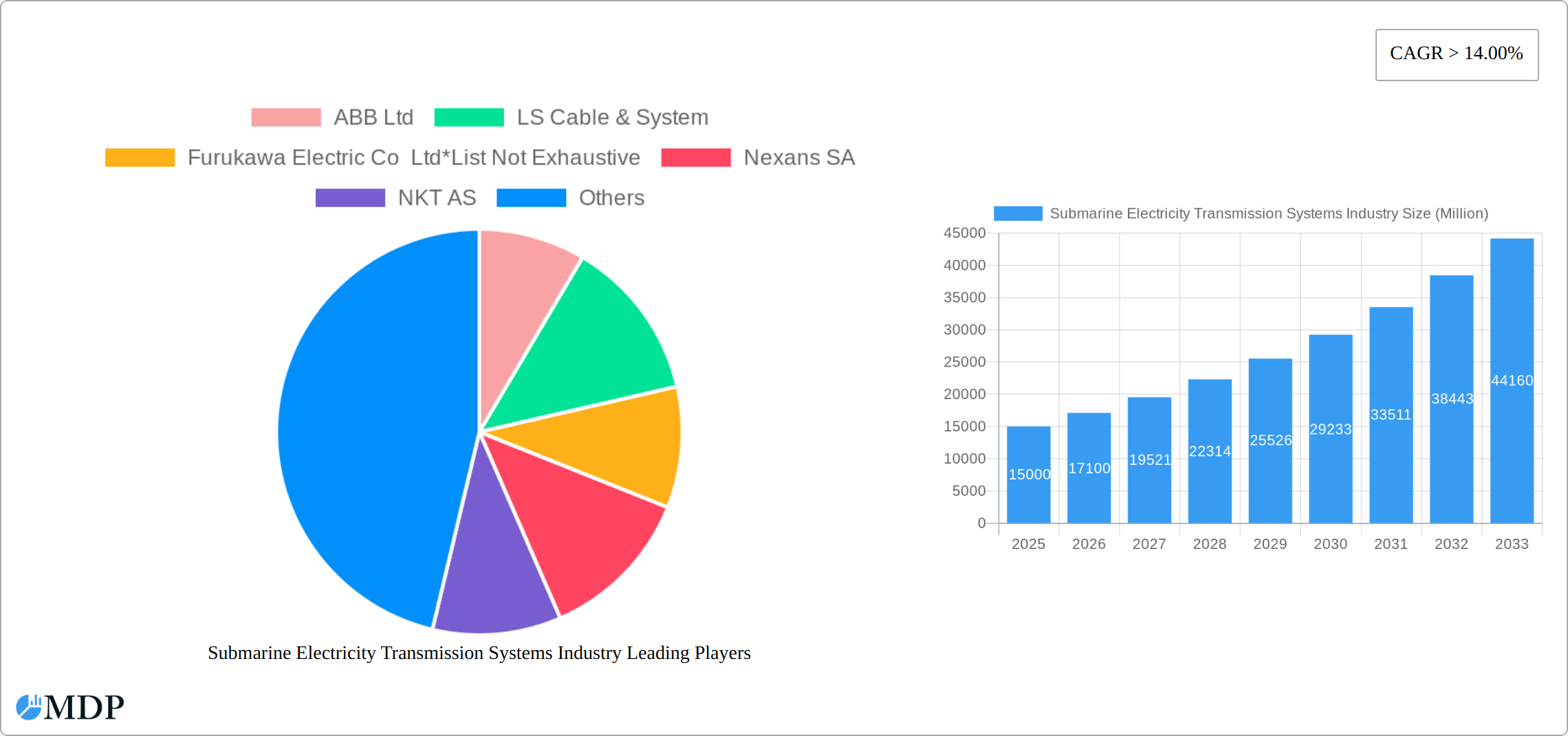
Submarine Electricity Transmission Systems Industry: A Comprehensive Market Report (2019-2033)
This comprehensive report provides a detailed analysis of the Submarine Electricity Transmission Systems industry, offering invaluable insights for stakeholders, investors, and industry professionals. With a study period spanning 2019-2033, a base year of 2025, and a forecast period of 2025-2033, this report meticulously examines market dynamics, technological advancements, and future growth prospects. The report leverages a wealth of data to provide actionable intelligence and strategic recommendations for navigating this dynamic sector. The global market size in 2025 is estimated at xx Million.
Submarine Electricity Transmission Systems Industry Market Dynamics & Concentration
The Submarine Electricity Transmission Systems market exhibits a moderately concentrated competitive landscape, dominated by established players like ABB Ltd, LS Cable & System, Furukawa Electric Co Ltd, Nexans SA, NKT AS, Prysmian SpA, Siemens AG, Norddeutsche Seekabelwerke GmbH (NSW), and Sumitomo Electric Industries Ltd. These companies hold substantial market share, driven by significant investments in R&D, manufacturing capabilities, and established global presence. However, the market is witnessing intensified competition from new entrants, particularly those specializing in innovative technologies and cost-effective solutions. This dynamic environment is fostering innovation and driving down prices, creating opportunities for both established and emerging players.
- Market Concentration: The top 5 players commanded an estimated [Insert updated percentage]% of the global market share in 2025. This concentration reflects the substantial capital investment and specialized technical expertise required for entry, creating high barriers for new competitors. However, strategic partnerships and acquisitions are reshaping the competitive landscape.
- Innovation Drivers: Technological advancements, especially in High-Voltage Direct Current (HVDC) technology, are pivotal in driving market growth. This includes the development of next-generation cable materials with enhanced performance characteristics, improved insulation, and increased capacity, alongside more efficient and cost-effective installation techniques, like trenching and ploughing technologies. The push towards sustainable manufacturing processes also plays a key role.
- Regulatory Frameworks & Policy Support: Government regulations and policies actively promoting renewable energy sources, especially offshore wind, are major growth catalysts. However, inconsistencies in regulatory frameworks across different regions create navigational challenges for global players, necessitating adaptive strategies for market access and compliance.
- Product Substitutes & Technological Disruption: Although few direct substitutes currently exist for submarine cable systems, advancements in wireless power transmission and alternative energy storage solutions could pose a long-term competitive threat. However, these technologies are still in their nascent stages of development and face significant hurdles before achieving commercial viability at scale.
- End-User Trends & Demand Drivers: The surging demand for offshore wind energy and the proliferation of interconnector projects are primary drivers. The offshore oil and gas sector remains a significant contributor, although this segment is vulnerable to fluctuations in energy prices and investment cycles. Furthermore, the increasing focus on energy independence and energy security globally is further bolstering demand.
- M&A Activities & Market Consolidation: The period between 2019 and 2024 witnessed approximately [Insert updated number] M&A deals within the submarine cable industry. This consolidation trend reflects companies' strategies to expand their geographical reach, enhance technological capabilities, and gain access to new markets and project pipelines.
Submarine Electricity Transmission Systems Industry Industry Trends & Analysis
The Submarine Electricity Transmission Systems market is experiencing robust and sustained growth, projected to achieve a CAGR of [Insert updated CAGR]% during the forecast period (2025-2033). This expansion is fueled by the escalating global demand for renewable energy, particularly offshore wind power, driving the need for extensive submarine cable infrastructure to connect these renewable energy sources to the onshore grid. Technological advancements, such as the development of higher-capacity and more efficient HVDC systems, are significantly enhancing the capabilities and reducing the cost of submarine power transmission.
Significant technological advancements, such as improvements in cable materials (e.g., advanced polymers, high-temperature superconductors) and installation methods (e.g., remotely operated vehicles, improved trenching techniques), are constantly improving efficiency and reducing both capital and operational expenditures. The global shift towards sustainable and environmentally friendly energy solutions further supports the increased adoption of offshore wind farms and the submarine cable systems that are essential for their operation. Intense competition among existing players and new entrants is fueling innovation and driving down prices, broadening the accessibility of submarine cable systems for various applications. Market penetration of HVDC systems continues its upward trajectory, exceeding [Insert updated percentage]% in 2025, primarily due to their superior efficiency in long-distance power transmission.
Leading Markets & Segments in Submarine Electricity Transmission Systems Industry
Europe currently holds the leading position in the Submarine Electricity Transmission Systems market, driven by substantial investments in offshore wind energy projects and a well-established network of interconnectors, particularly in the North Sea region. North America and the Asia-Pacific region are also experiencing robust growth, albeit at a slightly slower pace, fueled by increasing energy demands and government support for renewable energy initiatives.
- Dominant Regions: Europe (especially the North Sea region), followed by North America and Asia-Pacific.
- Key Drivers:
- Europe: Strong government support for renewable energy transition, extensive offshore wind farm deployments, significant investment in grid modernization and interconnections, and a well-established regulatory framework.
- North America: Growing offshore wind capacity, government initiatives promoting renewable energy development, and increasing focus on energy independence.
- Asia-Pacific: Rising energy demands, investments in offshore wind and inter-island connections, and economic growth driving infrastructure development.
Dominant Segments:
- End User: Offshore Wind Turbines represent the fastest-growing segment, propelled by ambitious renewable energy targets across multiple countries. Offshore Oil and Gas platforms maintain a significant share, while Intercountry and Island Connectors are experiencing steady growth driven by the increasing need for reliable energy transfer between geographically separated locations. The burgeoning market for subsea data centers is also emerging as a significant end-user segment.
- System Type: HVDC systems dominate the market due to their efficiency in long-distance power transmission, especially in deep-water applications. However, HVAC (High-Voltage Alternating Current) systems still retain a niche in shorter-distance applications and specific circumstances.
Submarine Electricity Transmission Systems Industry Product Developments
Recent product innovations focus on enhancing cable capacity, improving reliability, and reducing installation costs. The development of higher voltage and capacity cables, along with improved materials and installation techniques, are key trends. These innovations enable longer transmission distances and accommodate the increasing power output of offshore wind farms. The market is witnessing a shift toward more sustainable and environmentally friendly cable materials to minimize environmental impact during manufacturing and deployment. These developments translate to greater efficiency, reduced operational costs, and enhanced market competitiveness for providers.
Key Drivers of Submarine Electricity Transmission Systems Industry Growth
The industry's growth is primarily driven by several factors:
- Technological advancements: Enhanced HVDC technologies, improved cable materials, and sophisticated installation techniques contribute to increased efficiency and reduced costs.
- Economic factors: Government incentives and subsidies for renewable energy projects and the economic benefits of reliable energy infrastructure promote market expansion.
- Regulatory support: Stringent environmental regulations and policies favoring renewable energy sources mandate the implementation of submarine cable systems. The expansion of offshore wind energy capacity in numerous countries directly boosts demand.
Challenges in the Submarine Electricity Transmission Systems Industry Market
The industry faces several challenges:
- Regulatory hurdles: Complex permitting processes and evolving regulatory frameworks across different regions increase project timelines and costs.
- Supply chain issues: The dependence on specialized materials and manufacturing processes can lead to supply chain disruptions and price volatility.
- Competitive pressures: Intense competition among established players and new entrants puts pressure on profit margins. Technological innovation is crucial for maintaining competitiveness. The market is estimated to experience a xx Million decrease in revenue due to these challenges in 2026.
Emerging Opportunities in Submarine Electricity Transmission Systems Industry
Several factors present significant long-term growth opportunities within the Submarine Electricity Transmission Systems industry:
The expansion of offshore wind farms, particularly in deeper waters and further offshore, presents a substantial potential market for high-capacity submarine cable systems. Technological breakthroughs in cable materials and installation methods, including advancements in robotics and AI-powered systems, will continue to enhance efficiency and reduce costs. Strategic partnerships between cable manufacturers, offshore wind developers, grid operators, and financial institutions are essential for facilitating large-scale project implementation and smoother market entry. Expansion into new markets, particularly developing economies with ambitious renewable energy targets and significant energy infrastructure needs, will create further growth prospects. The increasing focus on the circular economy and sustainable practices throughout the lifecycle of submarine cable systems will also open up new avenues for innovation and investment.
Leading Players in the Submarine Electricity Transmission Systems Industry Sector
- ABB Ltd
- LS Cable & System
- Furukawa Electric Co Ltd
- Nexans SA
- NKT AS
- Prysmian SpA
- Siemens AG
- Norddeutsche Seekabelwerke GmbH(NSW)
- Sumitomo Electric Industries Ltd
Key Milestones in Submarine Electricity Transmission Systems Industry Industry
December 2022: DEME Offshore and LS Cable & System secured a contract from Vattenfall for the Norfolk Vanguard offshore wind farm, involving the design, engineering, procurement, manufacturing, testing, and installation of approximately 320 kilometers of HVDC export cables. This substantial contract underscores the significant investment in offshore wind energy infrastructure and the expanding market for submarine cable systems.
November 2022: RTE Réseau de Transport d'Electricité awarded a contract for the engineering, procurement, construction, installation, and commissioning of four HVDC converter stations and two offshore platforms for transmitting renewable energy from offshore wind farms (AO4 and AO8) in the English Channel, signifying a significant investment in HVDC technology for grid connection of offshore wind farms. This project highlights the increasing complexity and scale of offshore wind energy projects.
- [Add more recent key milestones with details - Include dates, companies involved, project specifics, and significance for the market.]
Strategic Outlook for Submarine Electricity Transmission Systems Industry Market
The Submarine Electricity Transmission Systems market presents significant long-term growth potential. Continued investments in offshore wind energy and cross-border interconnections will drive demand for advanced cable systems. Technological innovation, focused on enhancing efficiency, reducing costs, and improving sustainability, will be key to maintaining competitiveness. Strategic partnerships and collaborations across the value chain will be crucial for successfully navigating the market's complexities and capturing emerging opportunities. The long-term forecast suggests a substantial increase in market value, potentially exceeding xx Million by 2033, driven by the factors mentioned above.
Submarine Electricity Transmission Systems Industry Segmentation
-
1. End User
- 1.1. Offshore Wind Turbines
- 1.2. Offshore Oil and Gas Platforms
- 1.3. Intercountry and Island Connectors
-
2. System Type
- 2.1. HVDC System
- 2.2. HVAC System
Submarine Electricity Transmission Systems Industry Segmentation By Geography
- 1. North America
- 2. Europe
- 3. Asia Pacific
- 4. South America
- 5. Middle East and Africa
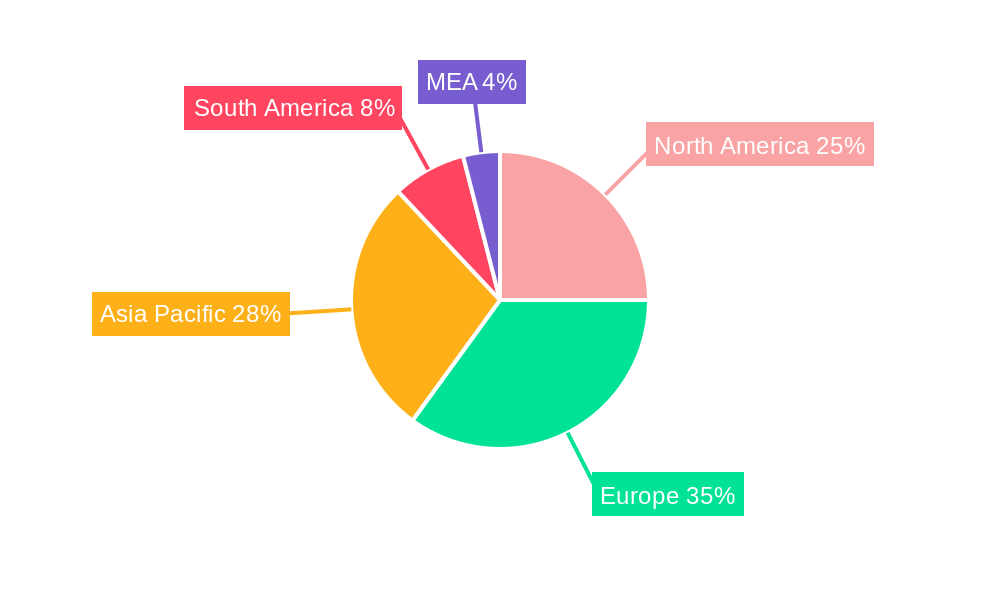
Submarine Electricity Transmission Systems Industry REPORT HIGHLIGHTS
| Aspects | Details |
|---|---|
| Study Period | 2019-2033 |
| Base Year | 2024 |
| Estimated Year | 2025 |
| Forecast Period | 2025-2033 |
| Historical Period | 2019-2024 |
| Growth Rate | CAGR of > 14.00% from 2019-2033 |
| Segmentation |
|
Table of Contents
- 1. Introduction
- 1.1. Research Scope
- 1.2. Market Segmentation
- 1.3. Research Methodology
- 1.4. Definitions and Assumptions
- 2. Executive Summary
- 2.1. Introduction
- 3. Market Dynamics
- 3.1. Introduction
- 3.2. Market Drivers
- 3.2.1. 4.; Substantial Investments and Efforts to Modernize the T&D Grid
- 3.3. Market Restrains
- 3.3.1. 4.; Expansion of High Voltage Direct Current (HVDC) Networks
- 3.4. Market Trends
- 3.4.1. HVDC System to Witness Significant Growth
- 4. Market Factor Analysis
- 4.1. Porters Five Forces
- 4.2. Supply/Value Chain
- 4.3. PESTEL analysis
- 4.4. Market Entropy
- 4.5. Patent/Trademark Analysis
- 5. Global Submarine Electricity Transmission Systems Industry Analysis, Insights and Forecast, 2019-2031
- 5.1. Market Analysis, Insights and Forecast - by End User
- 5.1.1. Offshore Wind Turbines
- 5.1.2. Offshore Oil and Gas Platforms
- 5.1.3. Intercountry and Island Connectors
- 5.2. Market Analysis, Insights and Forecast - by System Type
- 5.2.1. HVDC System
- 5.2.2. HVAC System
- 5.3. Market Analysis, Insights and Forecast - by Region
- 5.3.1. North America
- 5.3.2. Europe
- 5.3.3. Asia Pacific
- 5.3.4. South America
- 5.3.5. Middle East and Africa
- 5.1. Market Analysis, Insights and Forecast - by End User
- 6. North America Submarine Electricity Transmission Systems Industry Analysis, Insights and Forecast, 2019-2031
- 6.1. Market Analysis, Insights and Forecast - by End User
- 6.1.1. Offshore Wind Turbines
- 6.1.2. Offshore Oil and Gas Platforms
- 6.1.3. Intercountry and Island Connectors
- 6.2. Market Analysis, Insights and Forecast - by System Type
- 6.2.1. HVDC System
- 6.2.2. HVAC System
- 6.1. Market Analysis, Insights and Forecast - by End User
- 7. Europe Submarine Electricity Transmission Systems Industry Analysis, Insights and Forecast, 2019-2031
- 7.1. Market Analysis, Insights and Forecast - by End User
- 7.1.1. Offshore Wind Turbines
- 7.1.2. Offshore Oil and Gas Platforms
- 7.1.3. Intercountry and Island Connectors
- 7.2. Market Analysis, Insights and Forecast - by System Type
- 7.2.1. HVDC System
- 7.2.2. HVAC System
- 7.1. Market Analysis, Insights and Forecast - by End User
- 8. Asia Pacific Submarine Electricity Transmission Systems Industry Analysis, Insights and Forecast, 2019-2031
- 8.1. Market Analysis, Insights and Forecast - by End User
- 8.1.1. Offshore Wind Turbines
- 8.1.2. Offshore Oil and Gas Platforms
- 8.1.3. Intercountry and Island Connectors
- 8.2. Market Analysis, Insights and Forecast - by System Type
- 8.2.1. HVDC System
- 8.2.2. HVAC System
- 8.1. Market Analysis, Insights and Forecast - by End User
- 9. South America Submarine Electricity Transmission Systems Industry Analysis, Insights and Forecast, 2019-2031
- 9.1. Market Analysis, Insights and Forecast - by End User
- 9.1.1. Offshore Wind Turbines
- 9.1.2. Offshore Oil and Gas Platforms
- 9.1.3. Intercountry and Island Connectors
- 9.2. Market Analysis, Insights and Forecast - by System Type
- 9.2.1. HVDC System
- 9.2.2. HVAC System
- 9.1. Market Analysis, Insights and Forecast - by End User
- 10. Middle East and Africa Submarine Electricity Transmission Systems Industry Analysis, Insights and Forecast, 2019-2031
- 10.1. Market Analysis, Insights and Forecast - by End User
- 10.1.1. Offshore Wind Turbines
- 10.1.2. Offshore Oil and Gas Platforms
- 10.1.3. Intercountry and Island Connectors
- 10.2. Market Analysis, Insights and Forecast - by System Type
- 10.2.1. HVDC System
- 10.2.2. HVAC System
- 10.1. Market Analysis, Insights and Forecast - by End User
- 11. North America Submarine Electricity Transmission Systems Industry Analysis, Insights and Forecast, 2019-2031
- 11.1. Market Analysis, Insights and Forecast - By Country/Sub-region
- 11.1.1 United States
- 11.1.2 Canada
- 11.1.3 Mexico
- 12. Europe Submarine Electricity Transmission Systems Industry Analysis, Insights and Forecast, 2019-2031
- 12.1. Market Analysis, Insights and Forecast - By Country/Sub-region
- 12.1.1 Germany
- 12.1.2 United Kingdom
- 12.1.3 France
- 12.1.4 Spain
- 12.1.5 Italy
- 12.1.6 Spain
- 12.1.7 Belgium
- 12.1.8 Netherland
- 12.1.9 Nordics
- 12.1.10 Rest of Europe
- 13. Asia Pacific Submarine Electricity Transmission Systems Industry Analysis, Insights and Forecast, 2019-2031
- 13.1. Market Analysis, Insights and Forecast - By Country/Sub-region
- 13.1.1 China
- 13.1.2 Japan
- 13.1.3 India
- 13.1.4 South Korea
- 13.1.5 Southeast Asia
- 13.1.6 Australia
- 13.1.7 Indonesia
- 13.1.8 Phillipes
- 13.1.9 Singapore
- 13.1.10 Thailandc
- 13.1.11 Rest of Asia Pacific
- 14. South America Submarine Electricity Transmission Systems Industry Analysis, Insights and Forecast, 2019-2031
- 14.1. Market Analysis, Insights and Forecast - By Country/Sub-region
- 14.1.1 Brazil
- 14.1.2 Argentina
- 14.1.3 Peru
- 14.1.4 Chile
- 14.1.5 Colombia
- 14.1.6 Ecuador
- 14.1.7 Venezuela
- 14.1.8 Rest of South America
- 15. North America Submarine Electricity Transmission Systems Industry Analysis, Insights and Forecast, 2019-2031
- 15.1. Market Analysis, Insights and Forecast - By Country/Sub-region
- 15.1.1 United States
- 15.1.2 Canada
- 15.1.3 Mexico
- 16. MEA Submarine Electricity Transmission Systems Industry Analysis, Insights and Forecast, 2019-2031
- 16.1. Market Analysis, Insights and Forecast - By Country/Sub-region
- 16.1.1 United Arab Emirates
- 16.1.2 Saudi Arabia
- 16.1.3 South Africa
- 16.1.4 Rest of Middle East and Africa
- 17. Competitive Analysis
- 17.1. Global Market Share Analysis 2024
- 17.2. Company Profiles
- 17.2.1 ABB Ltd
- 17.2.1.1. Overview
- 17.2.1.2. Products
- 17.2.1.3. SWOT Analysis
- 17.2.1.4. Recent Developments
- 17.2.1.5. Financials (Based on Availability)
- 17.2.2 LS Cable & System
- 17.2.2.1. Overview
- 17.2.2.2. Products
- 17.2.2.3. SWOT Analysis
- 17.2.2.4. Recent Developments
- 17.2.2.5. Financials (Based on Availability)
- 17.2.3 Furukawa Electric Co Ltd*List Not Exhaustive
- 17.2.3.1. Overview
- 17.2.3.2. Products
- 17.2.3.3. SWOT Analysis
- 17.2.3.4. Recent Developments
- 17.2.3.5. Financials (Based on Availability)
- 17.2.4 Nexans SA
- 17.2.4.1. Overview
- 17.2.4.2. Products
- 17.2.4.3. SWOT Analysis
- 17.2.4.4. Recent Developments
- 17.2.4.5. Financials (Based on Availability)
- 17.2.5 NKT AS
- 17.2.5.1. Overview
- 17.2.5.2. Products
- 17.2.5.3. SWOT Analysis
- 17.2.5.4. Recent Developments
- 17.2.5.5. Financials (Based on Availability)
- 17.2.6 Prysmian SpA
- 17.2.6.1. Overview
- 17.2.6.2. Products
- 17.2.6.3. SWOT Analysis
- 17.2.6.4. Recent Developments
- 17.2.6.5. Financials (Based on Availability)
- 17.2.7 Siemens AG
- 17.2.7.1. Overview
- 17.2.7.2. Products
- 17.2.7.3. SWOT Analysis
- 17.2.7.4. Recent Developments
- 17.2.7.5. Financials (Based on Availability)
- 17.2.8 Norddeutsche Seekabelwerke GmbH(NSW)
- 17.2.8.1. Overview
- 17.2.8.2. Products
- 17.2.8.3. SWOT Analysis
- 17.2.8.4. Recent Developments
- 17.2.8.5. Financials (Based on Availability)
- 17.2.9 Sumitomo Electric Industries Ltd
- 17.2.9.1. Overview
- 17.2.9.2. Products
- 17.2.9.3. SWOT Analysis
- 17.2.9.4. Recent Developments
- 17.2.9.5. Financials (Based on Availability)
- 17.2.1 ABB Ltd
List of Figures
- Figure 1: Global Submarine Electricity Transmission Systems Industry Revenue Breakdown (Million, %) by Region 2024 & 2032
- Figure 2: North America Submarine Electricity Transmission Systems Industry Revenue (Million), by Country 2024 & 2032
- Figure 3: North America Submarine Electricity Transmission Systems Industry Revenue Share (%), by Country 2024 & 2032
- Figure 4: Europe Submarine Electricity Transmission Systems Industry Revenue (Million), by Country 2024 & 2032
- Figure 5: Europe Submarine Electricity Transmission Systems Industry Revenue Share (%), by Country 2024 & 2032
- Figure 6: Asia Pacific Submarine Electricity Transmission Systems Industry Revenue (Million), by Country 2024 & 2032
- Figure 7: Asia Pacific Submarine Electricity Transmission Systems Industry Revenue Share (%), by Country 2024 & 2032
- Figure 8: South America Submarine Electricity Transmission Systems Industry Revenue (Million), by Country 2024 & 2032
- Figure 9: South America Submarine Electricity Transmission Systems Industry Revenue Share (%), by Country 2024 & 2032
- Figure 10: North America Submarine Electricity Transmission Systems Industry Revenue (Million), by Country 2024 & 2032
- Figure 11: North America Submarine Electricity Transmission Systems Industry Revenue Share (%), by Country 2024 & 2032
- Figure 12: MEA Submarine Electricity Transmission Systems Industry Revenue (Million), by Country 2024 & 2032
- Figure 13: MEA Submarine Electricity Transmission Systems Industry Revenue Share (%), by Country 2024 & 2032
- Figure 14: North America Submarine Electricity Transmission Systems Industry Revenue (Million), by End User 2024 & 2032
- Figure 15: North America Submarine Electricity Transmission Systems Industry Revenue Share (%), by End User 2024 & 2032
- Figure 16: North America Submarine Electricity Transmission Systems Industry Revenue (Million), by System Type 2024 & 2032
- Figure 17: North America Submarine Electricity Transmission Systems Industry Revenue Share (%), by System Type 2024 & 2032
- Figure 18: North America Submarine Electricity Transmission Systems Industry Revenue (Million), by Country 2024 & 2032
- Figure 19: North America Submarine Electricity Transmission Systems Industry Revenue Share (%), by Country 2024 & 2032
- Figure 20: Europe Submarine Electricity Transmission Systems Industry Revenue (Million), by End User 2024 & 2032
- Figure 21: Europe Submarine Electricity Transmission Systems Industry Revenue Share (%), by End User 2024 & 2032
- Figure 22: Europe Submarine Electricity Transmission Systems Industry Revenue (Million), by System Type 2024 & 2032
- Figure 23: Europe Submarine Electricity Transmission Systems Industry Revenue Share (%), by System Type 2024 & 2032
- Figure 24: Europe Submarine Electricity Transmission Systems Industry Revenue (Million), by Country 2024 & 2032
- Figure 25: Europe Submarine Electricity Transmission Systems Industry Revenue Share (%), by Country 2024 & 2032
- Figure 26: Asia Pacific Submarine Electricity Transmission Systems Industry Revenue (Million), by End User 2024 & 2032
- Figure 27: Asia Pacific Submarine Electricity Transmission Systems Industry Revenue Share (%), by End User 2024 & 2032
- Figure 28: Asia Pacific Submarine Electricity Transmission Systems Industry Revenue (Million), by System Type 2024 & 2032
- Figure 29: Asia Pacific Submarine Electricity Transmission Systems Industry Revenue Share (%), by System Type 2024 & 2032
- Figure 30: Asia Pacific Submarine Electricity Transmission Systems Industry Revenue (Million), by Country 2024 & 2032
- Figure 31: Asia Pacific Submarine Electricity Transmission Systems Industry Revenue Share (%), by Country 2024 & 2032
- Figure 32: South America Submarine Electricity Transmission Systems Industry Revenue (Million), by End User 2024 & 2032
- Figure 33: South America Submarine Electricity Transmission Systems Industry Revenue Share (%), by End User 2024 & 2032
- Figure 34: South America Submarine Electricity Transmission Systems Industry Revenue (Million), by System Type 2024 & 2032
- Figure 35: South America Submarine Electricity Transmission Systems Industry Revenue Share (%), by System Type 2024 & 2032
- Figure 36: South America Submarine Electricity Transmission Systems Industry Revenue (Million), by Country 2024 & 2032
- Figure 37: South America Submarine Electricity Transmission Systems Industry Revenue Share (%), by Country 2024 & 2032
- Figure 38: Middle East and Africa Submarine Electricity Transmission Systems Industry Revenue (Million), by End User 2024 & 2032
- Figure 39: Middle East and Africa Submarine Electricity Transmission Systems Industry Revenue Share (%), by End User 2024 & 2032
- Figure 40: Middle East and Africa Submarine Electricity Transmission Systems Industry Revenue (Million), by System Type 2024 & 2032
- Figure 41: Middle East and Africa Submarine Electricity Transmission Systems Industry Revenue Share (%), by System Type 2024 & 2032
- Figure 42: Middle East and Africa Submarine Electricity Transmission Systems Industry Revenue (Million), by Country 2024 & 2032
- Figure 43: Middle East and Africa Submarine Electricity Transmission Systems Industry Revenue Share (%), by Country 2024 & 2032
List of Tables
- Table 1: Global Submarine Electricity Transmission Systems Industry Revenue Million Forecast, by Region 2019 & 2032
- Table 2: Global Submarine Electricity Transmission Systems Industry Revenue Million Forecast, by End User 2019 & 2032
- Table 3: Global Submarine Electricity Transmission Systems Industry Revenue Million Forecast, by System Type 2019 & 2032
- Table 4: Global Submarine Electricity Transmission Systems Industry Revenue Million Forecast, by Region 2019 & 2032
- Table 5: Global Submarine Electricity Transmission Systems Industry Revenue Million Forecast, by Country 2019 & 2032
- Table 6: United States Submarine Electricity Transmission Systems Industry Revenue (Million) Forecast, by Application 2019 & 2032
- Table 7: Canada Submarine Electricity Transmission Systems Industry Revenue (Million) Forecast, by Application 2019 & 2032
- Table 8: Mexico Submarine Electricity Transmission Systems Industry Revenue (Million) Forecast, by Application 2019 & 2032
- Table 9: Global Submarine Electricity Transmission Systems Industry Revenue Million Forecast, by Country 2019 & 2032
- Table 10: Germany Submarine Electricity Transmission Systems Industry Revenue (Million) Forecast, by Application 2019 & 2032
- Table 11: United Kingdom Submarine Electricity Transmission Systems Industry Revenue (Million) Forecast, by Application 2019 & 2032
- Table 12: France Submarine Electricity Transmission Systems Industry Revenue (Million) Forecast, by Application 2019 & 2032
- Table 13: Spain Submarine Electricity Transmission Systems Industry Revenue (Million) Forecast, by Application 2019 & 2032
- Table 14: Italy Submarine Electricity Transmission Systems Industry Revenue (Million) Forecast, by Application 2019 & 2032
- Table 15: Spain Submarine Electricity Transmission Systems Industry Revenue (Million) Forecast, by Application 2019 & 2032
- Table 16: Belgium Submarine Electricity Transmission Systems Industry Revenue (Million) Forecast, by Application 2019 & 2032
- Table 17: Netherland Submarine Electricity Transmission Systems Industry Revenue (Million) Forecast, by Application 2019 & 2032
- Table 18: Nordics Submarine Electricity Transmission Systems Industry Revenue (Million) Forecast, by Application 2019 & 2032
- Table 19: Rest of Europe Submarine Electricity Transmission Systems Industry Revenue (Million) Forecast, by Application 2019 & 2032
- Table 20: Global Submarine Electricity Transmission Systems Industry Revenue Million Forecast, by Country 2019 & 2032
- Table 21: China Submarine Electricity Transmission Systems Industry Revenue (Million) Forecast, by Application 2019 & 2032
- Table 22: Japan Submarine Electricity Transmission Systems Industry Revenue (Million) Forecast, by Application 2019 & 2032
- Table 23: India Submarine Electricity Transmission Systems Industry Revenue (Million) Forecast, by Application 2019 & 2032
- Table 24: South Korea Submarine Electricity Transmission Systems Industry Revenue (Million) Forecast, by Application 2019 & 2032
- Table 25: Southeast Asia Submarine Electricity Transmission Systems Industry Revenue (Million) Forecast, by Application 2019 & 2032
- Table 26: Australia Submarine Electricity Transmission Systems Industry Revenue (Million) Forecast, by Application 2019 & 2032
- Table 27: Indonesia Submarine Electricity Transmission Systems Industry Revenue (Million) Forecast, by Application 2019 & 2032
- Table 28: Phillipes Submarine Electricity Transmission Systems Industry Revenue (Million) Forecast, by Application 2019 & 2032
- Table 29: Singapore Submarine Electricity Transmission Systems Industry Revenue (Million) Forecast, by Application 2019 & 2032
- Table 30: Thailandc Submarine Electricity Transmission Systems Industry Revenue (Million) Forecast, by Application 2019 & 2032
- Table 31: Rest of Asia Pacific Submarine Electricity Transmission Systems Industry Revenue (Million) Forecast, by Application 2019 & 2032
- Table 32: Global Submarine Electricity Transmission Systems Industry Revenue Million Forecast, by Country 2019 & 2032
- Table 33: Brazil Submarine Electricity Transmission Systems Industry Revenue (Million) Forecast, by Application 2019 & 2032
- Table 34: Argentina Submarine Electricity Transmission Systems Industry Revenue (Million) Forecast, by Application 2019 & 2032
- Table 35: Peru Submarine Electricity Transmission Systems Industry Revenue (Million) Forecast, by Application 2019 & 2032
- Table 36: Chile Submarine Electricity Transmission Systems Industry Revenue (Million) Forecast, by Application 2019 & 2032
- Table 37: Colombia Submarine Electricity Transmission Systems Industry Revenue (Million) Forecast, by Application 2019 & 2032
- Table 38: Ecuador Submarine Electricity Transmission Systems Industry Revenue (Million) Forecast, by Application 2019 & 2032
- Table 39: Venezuela Submarine Electricity Transmission Systems Industry Revenue (Million) Forecast, by Application 2019 & 2032
- Table 40: Rest of South America Submarine Electricity Transmission Systems Industry Revenue (Million) Forecast, by Application 2019 & 2032
- Table 41: Global Submarine Electricity Transmission Systems Industry Revenue Million Forecast, by Country 2019 & 2032
- Table 42: United States Submarine Electricity Transmission Systems Industry Revenue (Million) Forecast, by Application 2019 & 2032
- Table 43: Canada Submarine Electricity Transmission Systems Industry Revenue (Million) Forecast, by Application 2019 & 2032
- Table 44: Mexico Submarine Electricity Transmission Systems Industry Revenue (Million) Forecast, by Application 2019 & 2032
- Table 45: Global Submarine Electricity Transmission Systems Industry Revenue Million Forecast, by Country 2019 & 2032
- Table 46: United Arab Emirates Submarine Electricity Transmission Systems Industry Revenue (Million) Forecast, by Application 2019 & 2032
- Table 47: Saudi Arabia Submarine Electricity Transmission Systems Industry Revenue (Million) Forecast, by Application 2019 & 2032
- Table 48: South Africa Submarine Electricity Transmission Systems Industry Revenue (Million) Forecast, by Application 2019 & 2032
- Table 49: Rest of Middle East and Africa Submarine Electricity Transmission Systems Industry Revenue (Million) Forecast, by Application 2019 & 2032
- Table 50: Global Submarine Electricity Transmission Systems Industry Revenue Million Forecast, by End User 2019 & 2032
- Table 51: Global Submarine Electricity Transmission Systems Industry Revenue Million Forecast, by System Type 2019 & 2032
- Table 52: Global Submarine Electricity Transmission Systems Industry Revenue Million Forecast, by Country 2019 & 2032
- Table 53: Global Submarine Electricity Transmission Systems Industry Revenue Million Forecast, by End User 2019 & 2032
- Table 54: Global Submarine Electricity Transmission Systems Industry Revenue Million Forecast, by System Type 2019 & 2032
- Table 55: Global Submarine Electricity Transmission Systems Industry Revenue Million Forecast, by Country 2019 & 2032
- Table 56: Global Submarine Electricity Transmission Systems Industry Revenue Million Forecast, by End User 2019 & 2032
- Table 57: Global Submarine Electricity Transmission Systems Industry Revenue Million Forecast, by System Type 2019 & 2032
- Table 58: Global Submarine Electricity Transmission Systems Industry Revenue Million Forecast, by Country 2019 & 2032
- Table 59: Global Submarine Electricity Transmission Systems Industry Revenue Million Forecast, by End User 2019 & 2032
- Table 60: Global Submarine Electricity Transmission Systems Industry Revenue Million Forecast, by System Type 2019 & 2032
- Table 61: Global Submarine Electricity Transmission Systems Industry Revenue Million Forecast, by Country 2019 & 2032
- Table 62: Global Submarine Electricity Transmission Systems Industry Revenue Million Forecast, by End User 2019 & 2032
- Table 63: Global Submarine Electricity Transmission Systems Industry Revenue Million Forecast, by System Type 2019 & 2032
- Table 64: Global Submarine Electricity Transmission Systems Industry Revenue Million Forecast, by Country 2019 & 2032
Frequently Asked Questions
1. What is the projected Compound Annual Growth Rate (CAGR) of the Submarine Electricity Transmission Systems Industry?
The projected CAGR is approximately > 14.00%.
2. Which companies are prominent players in the Submarine Electricity Transmission Systems Industry?
Key companies in the market include ABB Ltd, LS Cable & System, Furukawa Electric Co Ltd*List Not Exhaustive, Nexans SA, NKT AS, Prysmian SpA, Siemens AG, Norddeutsche Seekabelwerke GmbH(NSW), Sumitomo Electric Industries Ltd.
3. What are the main segments of the Submarine Electricity Transmission Systems Industry?
The market segments include End User, System Type.
4. Can you provide details about the market size?
The market size is estimated to be USD XX Million as of 2022.
5. What are some drivers contributing to market growth?
4.; Substantial Investments and Efforts to Modernize the T&D Grid.
6. What are the notable trends driving market growth?
HVDC System to Witness Significant Growth.
7. Are there any restraints impacting market growth?
4.; Expansion of High Voltage Direct Current (HVDC) Networks.
8. Can you provide examples of recent developments in the market?
December 2022: DEME Offshore and LS Cable & System signed a contract with Vattenfall to provide export cables on the 1.8 GW Norfolk Vanguard offshore wind farm. The consortium will be responsible for the design, engineering, procurement, manufacturing, testing, and installation of around 320 kilometers of HVDC export cables for the offshore route.
9. What pricing options are available for accessing the report?
Pricing options include single-user, multi-user, and enterprise licenses priced at USD 4750, USD 5250, and USD 8750 respectively.
10. Is the market size provided in terms of value or volume?
The market size is provided in terms of value, measured in Million.
11. Are there any specific market keywords associated with the report?
Yes, the market keyword associated with the report is "Submarine Electricity Transmission Systems Industry," which aids in identifying and referencing the specific market segment covered.
12. How do I determine which pricing option suits my needs best?
The pricing options vary based on user requirements and access needs. Individual users may opt for single-user licenses, while businesses requiring broader access may choose multi-user or enterprise licenses for cost-effective access to the report.
13. Are there any additional resources or data provided in the Submarine Electricity Transmission Systems Industry report?
While the report offers comprehensive insights, it's advisable to review the specific contents or supplementary materials provided to ascertain if additional resources or data are available.
14. How can I stay updated on further developments or reports in the Submarine Electricity Transmission Systems Industry?
To stay informed about further developments, trends, and reports in the Submarine Electricity Transmission Systems Industry, consider subscribing to industry newsletters, following relevant companies and organizations, or regularly checking reputable industry news sources and publications.
Methodology
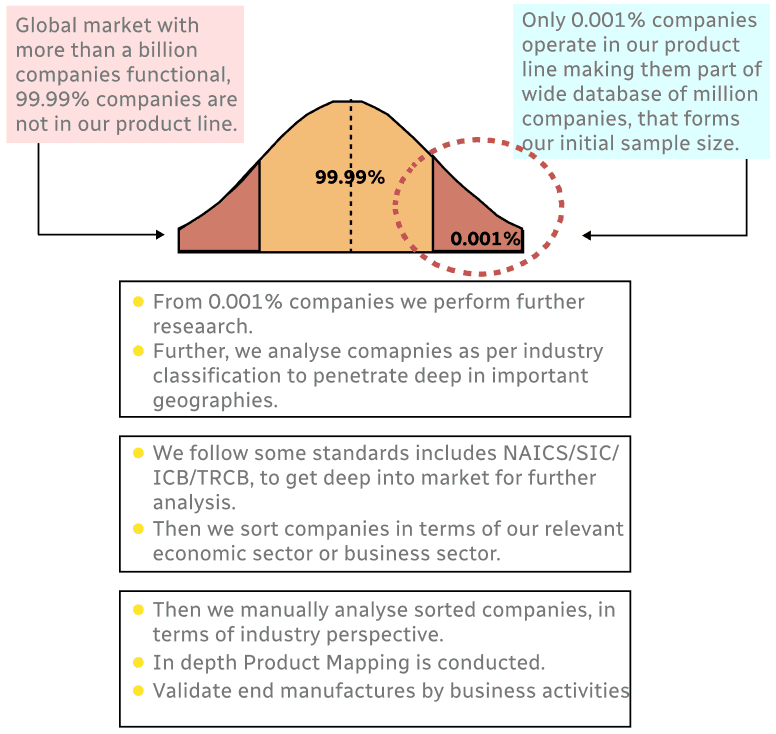
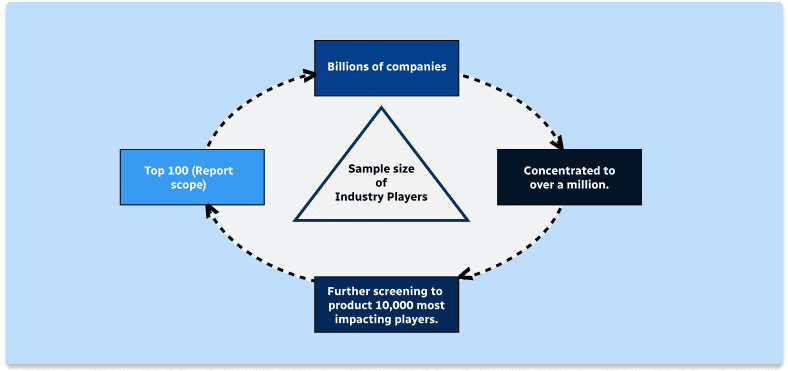
Step 1 - Identification of Relevant Samples Size from Population Database
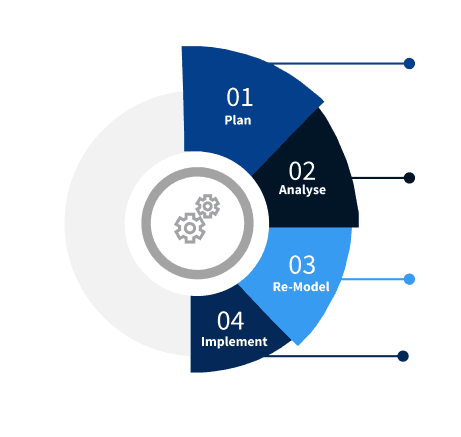
Step 2 - Approaches for Defining Global Market Size (Value, Volume* & Price*)
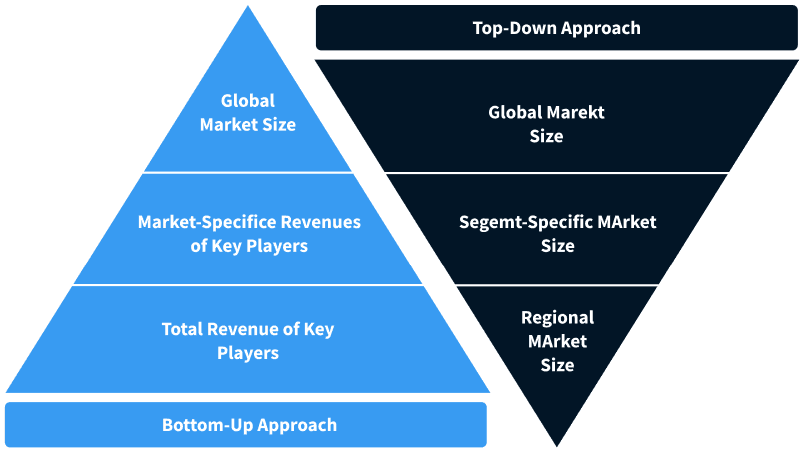
Note*: In applicable scenarios
Step 3 - Data Sources
Primary Research
- Web Analytics
- Survey Reports
- Research Institute
- Latest Research Reports
- Opinion Leaders
Secondary Research
- Annual Reports
- White Paper
- Latest Press Release
- Industry Association
- Paid Database
- Investor Presentations
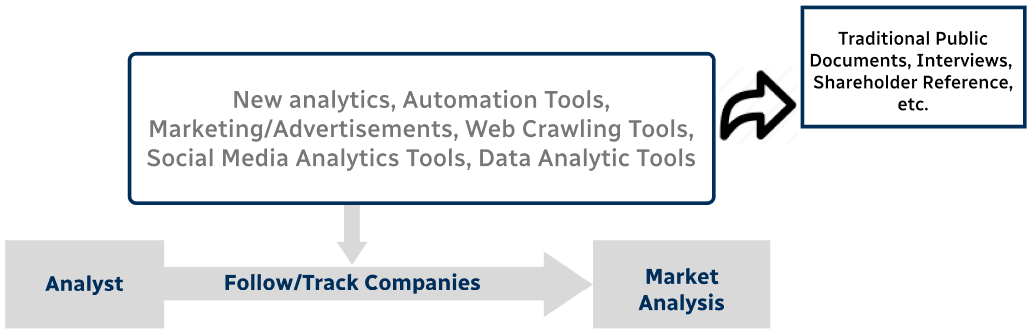
Step 4 - Data Triangulation
Involves using different sources of information in order to increase the validity of a study
These sources are likely to be stakeholders in a program - participants, other researchers, program staff, other community members, and so on.
Then we put all data in single framework & apply various statistical tools to find out the dynamic on the market.
During the analysis stage, feedback from the stakeholder groups would be compared to determine areas of agreement as well as areas of divergence