


Key Insights
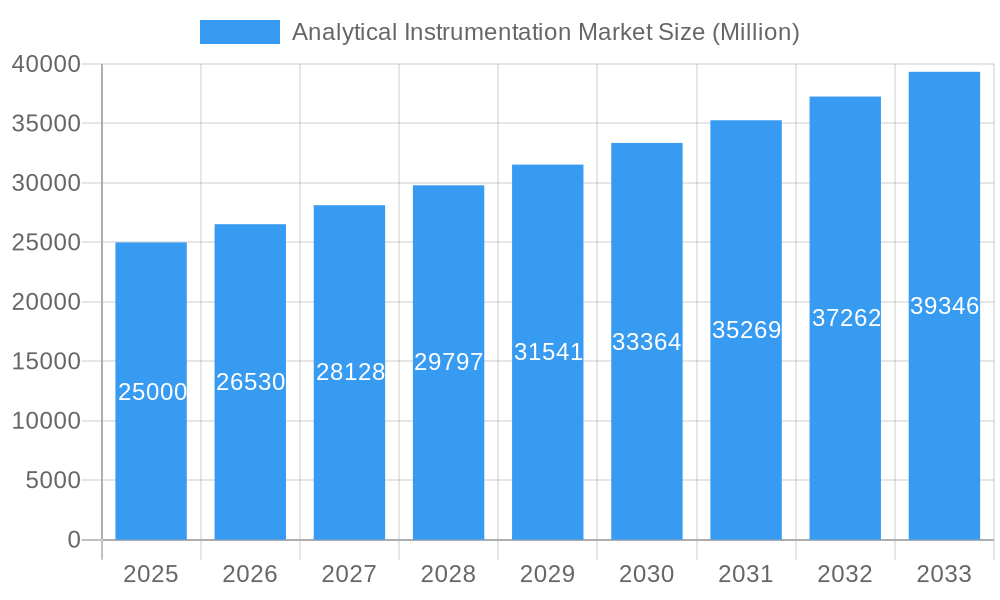
The global analytical instrumentation market is projected for significant expansion, reaching $41.8 billion by 2025, with a compound annual growth rate (CAGR) of 5.7%. This growth is propelled by escalating research and development investments, particularly in life sciences and pharmaceuticals. The increasing demand for sophisticated analytical techniques for quality control, drug discovery, and environmental monitoring is a key driver. Technological advancements, leading to more sensitive, faster, and automated instruments, also contribute significantly. The rising incidence of chronic diseases necessitates advanced diagnostic tools, further stimulating market growth. Additionally, stringent regulatory requirements for product quality and safety in sectors such as food and beverages, and chemical manufacturing are accelerating the adoption of analytical instrumentation. Chromatography and mass spectrometry dominate product segments, with life sciences and the chemical/petrochemical industries being major end-users.
Analytical Instrumentation Market Market Size (In Billion)

Future market expansion will be influenced by miniaturization, portable instrumentation, and the integration of AI and machine learning for data analysis and automation. Key challenges include high instrument costs, the requirement for skilled personnel, and economic volatility impacting R&D investments. Despite these restraints, the analytical instrumentation market holds positive long-term prospects, with growth opportunities in developing economies and emerging applications. The competitive landscape features established global players focusing on innovation and portfolio expansion. Geographic expansion, strategic partnerships, and M&A activities will shape market dynamics. North America and Europe are expected to retain substantial market shares due to robust infrastructure and R&D spending, while the Asia-Pacific region presents strong growth potential driven by rapid industrialization and increasing healthcare investments.
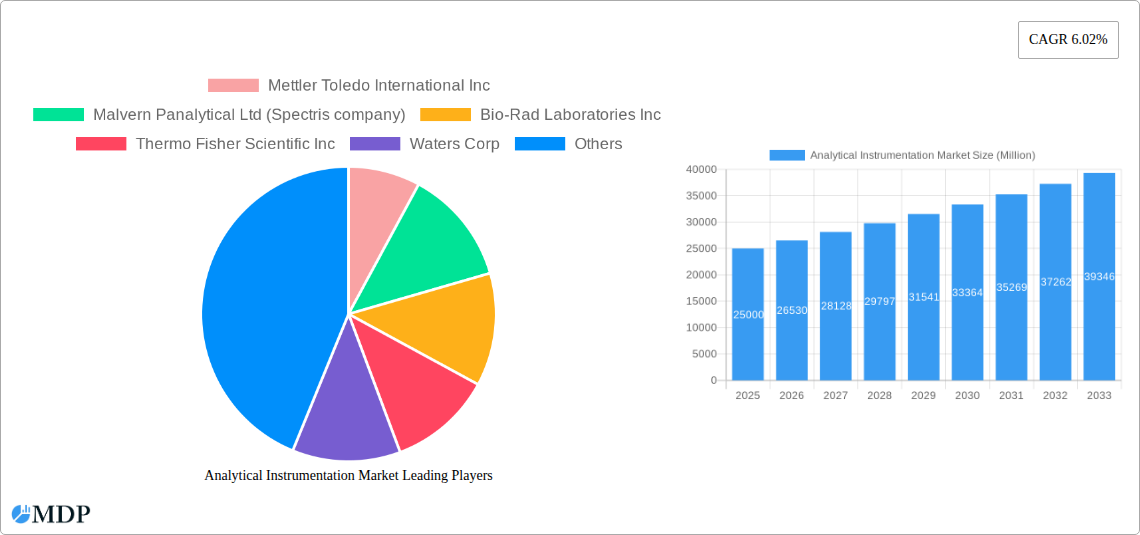
Analytical Instrumentation Market Company Market Share
Analytical Instrumentation Market Report: 2019-2033
Dive deep into the comprehensive analysis of the Analytical Instrumentation Market, projecting a robust growth trajectory fueled by technological advancements and expanding end-user applications. This meticulously researched report provides an in-depth understanding of market dynamics, key players, and emerging opportunities, covering the period 2019-2033, with a focus on 2025.
Analytical Instrumentation Market Market Dynamics & Concentration
The Analytical Instrumentation market, valued at xx Million in 2024, is characterized by moderate concentration, with a few major players holding significant market share. The market is driven by continuous innovation in analytical techniques, stringent regulatory compliance requirements across various industries, and the increasing demand for advanced analytical solutions across diverse sectors. Product substitution is a factor, with newer technologies continually emerging, putting pressure on established techniques. End-user trends show a strong shift towards automation, miniaturization, and higher throughput capabilities. M&A activity remains a key driver, with xx M&A deals recorded in the past five years, primarily focused on expanding product portfolios and geographical reach.
- Market Share: Top 5 players hold approximately xx% of the market.
- Innovation Drivers: Advancements in spectroscopy, chromatography, and mass spectrometry are key drivers.
- Regulatory Framework: Stringent regulations in pharmaceuticals, food safety, and environmental monitoring are impacting market growth.
- Product Substitutes: The emergence of newer technologies like lab-on-a-chip devices presents some challenges to existing instrumentation.
- End-User Trends: Demand for faster, more accurate, and automated solutions is increasing.
- M&A Activity: Consolidation is expected to continue as larger players seek to expand their product and service offerings.
Analytical Instrumentation Market Industry Trends & Analysis
The Analytical Instrumentation market exhibits a steady growth trajectory, projected to reach xx Million by 2033, with a CAGR of xx% during the forecast period (2025-2033). This growth is propelled by rising R&D investments in life sciences, the growing need for quality control in various industries, and increasing environmental regulations demanding advanced analytical capabilities. Technological disruptions, such as the integration of AI and machine learning in analytical instruments, are significantly impacting market penetration. Consumer preferences lean towards user-friendly, cost-effective, and portable instruments. Competitive dynamics are marked by technological advancements, strategic partnerships, and product differentiation. Market penetration for advanced analytical technologies remains relatively low, providing further growth opportunities.
Leading Markets & Segments in Analytical Instrumentation Market
The Life Sciences segment dominates the Analytical Instrumentation market, accounting for xx% of the total revenue in 2024, fueled by the high demand for advanced analytical tools in drug discovery, genomics, and proteomics. North America is the leading geographical market, driven by robust R&D spending and a well-established healthcare infrastructure.
Key Drivers:
- Life Sciences: High R&D spending, growing pharmaceutical industry, and advancements in genomics.
- Chemical and Petrochemical: Stringent quality control standards and the need for process optimization.
- Chromatography: Wide applications across various industries, including pharmaceuticals and environmental testing.
- Mass Spectrometry: High sensitivity and accuracy, making it vital in numerous analytical applications.
Dominance Analysis:
North America holds the largest market share due to strong government support for R&D, presence of major players, and well-established healthcare infrastructure. The Life Sciences segment maintains its leading position because of the ongoing demand for advanced analytical solutions in drug discovery and development, genomics research, and proteomics.
Analytical Instrumentation Market Product Developments
Recent product innovations focus on miniaturization, automation, and enhanced analytical capabilities. New instruments offer improved sensitivity, speed, and ease of use, catering to diverse industry needs. The integration of advanced data analysis software and AI algorithms is a prominent trend. These advancements enhance the efficiency and accuracy of analysis, delivering significant competitive advantages to manufacturers.
Key Drivers of Analytical Instrumentation Market Growth
Several factors contribute to the market's growth. Technological advancements, particularly in miniaturization and automation, are enhancing the efficiency and affordability of analytical instrumentation. Growing R&D investments across various sectors, especially pharmaceuticals and biotechnology, fuel the demand. Stringent regulatory requirements mandating quality control and environmental monitoring create opportunities for advanced analytical tools. Increasing awareness of food safety and environmental concerns drives market expansion.
Challenges in the Analytical Instrumentation Market Market
The market faces several challenges, including high capital costs of advanced instruments, the need for skilled technicians for operation and maintenance, and competitive pressures from emerging technologies. Supply chain disruptions can impact instrument availability and pricing. Regulatory complexities and varying standards across different regions can also hinder market expansion. The cost of servicing and maintaining advanced analytical instruments can be substantial.
Emerging Opportunities in Analytical Instrumentation Market
The market offers lucrative opportunities. The increasing adoption of AI and machine learning in analytical workflows holds significant potential. Strategic partnerships between instrument manufacturers and end-users facilitate customized solutions. Expansion into emerging markets, particularly in Asia and Africa, presents substantial growth prospects. Development of portable and user-friendly instruments caters to a wider range of applications.
Leading Players in the Analytical Instrumentation Market Sector
Key Milestones in Analytical Instrumentation Market Industry
- February 2022: AMETEK Spectro Scientific launched its online Fluid Management Academy (FMA), enhancing customer training and support for fluid analysis products in material sciences. This initiative improved market penetration and customer satisfaction.
- February 2022: Agilent Technologies and the University of Vermont established the Agilent Laboratory for Chemical Analysis (ALCA), fostering collaboration and driving innovation in advanced chemical analysis. This strategic partnership enhanced market access and broadened the scope of applications.
Strategic Outlook for Analytical Instrumentation Market Market
The Analytical Instrumentation market holds immense long-term growth potential. Continuous technological advancements, increasing demand across various sectors, and strategic partnerships will drive future market expansion. Focusing on developing user-friendly, cost-effective, and portable instruments will cater to a wider range of applications. Expansion into emerging markets and strategic collaborations with research institutions will be key to unlocking future growth opportunities.
Analytical Instrumentation Market Segmentation
-
1. Product Type
- 1.1. Chromatography
- 1.2. Molecular Analysis Spectroscopy
- 1.3. Elemental Analysis Spectroscopy
- 1.4. Mass Spectroscopy
- 1.5. Analytical Microscopes
- 1.6. Other Product Types
-
2. End User
- 2.1. Life Sciences
- 2.2. Chemical and Petrochemical
- 2.3. Oil and Gas
- 2.4. Material Sciences
- 2.5. Food Testing
- 2.6. Water and Wastewater
- 2.7. Other End Users
Analytical Instrumentation Market Segmentation By Geography
- 1. North America
- 2. Europe
- 3. Asia Pacific
- 4. Rest of the World
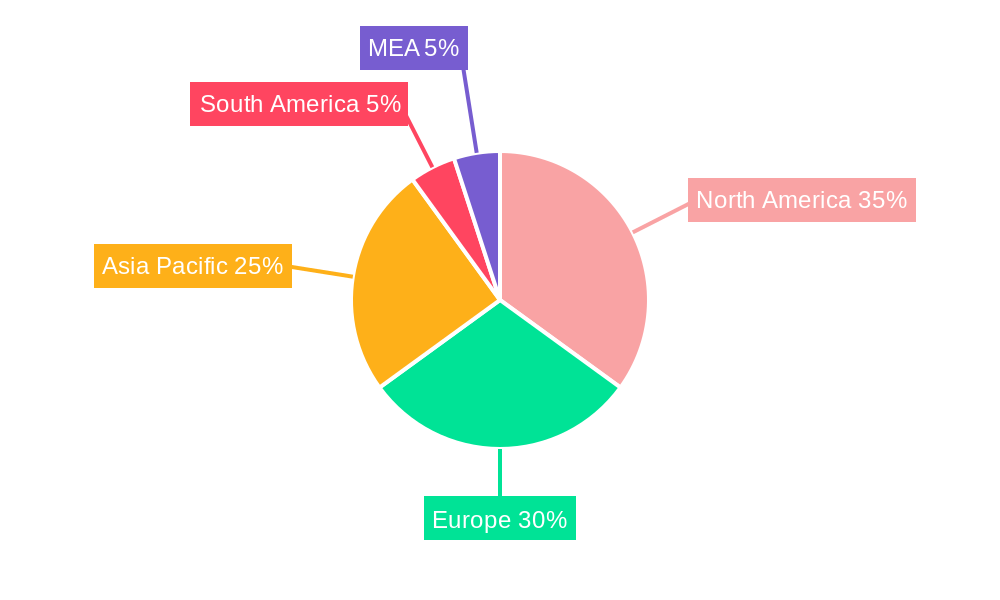
Analytical Instrumentation Market Regional Market Share
Geographic Coverage of Analytical Instrumentation Market
Analytical Instrumentation Market REPORT HIGHLIGHTS
| Aspects | Details |
|---|---|
| Study Period | 2020-2034 |
| Base Year | 2025 |
| Estimated Year | 2026 |
| Forecast Period | 2026-2034 |
| Historical Period | 2020-2025 |
| Growth Rate | CAGR of 5.7% from 2020-2034 |
| Segmentation |
|
Table of Contents
- 1. Introduction
- 1.1. Research Scope
- 1.2. Market Segmentation
- 1.3. Research Methodology
- 1.4. Definitions and Assumptions
- 2. Executive Summary
- 2.1. Introduction
- 3. Market Dynamics
- 3.1. Introduction
- 3.2. Market Drivers
- 3.2.1. Development of Precision Medicine
- 3.3. Market Restrains
- 3.3.1. ; Emergence of Digital Radiography and Flat Panel Detector Technology
- 3.4. Market Trends
- 3.4.1. Life Sciences Segment Expected to Hold Significant Market Share
- 4. Market Factor Analysis
- 4.1. Porters Five Forces
- 4.2. Supply/Value Chain
- 4.3. PESTEL analysis
- 4.4. Market Entropy
- 4.5. Patent/Trademark Analysis
- 5. Global Analytical Instrumentation Market Analysis, Insights and Forecast, 2020-2032
- 5.1. Market Analysis, Insights and Forecast - by Product Type
- 5.1.1. Chromatography
- 5.1.2. Molecular Analysis Spectroscopy
- 5.1.3. Elemental Analysis Spectroscopy
- 5.1.4. Mass Spectroscopy
- 5.1.5. Analytical Microscopes
- 5.1.6. Other Product Types
- 5.2. Market Analysis, Insights and Forecast - by End User
- 5.2.1. Life Sciences
- 5.2.2. Chemical and Petrochemical
- 5.2.3. Oil and Gas
- 5.2.4. Material Sciences
- 5.2.5. Food Testing
- 5.2.6. Water and Wastewater
- 5.2.7. Other End Users
- 5.3. Market Analysis, Insights and Forecast - by Region
- 5.3.1. North America
- 5.3.2. Europe
- 5.3.3. Asia Pacific
- 5.3.4. Rest of the World
- 5.1. Market Analysis, Insights and Forecast - by Product Type
- 6. North America Analytical Instrumentation Market Analysis, Insights and Forecast, 2020-2032
- 6.1. Market Analysis, Insights and Forecast - by Product Type
- 6.1.1. Chromatography
- 6.1.2. Molecular Analysis Spectroscopy
- 6.1.3. Elemental Analysis Spectroscopy
- 6.1.4. Mass Spectroscopy
- 6.1.5. Analytical Microscopes
- 6.1.6. Other Product Types
- 6.2. Market Analysis, Insights and Forecast - by End User
- 6.2.1. Life Sciences
- 6.2.2. Chemical and Petrochemical
- 6.2.3. Oil and Gas
- 6.2.4. Material Sciences
- 6.2.5. Food Testing
- 6.2.6. Water and Wastewater
- 6.2.7. Other End Users
- 6.1. Market Analysis, Insights and Forecast - by Product Type
- 7. Europe Analytical Instrumentation Market Analysis, Insights and Forecast, 2020-2032
- 7.1. Market Analysis, Insights and Forecast - by Product Type
- 7.1.1. Chromatography
- 7.1.2. Molecular Analysis Spectroscopy
- 7.1.3. Elemental Analysis Spectroscopy
- 7.1.4. Mass Spectroscopy
- 7.1.5. Analytical Microscopes
- 7.1.6. Other Product Types
- 7.2. Market Analysis, Insights and Forecast - by End User
- 7.2.1. Life Sciences
- 7.2.2. Chemical and Petrochemical
- 7.2.3. Oil and Gas
- 7.2.4. Material Sciences
- 7.2.5. Food Testing
- 7.2.6. Water and Wastewater
- 7.2.7. Other End Users
- 7.1. Market Analysis, Insights and Forecast - by Product Type
- 8. Asia Pacific Analytical Instrumentation Market Analysis, Insights and Forecast, 2020-2032
- 8.1. Market Analysis, Insights and Forecast - by Product Type
- 8.1.1. Chromatography
- 8.1.2. Molecular Analysis Spectroscopy
- 8.1.3. Elemental Analysis Spectroscopy
- 8.1.4. Mass Spectroscopy
- 8.1.5. Analytical Microscopes
- 8.1.6. Other Product Types
- 8.2. Market Analysis, Insights and Forecast - by End User
- 8.2.1. Life Sciences
- 8.2.2. Chemical and Petrochemical
- 8.2.3. Oil and Gas
- 8.2.4. Material Sciences
- 8.2.5. Food Testing
- 8.2.6. Water and Wastewater
- 8.2.7. Other End Users
- 8.1. Market Analysis, Insights and Forecast - by Product Type
- 9. Rest of the World Analytical Instrumentation Market Analysis, Insights and Forecast, 2020-2032
- 9.1. Market Analysis, Insights and Forecast - by Product Type
- 9.1.1. Chromatography
- 9.1.2. Molecular Analysis Spectroscopy
- 9.1.3. Elemental Analysis Spectroscopy
- 9.1.4. Mass Spectroscopy
- 9.1.5. Analytical Microscopes
- 9.1.6. Other Product Types
- 9.2. Market Analysis, Insights and Forecast - by End User
- 9.2.1. Life Sciences
- 9.2.2. Chemical and Petrochemical
- 9.2.3. Oil and Gas
- 9.2.4. Material Sciences
- 9.2.5. Food Testing
- 9.2.6. Water and Wastewater
- 9.2.7. Other End Users
- 9.1. Market Analysis, Insights and Forecast - by Product Type
- 10. Competitive Analysis
- 10.1. Global Market Share Analysis 2025
- 10.2. Company Profiles
- 10.2.1 Mettler Toledo International Inc
- 10.2.1.1. Overview
- 10.2.1.2. Products
- 10.2.1.3. SWOT Analysis
- 10.2.1.4. Recent Developments
- 10.2.1.5. Financials (Based on Availability)
- 10.2.2 Malvern Panalytical Ltd (Spectris company)
- 10.2.2.1. Overview
- 10.2.2.2. Products
- 10.2.2.3. SWOT Analysis
- 10.2.2.4. Recent Developments
- 10.2.2.5. Financials (Based on Availability)
- 10.2.3 Bio-Rad Laboratories Inc
- 10.2.3.1. Overview
- 10.2.3.2. Products
- 10.2.3.3. SWOT Analysis
- 10.2.3.4. Recent Developments
- 10.2.3.5. Financials (Based on Availability)
- 10.2.4 Thermo Fisher Scientific Inc
- 10.2.4.1. Overview
- 10.2.4.2. Products
- 10.2.4.3. SWOT Analysis
- 10.2.4.4. Recent Developments
- 10.2.4.5. Financials (Based on Availability)
- 10.2.5 Waters Corp
- 10.2.5.1. Overview
- 10.2.5.2. Products
- 10.2.5.3. SWOT Analysis
- 10.2.5.4. Recent Developments
- 10.2.5.5. Financials (Based on Availability)
- 10.2.6 Agilent Technologies Inc
- 10.2.6.1. Overview
- 10.2.6.2. Products
- 10.2.6.3. SWOT Analysis
- 10.2.6.4. Recent Developments
- 10.2.6.5. Financials (Based on Availability)
- 10.2.7 PerkinElmer Inc
- 10.2.7.1. Overview
- 10.2.7.2. Products
- 10.2.7.3. SWOT Analysis
- 10.2.7.4. Recent Developments
- 10.2.7.5. Financials (Based on Availability)
- 10.2.8 Bruker Corporation
- 10.2.8.1. Overview
- 10.2.8.2. Products
- 10.2.8.3. SWOT Analysis
- 10.2.8.4. Recent Developments
- 10.2.8.5. Financials (Based on Availability)
- 10.2.9 Shimadzu Corporation
- 10.2.9.1. Overview
- 10.2.9.2. Products
- 10.2.9.3. SWOT Analysis
- 10.2.9.4. Recent Developments
- 10.2.9.5. Financials (Based on Availability)
- 10.2.1 Mettler Toledo International Inc
List of Figures
- Figure 1: Global Analytical Instrumentation Market Revenue Breakdown (billion, %) by Region 2025 & 2033
- Figure 2: Global Analytical Instrumentation Market Volume Breakdown (K Unit, %) by Region 2025 & 2033
- Figure 3: North America Analytical Instrumentation Market Revenue (billion), by Product Type 2025 & 2033
- Figure 4: North America Analytical Instrumentation Market Volume (K Unit), by Product Type 2025 & 2033
- Figure 5: North America Analytical Instrumentation Market Revenue Share (%), by Product Type 2025 & 2033
- Figure 6: North America Analytical Instrumentation Market Volume Share (%), by Product Type 2025 & 2033
- Figure 7: North America Analytical Instrumentation Market Revenue (billion), by End User 2025 & 2033
- Figure 8: North America Analytical Instrumentation Market Volume (K Unit), by End User 2025 & 2033
- Figure 9: North America Analytical Instrumentation Market Revenue Share (%), by End User 2025 & 2033
- Figure 10: North America Analytical Instrumentation Market Volume Share (%), by End User 2025 & 2033
- Figure 11: North America Analytical Instrumentation Market Revenue (billion), by Country 2025 & 2033
- Figure 12: North America Analytical Instrumentation Market Volume (K Unit), by Country 2025 & 2033
- Figure 13: North America Analytical Instrumentation Market Revenue Share (%), by Country 2025 & 2033
- Figure 14: North America Analytical Instrumentation Market Volume Share (%), by Country 2025 & 2033
- Figure 15: Europe Analytical Instrumentation Market Revenue (billion), by Product Type 2025 & 2033
- Figure 16: Europe Analytical Instrumentation Market Volume (K Unit), by Product Type 2025 & 2033
- Figure 17: Europe Analytical Instrumentation Market Revenue Share (%), by Product Type 2025 & 2033
- Figure 18: Europe Analytical Instrumentation Market Volume Share (%), by Product Type 2025 & 2033
- Figure 19: Europe Analytical Instrumentation Market Revenue (billion), by End User 2025 & 2033
- Figure 20: Europe Analytical Instrumentation Market Volume (K Unit), by End User 2025 & 2033
- Figure 21: Europe Analytical Instrumentation Market Revenue Share (%), by End User 2025 & 2033
- Figure 22: Europe Analytical Instrumentation Market Volume Share (%), by End User 2025 & 2033
- Figure 23: Europe Analytical Instrumentation Market Revenue (billion), by Country 2025 & 2033
- Figure 24: Europe Analytical Instrumentation Market Volume (K Unit), by Country 2025 & 2033
- Figure 25: Europe Analytical Instrumentation Market Revenue Share (%), by Country 2025 & 2033
- Figure 26: Europe Analytical Instrumentation Market Volume Share (%), by Country 2025 & 2033
- Figure 27: Asia Pacific Analytical Instrumentation Market Revenue (billion), by Product Type 2025 & 2033
- Figure 28: Asia Pacific Analytical Instrumentation Market Volume (K Unit), by Product Type 2025 & 2033
- Figure 29: Asia Pacific Analytical Instrumentation Market Revenue Share (%), by Product Type 2025 & 2033
- Figure 30: Asia Pacific Analytical Instrumentation Market Volume Share (%), by Product Type 2025 & 2033
- Figure 31: Asia Pacific Analytical Instrumentation Market Revenue (billion), by End User 2025 & 2033
- Figure 32: Asia Pacific Analytical Instrumentation Market Volume (K Unit), by End User 2025 & 2033
- Figure 33: Asia Pacific Analytical Instrumentation Market Revenue Share (%), by End User 2025 & 2033
- Figure 34: Asia Pacific Analytical Instrumentation Market Volume Share (%), by End User 2025 & 2033
- Figure 35: Asia Pacific Analytical Instrumentation Market Revenue (billion), by Country 2025 & 2033
- Figure 36: Asia Pacific Analytical Instrumentation Market Volume (K Unit), by Country 2025 & 2033
- Figure 37: Asia Pacific Analytical Instrumentation Market Revenue Share (%), by Country 2025 & 2033
- Figure 38: Asia Pacific Analytical Instrumentation Market Volume Share (%), by Country 2025 & 2033
- Figure 39: Rest of the World Analytical Instrumentation Market Revenue (billion), by Product Type 2025 & 2033
- Figure 40: Rest of the World Analytical Instrumentation Market Volume (K Unit), by Product Type 2025 & 2033
- Figure 41: Rest of the World Analytical Instrumentation Market Revenue Share (%), by Product Type 2025 & 2033
- Figure 42: Rest of the World Analytical Instrumentation Market Volume Share (%), by Product Type 2025 & 2033
- Figure 43: Rest of the World Analytical Instrumentation Market Revenue (billion), by End User 2025 & 2033
- Figure 44: Rest of the World Analytical Instrumentation Market Volume (K Unit), by End User 2025 & 2033
- Figure 45: Rest of the World Analytical Instrumentation Market Revenue Share (%), by End User 2025 & 2033
- Figure 46: Rest of the World Analytical Instrumentation Market Volume Share (%), by End User 2025 & 2033
- Figure 47: Rest of the World Analytical Instrumentation Market Revenue (billion), by Country 2025 & 2033
- Figure 48: Rest of the World Analytical Instrumentation Market Volume (K Unit), by Country 2025 & 2033
- Figure 49: Rest of the World Analytical Instrumentation Market Revenue Share (%), by Country 2025 & 2033
- Figure 50: Rest of the World Analytical Instrumentation Market Volume Share (%), by Country 2025 & 2033
List of Tables
- Table 1: Global Analytical Instrumentation Market Revenue billion Forecast, by Product Type 2020 & 2033
- Table 2: Global Analytical Instrumentation Market Volume K Unit Forecast, by Product Type 2020 & 2033
- Table 3: Global Analytical Instrumentation Market Revenue billion Forecast, by End User 2020 & 2033
- Table 4: Global Analytical Instrumentation Market Volume K Unit Forecast, by End User 2020 & 2033
- Table 5: Global Analytical Instrumentation Market Revenue billion Forecast, by Region 2020 & 2033
- Table 6: Global Analytical Instrumentation Market Volume K Unit Forecast, by Region 2020 & 2033
- Table 7: Global Analytical Instrumentation Market Revenue billion Forecast, by Product Type 2020 & 2033
- Table 8: Global Analytical Instrumentation Market Volume K Unit Forecast, by Product Type 2020 & 2033
- Table 9: Global Analytical Instrumentation Market Revenue billion Forecast, by End User 2020 & 2033
- Table 10: Global Analytical Instrumentation Market Volume K Unit Forecast, by End User 2020 & 2033
- Table 11: Global Analytical Instrumentation Market Revenue billion Forecast, by Country 2020 & 2033
- Table 12: Global Analytical Instrumentation Market Volume K Unit Forecast, by Country 2020 & 2033
- Table 13: Global Analytical Instrumentation Market Revenue billion Forecast, by Product Type 2020 & 2033
- Table 14: Global Analytical Instrumentation Market Volume K Unit Forecast, by Product Type 2020 & 2033
- Table 15: Global Analytical Instrumentation Market Revenue billion Forecast, by End User 2020 & 2033
- Table 16: Global Analytical Instrumentation Market Volume K Unit Forecast, by End User 2020 & 2033
- Table 17: Global Analytical Instrumentation Market Revenue billion Forecast, by Country 2020 & 2033
- Table 18: Global Analytical Instrumentation Market Volume K Unit Forecast, by Country 2020 & 2033
- Table 19: Global Analytical Instrumentation Market Revenue billion Forecast, by Product Type 2020 & 2033
- Table 20: Global Analytical Instrumentation Market Volume K Unit Forecast, by Product Type 2020 & 2033
- Table 21: Global Analytical Instrumentation Market Revenue billion Forecast, by End User 2020 & 2033
- Table 22: Global Analytical Instrumentation Market Volume K Unit Forecast, by End User 2020 & 2033
- Table 23: Global Analytical Instrumentation Market Revenue billion Forecast, by Country 2020 & 2033
- Table 24: Global Analytical Instrumentation Market Volume K Unit Forecast, by Country 2020 & 2033
- Table 25: Global Analytical Instrumentation Market Revenue billion Forecast, by Product Type 2020 & 2033
- Table 26: Global Analytical Instrumentation Market Volume K Unit Forecast, by Product Type 2020 & 2033
- Table 27: Global Analytical Instrumentation Market Revenue billion Forecast, by End User 2020 & 2033
- Table 28: Global Analytical Instrumentation Market Volume K Unit Forecast, by End User 2020 & 2033
- Table 29: Global Analytical Instrumentation Market Revenue billion Forecast, by Country 2020 & 2033
- Table 30: Global Analytical Instrumentation Market Volume K Unit Forecast, by Country 2020 & 2033
Frequently Asked Questions
1. What is the projected Compound Annual Growth Rate (CAGR) of the Analytical Instrumentation Market?
The projected CAGR is approximately 5.7%.
2. Which companies are prominent players in the Analytical Instrumentation Market?
Key companies in the market include Mettler Toledo International Inc, Malvern Panalytical Ltd (Spectris company), Bio-Rad Laboratories Inc , Thermo Fisher Scientific Inc, Waters Corp, Agilent Technologies Inc, PerkinElmer Inc, Bruker Corporation, Shimadzu Corporation.
3. What are the main segments of the Analytical Instrumentation Market?
The market segments include Product Type, End User.
4. Can you provide details about the market size?
The market size is estimated to be USD 41.8 billion as of 2022.
5. What are some drivers contributing to market growth?
Development of Precision Medicine.
6. What are the notable trends driving market growth?
Life Sciences Segment Expected to Hold Significant Market Share.
7. Are there any restraints impacting market growth?
; Emergence of Digital Radiography and Flat Panel Detector Technology.
8. Can you provide examples of recent developments in the market?
February 2022: AMETEK Spectro Scientific announced the release of its online Fluid Management Academy (FMA). The FMA is an online learning platform offering customers a range of courses about Spectro Scientific's and Grabner Instruments' fluid analysis products for material sciences.
9. What pricing options are available for accessing the report?
Pricing options include single-user, multi-user, and enterprise licenses priced at USD 4750, USD 5250, and USD 8750 respectively.
10. Is the market size provided in terms of value or volume?
The market size is provided in terms of value, measured in billion and volume, measured in K Unit.
11. Are there any specific market keywords associated with the report?
Yes, the market keyword associated with the report is "Analytical Instrumentation Market," which aids in identifying and referencing the specific market segment covered.
12. How do I determine which pricing option suits my needs best?
The pricing options vary based on user requirements and access needs. Individual users may opt for single-user licenses, while businesses requiring broader access may choose multi-user or enterprise licenses for cost-effective access to the report.
13. Are there any additional resources or data provided in the Analytical Instrumentation Market report?
While the report offers comprehensive insights, it's advisable to review the specific contents or supplementary materials provided to ascertain if additional resources or data are available.
14. How can I stay updated on further developments or reports in the Analytical Instrumentation Market?
To stay informed about further developments, trends, and reports in the Analytical Instrumentation Market, consider subscribing to industry newsletters, following relevant companies and organizations, or regularly checking reputable industry news sources and publications.
Methodology
Step 1 - Identification of Relevant Samples Size from Population Database



Step 2 - Approaches for Defining Global Market Size (Value, Volume* & Price*)

Note*: In applicable scenarios
Step 3 - Data Sources
Primary Research
- Web Analytics
- Survey Reports
- Research Institute
- Latest Research Reports
- Opinion Leaders
Secondary Research
- Annual Reports
- White Paper
- Latest Press Release
- Industry Association
- Paid Database
- Investor Presentations

Step 4 - Data Triangulation
Involves using different sources of information in order to increase the validity of a study
These sources are likely to be stakeholders in a program - participants, other researchers, program staff, other community members, and so on.
Then we put all data in single framework & apply various statistical tools to find out the dynamic on the market.
During the analysis stage, feedback from the stakeholder groups would be compared to determine areas of agreement as well as areas of divergence