

Key Insights
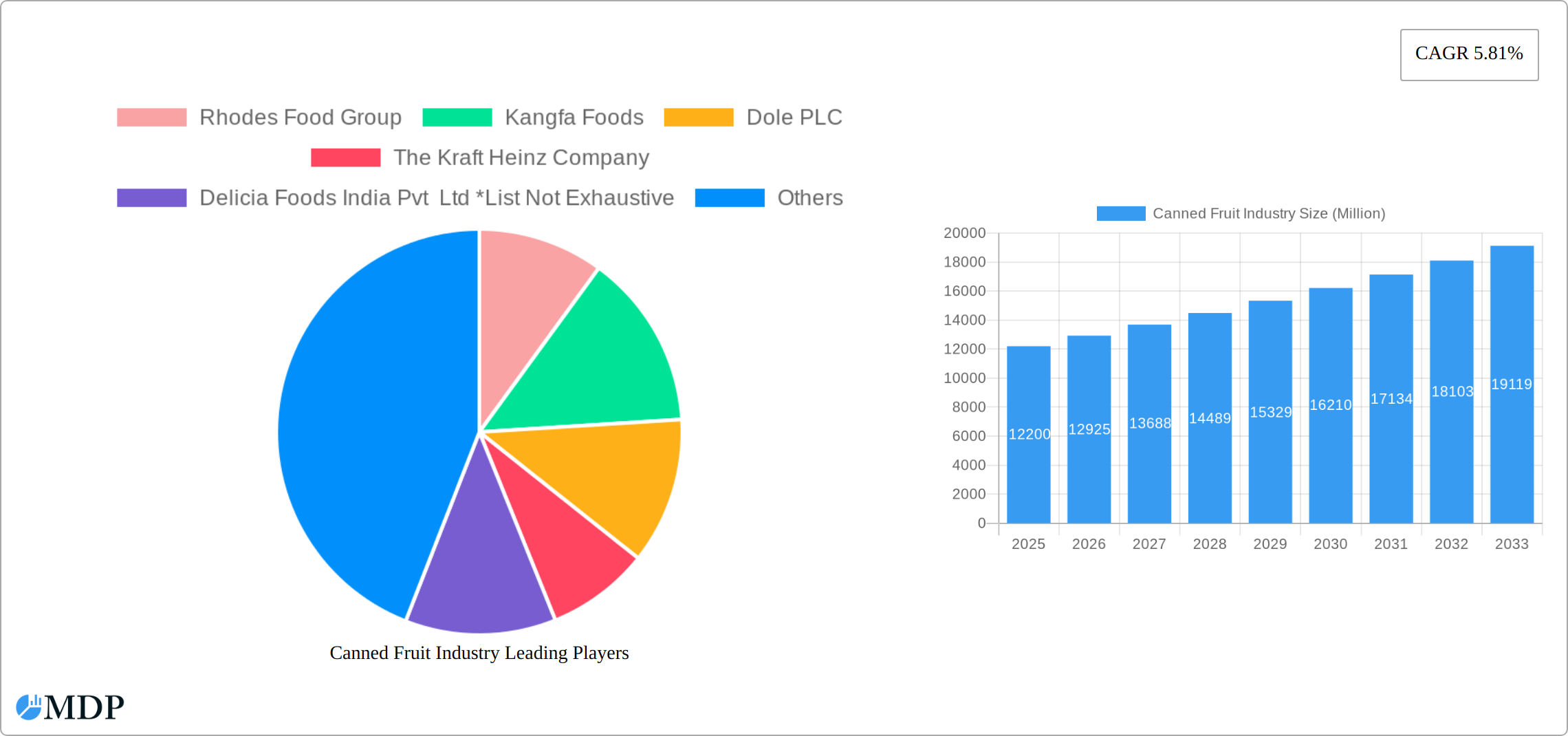
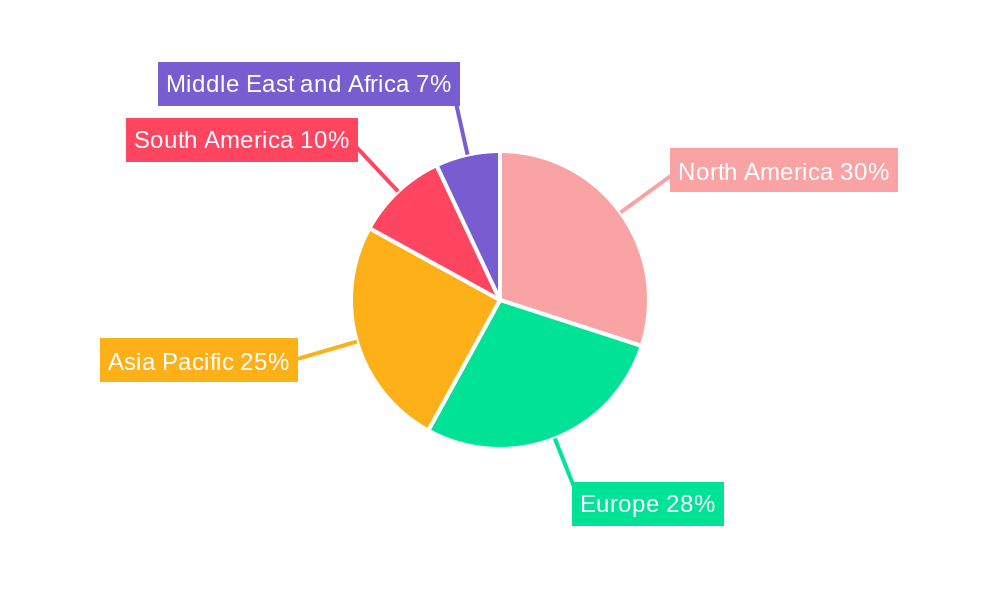
The global canned fruit market, valued at $12.20 billion in 2025, is projected to experience robust growth, driven by several key factors. Convenience, extended shelf life, and affordability make canned fruits a popular choice for consumers, particularly in busy lifestyles. Increasing health consciousness is also fueling demand for canned fruits as a source of vitamins and minerals, though this is somewhat mitigated by concerns regarding added sugar and preservatives. The market is segmented by fruit type (peaches, pineapples, mandarin oranges, pears, and others), form (whole and cut fruits), and distribution channel (supermarkets/hypermarkets, convenience stores, online retail, and others). Peaches and pineapples are likely the leading fruit types due to their widespread appeal and suitability for canning. Supermarkets and hypermarkets currently dominate distribution, but online retail is expected to show significant growth, driven by evolving consumer shopping habits and e-commerce expansion. Geographical distribution shows a relatively even split across North America, Europe, and Asia-Pacific, with developing economies in Asia-Pacific exhibiting high growth potential due to rising disposable incomes and changing dietary preferences. However, fluctuating raw material prices and seasonal availability of fruits pose challenges to consistent supply and pricing. Competitive pressures among major players like Rhodes Food Group, Dole PLC, and Del Monte Food Inc., are driving innovation in product offerings (e.g., organic options, reduced sugar varieties) and distribution strategies. The 5.81% CAGR suggests continued market expansion through 2033, albeit at a moderate pace compared to some other food segments.
The continued growth of the canned fruit market is contingent upon addressing consumer concerns regarding sugar content and preservatives. Companies are actively responding by offering healthier alternatives, such as reduced-sugar options and those utilizing natural preservatives. Furthermore, successful market expansion hinges on efficient supply chain management to mitigate the effects of seasonal fluctuations in fruit availability and raw material costs. Strategic partnerships with farmers and improved logistics will play a vital role in ensuring consistent product availability and affordability. Marketing efforts focusing on the convenience and nutritional benefits of canned fruits, particularly targeted at health-conscious consumers, will be crucial in driving further market penetration. Growth will likely be strongest in emerging markets with expanding middle classes and increased demand for convenient and affordable food options. The competitive landscape will continue to evolve, with companies investing in product diversification, innovative packaging solutions, and expanding their distribution networks.
Canned Fruit Industry: A Comprehensive Market Report (2019-2033)
This comprehensive report provides a detailed analysis of the global canned fruit industry, offering invaluable insights for industry stakeholders, investors, and strategic decision-makers. With a focus on market dynamics, leading players, and future trends, this report covers the period 2019-2033, using 2025 as the base and estimated year. The report projects a market value exceeding XX Million by 2033, driven by several key factors explored within.
Canned Fruit Industry Market Dynamics & Concentration
The global canned fruit market, a sector valued at approximately XX Million USD in 2025, presents a moderately concentrated competitive landscape. Key players such as Dole PLC, The Kraft Heinz Company, and Del Monte Foods, Inc. command substantial market share. These industry giants are complemented by a network of regional players, including Xiamen Gulong Group Co Ltd and Delicia Foods India Pvt Ltd, each catering to specific geographic niches and consumer preferences. The level of market concentration is shaped by several interconnected factors, most notably economies of scale in both production and distribution, established brand recognition, and strategic access to robust global supply chains. Smaller players often compete by focusing on niche markets, offering specialized products, or emphasizing sustainable practices.
Innovation Drivers: The canned fruit industry is experiencing a wave of innovation across various aspects of its operations. This includes a significant push toward sustainable and eco-friendly packaging alternatives (e.g., recyclable materials, reduced packaging size), a diversification of product offerings (e.g., organic, low-sugar, functional canned fruits enriched with added vitamins or antioxidants), and the implementation of advanced processing techniques to preserve fruit quality, texture, and nutritional value throughout the extended shelf life.
Regulatory Landscape and its Impact: Stringent food safety regulations and detailed labeling requirements, which vary considerably across different regions, exert significant influence on production processes and market access. Furthermore, fluctuations in agricultural policies (e.g., subsidies, tariffs) and import/export tariffs introduce an element of volatility into the market, impacting both production costs and pricing strategies.
Competitive Pressures from Substitute Products: The canned fruit industry faces competition from a range of substitute products, including fresh fruit, frozen fruit, and fruit juices. However, the inherent convenience and significantly extended shelf life of canned fruits remain key drivers of consumer demand, especially for consumers seeking longer-term storage options or lacking consistent access to fresh produce.
Evolving End-User Preferences: The growing emphasis on health and wellness among consumers has led to increased demand for healthier canned fruit options, such as low-sugar and organic varieties. While convenience remains a pivotal factor, particularly for busy consumers and those with limited time for food preparation, the nutritional aspects of canned fruits are increasingly important purchase criteria.
Mergers and Acquisitions (M&A) Activity: The canned fruit industry has witnessed a notable level of merger and acquisition activity in recent years, with approximately xx deals recorded between 2019 and 2024. These consolidation efforts often center on expanding market reach, enriching product portfolios, and streamlining supply chains for greater efficiency. Major players are actively pursuing strategic acquisitions to gain access to new technologies, emerging markets, and specialized expertise.
Canned Fruit Industry Industry Trends & Analysis
The canned fruit market is projected to achieve a Compound Annual Growth Rate (CAGR) of xx% over the forecast period (2025-2033). This growth is propelled by several key factors: rising disposable incomes in emerging economies, the ongoing trend of urbanization, and evolving lifestyles that favor convenient and readily available food options. Technological advancements in processing and packaging technologies play a significant supporting role in enhancing both product quality and market competitiveness. While market penetration is high in developed nations, considerable growth potential exists in developing regions with expanding middle classes and increasing demand for processed foods. In response to consumer preferences, the industry is steadily adapting by prioritizing the development of healthier options, such as organic and low-sugar variants. The competitive landscape remains dynamic, with leading players focusing on product differentiation through strong branding, continuous product innovation, and the optimization of supply chain management for greater efficiency. The increasing adoption of e-commerce channels presents both new opportunities for growth and enhanced distribution efficiency.
Leading Markets & Segments in Canned Fruit Industry
The North American and European regions currently dominate the canned fruit market, driven by high consumption rates and established distribution networks. However, Asia-Pacific is projected to witness significant growth in the forecast period due to rising disposable incomes and increasing demand for convenient and affordable food options.
Dominant Segments:
- Fruit Type: Pineapple and Peaches represent the largest segments due to their widespread appeal and adaptability to canning. Mandarin oranges also hold significant market share.
- Form: Cut fruits dominate the market due to their convenience and versatility in various food applications.
- Distribution Channel: Supermarkets/hypermarkets represent the major distribution channel, followed by convenience stores. Online retail is witnessing rapid growth, particularly in developed countries.
Key Drivers by Region:
- North America: Strong retail infrastructure, high consumer spending power, and established distribution networks.
- Europe: Similar to North America, high consumer spending power and established distribution.
- Asia-Pacific: Rapidly rising disposable incomes, population growth, and urbanization are driving growth.
Canned Fruit Industry Product Developments
Recent product innovations showcase a strong industry focus on catering to evolving consumer preferences. This is evident in the introduction of convenient single-serve packaging formats, advanced shelf-life extending technologies, and the growing availability of organic and low-sugar varieties. This concentrated effort on healthier options and convenient formats enhances the overall competitiveness of canned fruits against competing fresh and frozen alternatives, allowing the industry to maintain its market relevance and attract health-conscious consumers.
Key Drivers of Canned Fruit Industry Growth
The expansion of the canned fruit industry is fueled by several interconnected factors:
- Technological Advancements: Continuous improvements in processing techniques and packaging technologies directly contribute to higher product quality, enhanced nutritional preservation, and extended shelf life.
- Economic Growth in Emerging Markets: Rising disposable incomes in developing economies are leading to increased consumption of convenient and affordable food products, including canned fruits.
- Supportive Regulatory Frameworks: Favorable governmental policies promoting food processing, agricultural development, and sustainable practices create a positive environment for industry growth.
- Changing Consumer Lifestyles: Busy lifestyles and the increasing demand for convenient food solutions significantly boost the demand for ready-to-eat options like canned fruits.
Challenges in the Canned Fruit Industry Market
The industry faces several challenges:
- Fluctuating raw material prices: Price volatility in agricultural commodities affects production costs and profitability.
- Intense competition: The presence of numerous players and substitute products creates pressure on pricing and margins.
- Stringent regulatory requirements: Compliance with food safety and labeling regulations adds to production costs.
Emerging Opportunities in Canned Fruit Industry
The canned fruit industry is poised for growth through:
- Expansion into new markets: Untapped potential exists in developing regions with rising disposable incomes.
- Strategic partnerships: Collaboration with retailers and food service providers can enhance market reach and distribution efficiency.
- Innovation in product offerings: Developing unique flavors, functional ingredients, and eco-friendly packaging can boost consumer appeal.
Leading Players in the Canned Fruit Industry Sector
- Rhodes Food Group
- Kangfa Foods
- Dole PLC
- The Kraft Heinz Company
- Delicia Foods India Pvt Ltd
- CHB Group
- Del Monte Food Inc
- Xiamen Gulong Group Co Ltd
- Roland Foods
- Seneca Foods
Key Milestones in Canned Fruit Industry Industry
- 2020: Several major players invested heavily in sustainable packaging solutions.
- 2022: A significant merger between two medium-sized canned fruit producers expanded market share in the European region.
- 2023: Launch of several new product lines featuring organic and functional canned fruits.
Strategic Outlook for Canned Fruit Industry Market
The canned fruit market is poised for continued growth driven by health-conscious consumer preferences and expansion into emerging markets. Strategic opportunities exist in product diversification, sustainable packaging, and leveraging e-commerce channels for efficient distribution. Companies focusing on innovation and adapting to consumer demands will be best positioned for success in the coming years.
Canned Fruit Industry Segmentation
-
1. Fruit Type
- 1.1. Peaches
- 1.2. Pineapple
- 1.3. Mandarin oranges
- 1.4. Pears
- 1.5. Other Fruit Types
-
2. Form
- 2.1. Whole fruits
- 2.2. Cut fruits
-
3. Distribution Channel
- 3.1. Supermarkets/Hypermarkets
- 3.2. Convenience Stores
- 3.3. Online Retail Stores
- 3.4. Other Distribution Channels
Canned Fruit Industry Segmentation By Geography
-
1. North America
- 1.1. United States
- 1.2. Canada
- 1.3. Mexico
- 1.4. Rest of North America
-
2. Europe
- 2.1. Spain
- 2.2. United Kingdom
- 2.3. Germany
- 2.4. France
- 2.5. Italy
- 2.6. Russia
- 2.7. Rest of Europe
-
3. Asia Pacific
- 3.1. China
- 3.2. Japan
- 3.3. India
- 3.4. Australia
- 3.5. Rest of Asia Pacific
-
4. South America
- 4.1. Brazil
- 4.2. Argentina
- 4.3. Rest of South America
-
5. Middle East and Africa
- 5.1. South Africa
- 5.2. Saudi Arabia
- 5.3. Rest of Middle East and Africa
Canned Fruit Industry REPORT HIGHLIGHTS
| Aspects | Details |
|---|---|
| Study Period | 2019-2033 |
| Base Year | 2024 |
| Estimated Year | 2025 |
| Forecast Period | 2025-2033 |
| Historical Period | 2019-2024 |
| Growth Rate | CAGR of 5.81% from 2019-2033 |
| Segmentation |
|
Table of Contents
- 1. Introduction
- 1.1. Research Scope
- 1.2. Market Segmentation
- 1.3. Research Methodology
- 1.4. Definitions and Assumptions
- 2. Executive Summary
- 2.1. Introduction
- 3. Market Dynamics
- 3.1. Introduction
- 3.2. Market Drivers
- 3.2.1. Growing Awareness of Functional Benefits of Carotenoids; Consumption of Health and Wellness Products
- 3.3. Market Restrains
- 3.3.1. High Processing Cost and Low Yield of Natural Food Colors
- 3.4. Market Trends
- 3.4.1 Growing Consumer Preference Towards Fresh
- 3.4.2 Convenient Fruits Offering
- 4. Market Factor Analysis
- 4.1. Porters Five Forces
- 4.2. Supply/Value Chain
- 4.3. PESTEL analysis
- 4.4. Market Entropy
- 4.5. Patent/Trademark Analysis
- 5. Global Canned Fruit Industry Analysis, Insights and Forecast, 2019-2031
- 5.1. Market Analysis, Insights and Forecast - by Fruit Type
- 5.1.1. Peaches
- 5.1.2. Pineapple
- 5.1.3. Mandarin oranges
- 5.1.4. Pears
- 5.1.5. Other Fruit Types
- 5.2. Market Analysis, Insights and Forecast - by Form
- 5.2.1. Whole fruits
- 5.2.2. Cut fruits
- 5.3. Market Analysis, Insights and Forecast - by Distribution Channel
- 5.3.1. Supermarkets/Hypermarkets
- 5.3.2. Convenience Stores
- 5.3.3. Online Retail Stores
- 5.3.4. Other Distribution Channels
- 5.4. Market Analysis, Insights and Forecast - by Region
- 5.4.1. North America
- 5.4.2. Europe
- 5.4.3. Asia Pacific
- 5.4.4. South America
- 5.4.5. Middle East and Africa
- 5.1. Market Analysis, Insights and Forecast - by Fruit Type
- 6. North America Canned Fruit Industry Analysis, Insights and Forecast, 2019-2031
- 6.1. Market Analysis, Insights and Forecast - by Fruit Type
- 6.1.1. Peaches
- 6.1.2. Pineapple
- 6.1.3. Mandarin oranges
- 6.1.4. Pears
- 6.1.5. Other Fruit Types
- 6.2. Market Analysis, Insights and Forecast - by Form
- 6.2.1. Whole fruits
- 6.2.2. Cut fruits
- 6.3. Market Analysis, Insights and Forecast - by Distribution Channel
- 6.3.1. Supermarkets/Hypermarkets
- 6.3.2. Convenience Stores
- 6.3.3. Online Retail Stores
- 6.3.4. Other Distribution Channels
- 6.1. Market Analysis, Insights and Forecast - by Fruit Type
- 7. Europe Canned Fruit Industry Analysis, Insights and Forecast, 2019-2031
- 7.1. Market Analysis, Insights and Forecast - by Fruit Type
- 7.1.1. Peaches
- 7.1.2. Pineapple
- 7.1.3. Mandarin oranges
- 7.1.4. Pears
- 7.1.5. Other Fruit Types
- 7.2. Market Analysis, Insights and Forecast - by Form
- 7.2.1. Whole fruits
- 7.2.2. Cut fruits
- 7.3. Market Analysis, Insights and Forecast - by Distribution Channel
- 7.3.1. Supermarkets/Hypermarkets
- 7.3.2. Convenience Stores
- 7.3.3. Online Retail Stores
- 7.3.4. Other Distribution Channels
- 7.1. Market Analysis, Insights and Forecast - by Fruit Type
- 8. Asia Pacific Canned Fruit Industry Analysis, Insights and Forecast, 2019-2031
- 8.1. Market Analysis, Insights and Forecast - by Fruit Type
- 8.1.1. Peaches
- 8.1.2. Pineapple
- 8.1.3. Mandarin oranges
- 8.1.4. Pears
- 8.1.5. Other Fruit Types
- 8.2. Market Analysis, Insights and Forecast - by Form
- 8.2.1. Whole fruits
- 8.2.2. Cut fruits
- 8.3. Market Analysis, Insights and Forecast - by Distribution Channel
- 8.3.1. Supermarkets/Hypermarkets
- 8.3.2. Convenience Stores
- 8.3.3. Online Retail Stores
- 8.3.4. Other Distribution Channels
- 8.1. Market Analysis, Insights and Forecast - by Fruit Type
- 9. South America Canned Fruit Industry Analysis, Insights and Forecast, 2019-2031
- 9.1. Market Analysis, Insights and Forecast - by Fruit Type
- 9.1.1. Peaches
- 9.1.2. Pineapple
- 9.1.3. Mandarin oranges
- 9.1.4. Pears
- 9.1.5. Other Fruit Types
- 9.2. Market Analysis, Insights and Forecast - by Form
- 9.2.1. Whole fruits
- 9.2.2. Cut fruits
- 9.3. Market Analysis, Insights and Forecast - by Distribution Channel
- 9.3.1. Supermarkets/Hypermarkets
- 9.3.2. Convenience Stores
- 9.3.3. Online Retail Stores
- 9.3.4. Other Distribution Channels
- 9.1. Market Analysis, Insights and Forecast - by Fruit Type
- 10. Middle East and Africa Canned Fruit Industry Analysis, Insights and Forecast, 2019-2031
- 10.1. Market Analysis, Insights and Forecast - by Fruit Type
- 10.1.1. Peaches
- 10.1.2. Pineapple
- 10.1.3. Mandarin oranges
- 10.1.4. Pears
- 10.1.5. Other Fruit Types
- 10.2. Market Analysis, Insights and Forecast - by Form
- 10.2.1. Whole fruits
- 10.2.2. Cut fruits
- 10.3. Market Analysis, Insights and Forecast - by Distribution Channel
- 10.3.1. Supermarkets/Hypermarkets
- 10.3.2. Convenience Stores
- 10.3.3. Online Retail Stores
- 10.3.4. Other Distribution Channels
- 10.1. Market Analysis, Insights and Forecast - by Fruit Type
- 11. North America Canned Fruit Industry Analysis, Insights and Forecast, 2019-2031
- 11.1. Market Analysis, Insights and Forecast - By Country/Sub-region
- 11.1.1 United States
- 11.1.2 Canada
- 11.1.3 Mexico
- 11.1.4 Rest of North America
- 12. Europe Canned Fruit Industry Analysis, Insights and Forecast, 2019-2031
- 12.1. Market Analysis, Insights and Forecast - By Country/Sub-region
- 12.1.1 Spain
- 12.1.2 United Kingdom
- 12.1.3 Germany
- 12.1.4 France
- 12.1.5 Italy
- 12.1.6 Russia
- 12.1.7 Rest of Europe
- 13. Asia Pacific Canned Fruit Industry Analysis, Insights and Forecast, 2019-2031
- 13.1. Market Analysis, Insights and Forecast - By Country/Sub-region
- 13.1.1 China
- 13.1.2 Japan
- 13.1.3 India
- 13.1.4 Australia
- 13.1.5 Rest of Asia Pacific
- 14. South America Canned Fruit Industry Analysis, Insights and Forecast, 2019-2031
- 14.1. Market Analysis, Insights and Forecast - By Country/Sub-region
- 14.1.1 Brazil
- 14.1.2 Argentina
- 14.1.3 Rest of South America
- 15. Middle East and Africa Canned Fruit Industry Analysis, Insights and Forecast, 2019-2031
- 15.1. Market Analysis, Insights and Forecast - By Country/Sub-region
- 15.1.1 South Africa
- 15.1.2 Saudi Arabia
- 15.1.3 Rest of Middle East and Africa
- 16. Competitive Analysis
- 16.1. Global Market Share Analysis 2024
- 16.2. Company Profiles
- 16.2.1 Rhodes Food Group
- 16.2.1.1. Overview
- 16.2.1.2. Products
- 16.2.1.3. SWOT Analysis
- 16.2.1.4. Recent Developments
- 16.2.1.5. Financials (Based on Availability)
- 16.2.2 Kangfa Foods
- 16.2.2.1. Overview
- 16.2.2.2. Products
- 16.2.2.3. SWOT Analysis
- 16.2.2.4. Recent Developments
- 16.2.2.5. Financials (Based on Availability)
- 16.2.3 Dole PLC
- 16.2.3.1. Overview
- 16.2.3.2. Products
- 16.2.3.3. SWOT Analysis
- 16.2.3.4. Recent Developments
- 16.2.3.5. Financials (Based on Availability)
- 16.2.4 The Kraft Heinz Company
- 16.2.4.1. Overview
- 16.2.4.2. Products
- 16.2.4.3. SWOT Analysis
- 16.2.4.4. Recent Developments
- 16.2.4.5. Financials (Based on Availability)
- 16.2.5 Delicia Foods India Pvt Ltd *List Not Exhaustive
- 16.2.5.1. Overview
- 16.2.5.2. Products
- 16.2.5.3. SWOT Analysis
- 16.2.5.4. Recent Developments
- 16.2.5.5. Financials (Based on Availability)
- 16.2.6 CHB Group
- 16.2.6.1. Overview
- 16.2.6.2. Products
- 16.2.6.3. SWOT Analysis
- 16.2.6.4. Recent Developments
- 16.2.6.5. Financials (Based on Availability)
- 16.2.7 Del Monte Food Inc
- 16.2.7.1. Overview
- 16.2.7.2. Products
- 16.2.7.3. SWOT Analysis
- 16.2.7.4. Recent Developments
- 16.2.7.5. Financials (Based on Availability)
- 16.2.8 Xiamen Gulong Group Co Ltd
- 16.2.8.1. Overview
- 16.2.8.2. Products
- 16.2.8.3. SWOT Analysis
- 16.2.8.4. Recent Developments
- 16.2.8.5. Financials (Based on Availability)
- 16.2.9 Roland Foods
- 16.2.9.1. Overview
- 16.2.9.2. Products
- 16.2.9.3. SWOT Analysis
- 16.2.9.4. Recent Developments
- 16.2.9.5. Financials (Based on Availability)
- 16.2.10 Seneca Foods
- 16.2.10.1. Overview
- 16.2.10.2. Products
- 16.2.10.3. SWOT Analysis
- 16.2.10.4. Recent Developments
- 16.2.10.5. Financials (Based on Availability)
- 16.2.1 Rhodes Food Group
List of Figures
- Figure 1: Global Canned Fruit Industry Revenue Breakdown (Million, %) by Region 2024 & 2032
- Figure 2: North America Canned Fruit Industry Revenue (Million), by Country 2024 & 2032
- Figure 3: North America Canned Fruit Industry Revenue Share (%), by Country 2024 & 2032
- Figure 4: Europe Canned Fruit Industry Revenue (Million), by Country 2024 & 2032
- Figure 5: Europe Canned Fruit Industry Revenue Share (%), by Country 2024 & 2032
- Figure 6: Asia Pacific Canned Fruit Industry Revenue (Million), by Country 2024 & 2032
- Figure 7: Asia Pacific Canned Fruit Industry Revenue Share (%), by Country 2024 & 2032
- Figure 8: South America Canned Fruit Industry Revenue (Million), by Country 2024 & 2032
- Figure 9: South America Canned Fruit Industry Revenue Share (%), by Country 2024 & 2032
- Figure 10: Middle East and Africa Canned Fruit Industry Revenue (Million), by Country 2024 & 2032
- Figure 11: Middle East and Africa Canned Fruit Industry Revenue Share (%), by Country 2024 & 2032
- Figure 12: North America Canned Fruit Industry Revenue (Million), by Fruit Type 2024 & 2032
- Figure 13: North America Canned Fruit Industry Revenue Share (%), by Fruit Type 2024 & 2032
- Figure 14: North America Canned Fruit Industry Revenue (Million), by Form 2024 & 2032
- Figure 15: North America Canned Fruit Industry Revenue Share (%), by Form 2024 & 2032
- Figure 16: North America Canned Fruit Industry Revenue (Million), by Distribution Channel 2024 & 2032
- Figure 17: North America Canned Fruit Industry Revenue Share (%), by Distribution Channel 2024 & 2032
- Figure 18: North America Canned Fruit Industry Revenue (Million), by Country 2024 & 2032
- Figure 19: North America Canned Fruit Industry Revenue Share (%), by Country 2024 & 2032
- Figure 20: Europe Canned Fruit Industry Revenue (Million), by Fruit Type 2024 & 2032
- Figure 21: Europe Canned Fruit Industry Revenue Share (%), by Fruit Type 2024 & 2032
- Figure 22: Europe Canned Fruit Industry Revenue (Million), by Form 2024 & 2032
- Figure 23: Europe Canned Fruit Industry Revenue Share (%), by Form 2024 & 2032
- Figure 24: Europe Canned Fruit Industry Revenue (Million), by Distribution Channel 2024 & 2032
- Figure 25: Europe Canned Fruit Industry Revenue Share (%), by Distribution Channel 2024 & 2032
- Figure 26: Europe Canned Fruit Industry Revenue (Million), by Country 2024 & 2032
- Figure 27: Europe Canned Fruit Industry Revenue Share (%), by Country 2024 & 2032
- Figure 28: Asia Pacific Canned Fruit Industry Revenue (Million), by Fruit Type 2024 & 2032
- Figure 29: Asia Pacific Canned Fruit Industry Revenue Share (%), by Fruit Type 2024 & 2032
- Figure 30: Asia Pacific Canned Fruit Industry Revenue (Million), by Form 2024 & 2032
- Figure 31: Asia Pacific Canned Fruit Industry Revenue Share (%), by Form 2024 & 2032
- Figure 32: Asia Pacific Canned Fruit Industry Revenue (Million), by Distribution Channel 2024 & 2032
- Figure 33: Asia Pacific Canned Fruit Industry Revenue Share (%), by Distribution Channel 2024 & 2032
- Figure 34: Asia Pacific Canned Fruit Industry Revenue (Million), by Country 2024 & 2032
- Figure 35: Asia Pacific Canned Fruit Industry Revenue Share (%), by Country 2024 & 2032
- Figure 36: South America Canned Fruit Industry Revenue (Million), by Fruit Type 2024 & 2032
- Figure 37: South America Canned Fruit Industry Revenue Share (%), by Fruit Type 2024 & 2032
- Figure 38: South America Canned Fruit Industry Revenue (Million), by Form 2024 & 2032
- Figure 39: South America Canned Fruit Industry Revenue Share (%), by Form 2024 & 2032
- Figure 40: South America Canned Fruit Industry Revenue (Million), by Distribution Channel 2024 & 2032
- Figure 41: South America Canned Fruit Industry Revenue Share (%), by Distribution Channel 2024 & 2032
- Figure 42: South America Canned Fruit Industry Revenue (Million), by Country 2024 & 2032
- Figure 43: South America Canned Fruit Industry Revenue Share (%), by Country 2024 & 2032
- Figure 44: Middle East and Africa Canned Fruit Industry Revenue (Million), by Fruit Type 2024 & 2032
- Figure 45: Middle East and Africa Canned Fruit Industry Revenue Share (%), by Fruit Type 2024 & 2032
- Figure 46: Middle East and Africa Canned Fruit Industry Revenue (Million), by Form 2024 & 2032
- Figure 47: Middle East and Africa Canned Fruit Industry Revenue Share (%), by Form 2024 & 2032
- Figure 48: Middle East and Africa Canned Fruit Industry Revenue (Million), by Distribution Channel 2024 & 2032
- Figure 49: Middle East and Africa Canned Fruit Industry Revenue Share (%), by Distribution Channel 2024 & 2032
- Figure 50: Middle East and Africa Canned Fruit Industry Revenue (Million), by Country 2024 & 2032
- Figure 51: Middle East and Africa Canned Fruit Industry Revenue Share (%), by Country 2024 & 2032
List of Tables
- Table 1: Global Canned Fruit Industry Revenue Million Forecast, by Region 2019 & 2032
- Table 2: Global Canned Fruit Industry Revenue Million Forecast, by Fruit Type 2019 & 2032
- Table 3: Global Canned Fruit Industry Revenue Million Forecast, by Form 2019 & 2032
- Table 4: Global Canned Fruit Industry Revenue Million Forecast, by Distribution Channel 2019 & 2032
- Table 5: Global Canned Fruit Industry Revenue Million Forecast, by Region 2019 & 2032
- Table 6: Global Canned Fruit Industry Revenue Million Forecast, by Country 2019 & 2032
- Table 7: United States Canned Fruit Industry Revenue (Million) Forecast, by Application 2019 & 2032
- Table 8: Canada Canned Fruit Industry Revenue (Million) Forecast, by Application 2019 & 2032
- Table 9: Mexico Canned Fruit Industry Revenue (Million) Forecast, by Application 2019 & 2032
- Table 10: Rest of North America Canned Fruit Industry Revenue (Million) Forecast, by Application 2019 & 2032
- Table 11: Global Canned Fruit Industry Revenue Million Forecast, by Country 2019 & 2032
- Table 12: Spain Canned Fruit Industry Revenue (Million) Forecast, by Application 2019 & 2032
- Table 13: United Kingdom Canned Fruit Industry Revenue (Million) Forecast, by Application 2019 & 2032
- Table 14: Germany Canned Fruit Industry Revenue (Million) Forecast, by Application 2019 & 2032
- Table 15: France Canned Fruit Industry Revenue (Million) Forecast, by Application 2019 & 2032
- Table 16: Italy Canned Fruit Industry Revenue (Million) Forecast, by Application 2019 & 2032
- Table 17: Russia Canned Fruit Industry Revenue (Million) Forecast, by Application 2019 & 2032
- Table 18: Rest of Europe Canned Fruit Industry Revenue (Million) Forecast, by Application 2019 & 2032
- Table 19: Global Canned Fruit Industry Revenue Million Forecast, by Country 2019 & 2032
- Table 20: China Canned Fruit Industry Revenue (Million) Forecast, by Application 2019 & 2032
- Table 21: Japan Canned Fruit Industry Revenue (Million) Forecast, by Application 2019 & 2032
- Table 22: India Canned Fruit Industry Revenue (Million) Forecast, by Application 2019 & 2032
- Table 23: Australia Canned Fruit Industry Revenue (Million) Forecast, by Application 2019 & 2032
- Table 24: Rest of Asia Pacific Canned Fruit Industry Revenue (Million) Forecast, by Application 2019 & 2032
- Table 25: Global Canned Fruit Industry Revenue Million Forecast, by Country 2019 & 2032
- Table 26: Brazil Canned Fruit Industry Revenue (Million) Forecast, by Application 2019 & 2032
- Table 27: Argentina Canned Fruit Industry Revenue (Million) Forecast, by Application 2019 & 2032
- Table 28: Rest of South America Canned Fruit Industry Revenue (Million) Forecast, by Application 2019 & 2032
- Table 29: Global Canned Fruit Industry Revenue Million Forecast, by Country 2019 & 2032
- Table 30: South Africa Canned Fruit Industry Revenue (Million) Forecast, by Application 2019 & 2032
- Table 31: Saudi Arabia Canned Fruit Industry Revenue (Million) Forecast, by Application 2019 & 2032
- Table 32: Rest of Middle East and Africa Canned Fruit Industry Revenue (Million) Forecast, by Application 2019 & 2032
- Table 33: Global Canned Fruit Industry Revenue Million Forecast, by Fruit Type 2019 & 2032
- Table 34: Global Canned Fruit Industry Revenue Million Forecast, by Form 2019 & 2032
- Table 35: Global Canned Fruit Industry Revenue Million Forecast, by Distribution Channel 2019 & 2032
- Table 36: Global Canned Fruit Industry Revenue Million Forecast, by Country 2019 & 2032
- Table 37: United States Canned Fruit Industry Revenue (Million) Forecast, by Application 2019 & 2032
- Table 38: Canada Canned Fruit Industry Revenue (Million) Forecast, by Application 2019 & 2032
- Table 39: Mexico Canned Fruit Industry Revenue (Million) Forecast, by Application 2019 & 2032
- Table 40: Rest of North America Canned Fruit Industry Revenue (Million) Forecast, by Application 2019 & 2032
- Table 41: Global Canned Fruit Industry Revenue Million Forecast, by Fruit Type 2019 & 2032
- Table 42: Global Canned Fruit Industry Revenue Million Forecast, by Form 2019 & 2032
- Table 43: Global Canned Fruit Industry Revenue Million Forecast, by Distribution Channel 2019 & 2032
- Table 44: Global Canned Fruit Industry Revenue Million Forecast, by Country 2019 & 2032
- Table 45: Spain Canned Fruit Industry Revenue (Million) Forecast, by Application 2019 & 2032
- Table 46: United Kingdom Canned Fruit Industry Revenue (Million) Forecast, by Application 2019 & 2032
- Table 47: Germany Canned Fruit Industry Revenue (Million) Forecast, by Application 2019 & 2032
- Table 48: France Canned Fruit Industry Revenue (Million) Forecast, by Application 2019 & 2032
- Table 49: Italy Canned Fruit Industry Revenue (Million) Forecast, by Application 2019 & 2032
- Table 50: Russia Canned Fruit Industry Revenue (Million) Forecast, by Application 2019 & 2032
- Table 51: Rest of Europe Canned Fruit Industry Revenue (Million) Forecast, by Application 2019 & 2032
- Table 52: Global Canned Fruit Industry Revenue Million Forecast, by Fruit Type 2019 & 2032
- Table 53: Global Canned Fruit Industry Revenue Million Forecast, by Form 2019 & 2032
- Table 54: Global Canned Fruit Industry Revenue Million Forecast, by Distribution Channel 2019 & 2032
- Table 55: Global Canned Fruit Industry Revenue Million Forecast, by Country 2019 & 2032
- Table 56: China Canned Fruit Industry Revenue (Million) Forecast, by Application 2019 & 2032
- Table 57: Japan Canned Fruit Industry Revenue (Million) Forecast, by Application 2019 & 2032
- Table 58: India Canned Fruit Industry Revenue (Million) Forecast, by Application 2019 & 2032
- Table 59: Australia Canned Fruit Industry Revenue (Million) Forecast, by Application 2019 & 2032
- Table 60: Rest of Asia Pacific Canned Fruit Industry Revenue (Million) Forecast, by Application 2019 & 2032
- Table 61: Global Canned Fruit Industry Revenue Million Forecast, by Fruit Type 2019 & 2032
- Table 62: Global Canned Fruit Industry Revenue Million Forecast, by Form 2019 & 2032
- Table 63: Global Canned Fruit Industry Revenue Million Forecast, by Distribution Channel 2019 & 2032
- Table 64: Global Canned Fruit Industry Revenue Million Forecast, by Country 2019 & 2032
- Table 65: Brazil Canned Fruit Industry Revenue (Million) Forecast, by Application 2019 & 2032
- Table 66: Argentina Canned Fruit Industry Revenue (Million) Forecast, by Application 2019 & 2032
- Table 67: Rest of South America Canned Fruit Industry Revenue (Million) Forecast, by Application 2019 & 2032
- Table 68: Global Canned Fruit Industry Revenue Million Forecast, by Fruit Type 2019 & 2032
- Table 69: Global Canned Fruit Industry Revenue Million Forecast, by Form 2019 & 2032
- Table 70: Global Canned Fruit Industry Revenue Million Forecast, by Distribution Channel 2019 & 2032
- Table 71: Global Canned Fruit Industry Revenue Million Forecast, by Country 2019 & 2032
- Table 72: South Africa Canned Fruit Industry Revenue (Million) Forecast, by Application 2019 & 2032
- Table 73: Saudi Arabia Canned Fruit Industry Revenue (Million) Forecast, by Application 2019 & 2032
- Table 74: Rest of Middle East and Africa Canned Fruit Industry Revenue (Million) Forecast, by Application 2019 & 2032
Frequently Asked Questions
1. What is the projected Compound Annual Growth Rate (CAGR) of the Canned Fruit Industry?
The projected CAGR is approximately 5.81%.
2. Which companies are prominent players in the Canned Fruit Industry?
Key companies in the market include Rhodes Food Group, Kangfa Foods, Dole PLC, The Kraft Heinz Company, Delicia Foods India Pvt Ltd *List Not Exhaustive, CHB Group, Del Monte Food Inc, Xiamen Gulong Group Co Ltd, Roland Foods, Seneca Foods.
3. What are the main segments of the Canned Fruit Industry?
The market segments include Fruit Type, Form, Distribution Channel.
4. Can you provide details about the market size?
The market size is estimated to be USD 12.20 Million as of 2022.
5. What are some drivers contributing to market growth?
Growing Awareness of Functional Benefits of Carotenoids; Consumption of Health and Wellness Products.
6. What are the notable trends driving market growth?
Growing Consumer Preference Towards Fresh. Convenient Fruits Offering.
7. Are there any restraints impacting market growth?
High Processing Cost and Low Yield of Natural Food Colors.
8. Can you provide examples of recent developments in the market?
N/A
9. What pricing options are available for accessing the report?
Pricing options include single-user, multi-user, and enterprise licenses priced at USD 4750, USD 5250, and USD 8750 respectively.
10. Is the market size provided in terms of value or volume?
The market size is provided in terms of value, measured in Million.
11. Are there any specific market keywords associated with the report?
Yes, the market keyword associated with the report is "Canned Fruit Industry," which aids in identifying and referencing the specific market segment covered.
12. How do I determine which pricing option suits my needs best?
The pricing options vary based on user requirements and access needs. Individual users may opt for single-user licenses, while businesses requiring broader access may choose multi-user or enterprise licenses for cost-effective access to the report.
13. Are there any additional resources or data provided in the Canned Fruit Industry report?
While the report offers comprehensive insights, it's advisable to review the specific contents or supplementary materials provided to ascertain if additional resources or data are available.
14. How can I stay updated on further developments or reports in the Canned Fruit Industry?
To stay informed about further developments, trends, and reports in the Canned Fruit Industry, consider subscribing to industry newsletters, following relevant companies and organizations, or regularly checking reputable industry news sources and publications.
Methodology
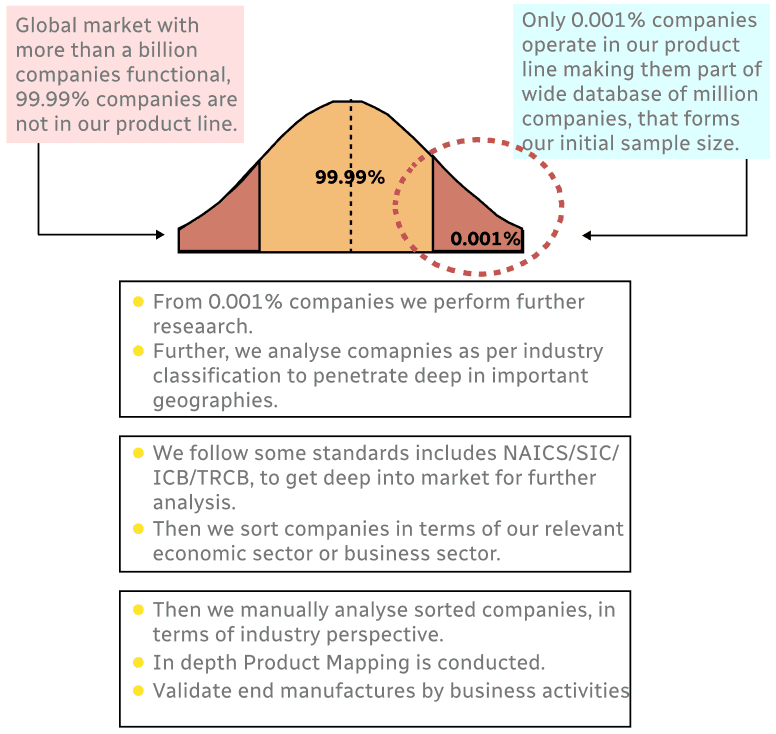
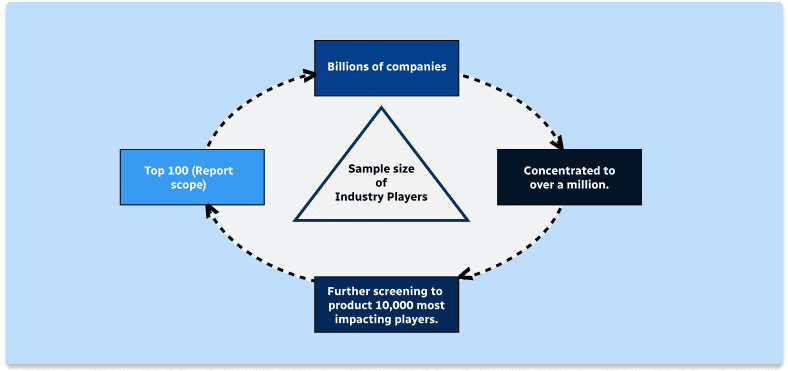
Step 1 - Identification of Relevant Samples Size from Population Database
Step 2 - Approaches for Defining Global Market Size (Value, Volume* & Price*)
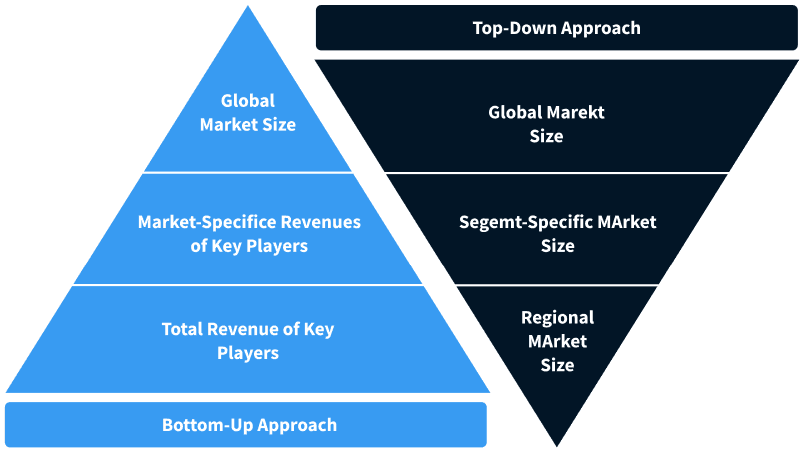
Note*: In applicable scenarios
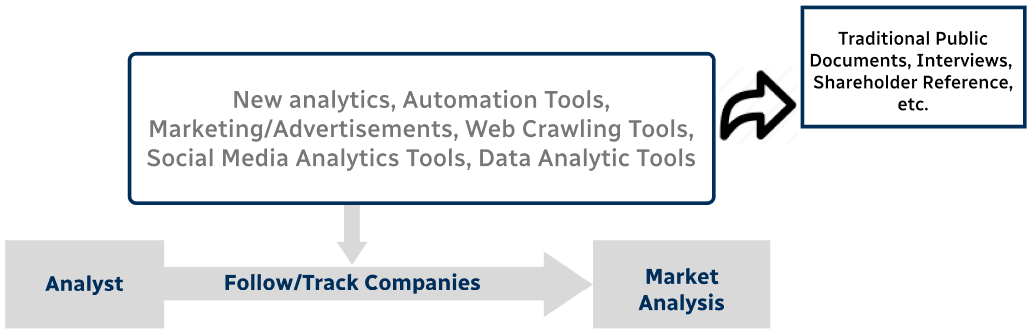
Step 3 - Data Sources
Primary Research
- Web Analytics
- Survey Reports
- Research Institute
- Latest Research Reports
- Opinion Leaders
Secondary Research
- Annual Reports
- White Paper
- Latest Press Release
- Industry Association
- Paid Database
- Investor Presentations
Step 4 - Data Triangulation
Involves using different sources of information in order to increase the validity of a study
These sources are likely to be stakeholders in a program - participants, other researchers, program staff, other community members, and so on.
Then we put all data in single framework & apply various statistical tools to find out the dynamic on the market.
During the analysis stage, feedback from the stakeholder groups would be compared to determine areas of agreement as well as areas of divergence