


Key Insights
The global Postpartum Hemorrhage (PPH) devices market is projected for substantial growth, with an estimated CAGR of 5.25%. Starting from a market size of $1.03 billion in the 2025 base year, this expansion is driven by rising maternal health concerns, increasing PPH incidence, and technological advancements. Key growth factors include the adoption of Non-Pneumatic Anti-Shock Garments (NASG) for hemodynamic stability, Prefilled Injection Systems for rapid drug administration, and Uterine Tamponade Devices for effective bleeding control. Enhanced healthcare infrastructure, especially in emerging economies, and government initiatives to reduce maternal mortality further propel market momentum. Hospitals and clinics are the primary end-users, investing in advanced obstetric care equipment.
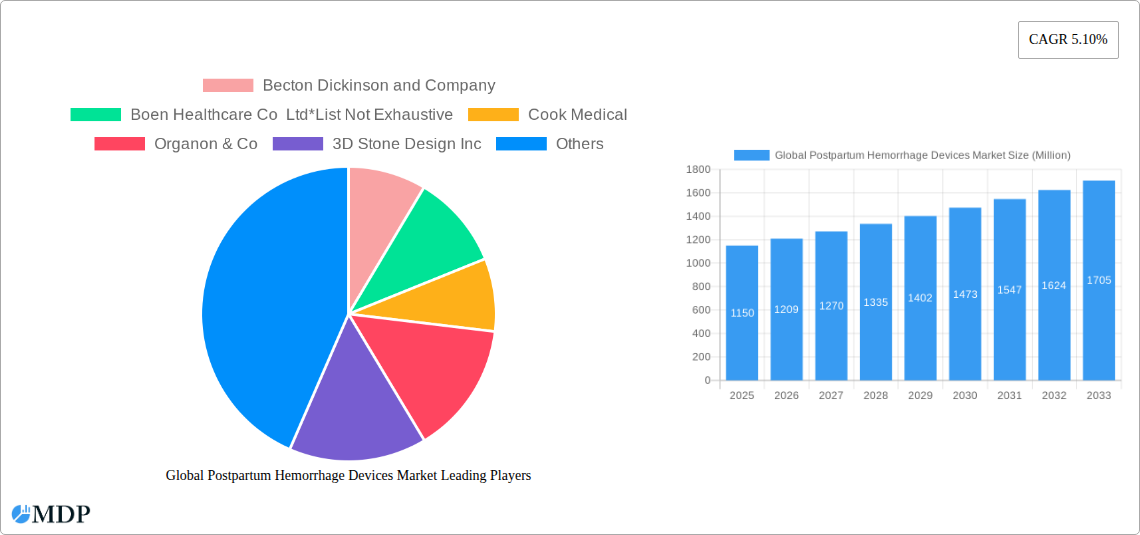
Global Postpartum Hemorrhage Devices Market Market Size (In Billion)

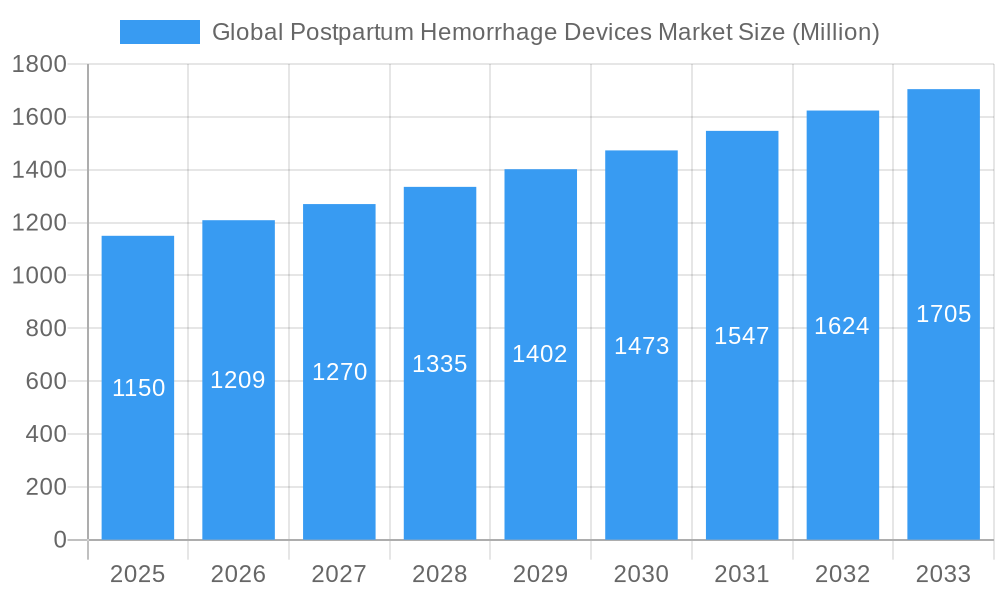
Innovation and strategic partnerships among leading companies like Becton Dickinson and Company, Cook Medical, and Organon & Co. characterize the market. These collaborations focus on developing novel, safer, and user-friendly PPH management solutions. The forecast period (2025-2033) anticipates significant growth, fueled by demand for minimally invasive treatments and integrated PPH management systems. Potential restraints, such as the cost of advanced devices and specialized training requirements, are expected to be mitigated by the global focus on improving maternal healthcare outcomes.
Global Postpartum Hemorrhage Devices Market Company Market Share
This comprehensive market analysis provides actionable insights for stakeholders in the Postpartum Hemorrhage (PPH) devices sector. Covering 2019-2024 historically, with 2025 as the base year and a forecast through 2033, the report offers a holistic view of market dynamics, trends, key segments, and competitive strategies. With an estimated market size of $1.03 billion in 2025, this report is vital for understanding the evolving landscape of PPH management solutions.
Global Postpartum Hemorrhage Devices Market Market Dynamics & Concentration
The global postpartum hemorrhage devices market exhibits a moderate concentration, with key players like Becton Dickinson and Company, Organon & Co, and Teleflex Incorporated holding substantial market shares. Innovation is a primary driver, fueled by advancements in medical technology and a growing emphasis on patient safety. Regulatory frameworks, such as those overseen by the FDA and EMA, play a crucial role in shaping product development and market entry, ensuring efficacy and safety. While direct product substitutes are limited, early detection and prevention methods, including AI-powered monitoring systems, represent emerging alternatives. End-user preferences are shifting towards minimally invasive and user-friendly devices that can be deployed rapidly in critical situations. Mergers and acquisitions are anticipated to increase as companies seek to expand their product portfolios and geographical reach. In the historical period (2019-2024), an estimated 7 M&A deals were recorded, with projections indicating a similar trend in the coming years.
- Market Concentration: Moderate, with a few key players dominating.
- Innovation Drivers: Technological advancements in device design, material science, and diagnostic capabilities.
- Regulatory Frameworks: Stringent regulations ensuring product safety and efficacy.
- Product Substitutes: Emerging early detection technologies like AI-powered monitoring.
- End-User Trends: Demand for rapid deployment, user-friendly, and minimally invasive solutions.
- M&A Activities: Expected to remain a key strategy for market consolidation and portfolio expansion.
Global Postpartum Hemorrhage Devices Market Industry Trends & Analysis
The global postpartum hemorrhage devices market is experiencing robust growth, driven by a confluence of factors including the rising incidence of PPH, increasing global birth rates, and heightened awareness among healthcare professionals and expectant mothers regarding PPH risks. Technological disruptions are at the forefront, with continuous innovation in device design leading to more effective and less invasive treatment options. Prefilled injection systems are gaining traction due to their ease of use and rapid administration of life-saving medications. Uterine tamponade devices, such as Foley catheters and inflatable balloons, remain critical for mechanical tamponade, with ongoing refinements enhancing their efficacy and patient comfort. Non-pneumatic anti-shock garments (NASG) are increasingly recognized for their role in stabilizing patients and reducing blood loss, particularly in resource-limited settings. The market penetration of these devices is steadily increasing, supported by favorable reimbursement policies and government initiatives aimed at reducing maternal mortality. Consumer preferences are leaning towards devices that offer quicker recovery times and minimal discomfort. The competitive landscape is characterized by strategic collaborations, product launches, and geographic expansion efforts by leading manufacturers. The Compound Annual Growth Rate (CAGR) for the period 2025–2033 is projected to be around 6.5%, with the market size expected to reach approximately $5,500 million by 2033.
Leading Markets & Segments in Global Postpartum Hemorrhage Devices Market
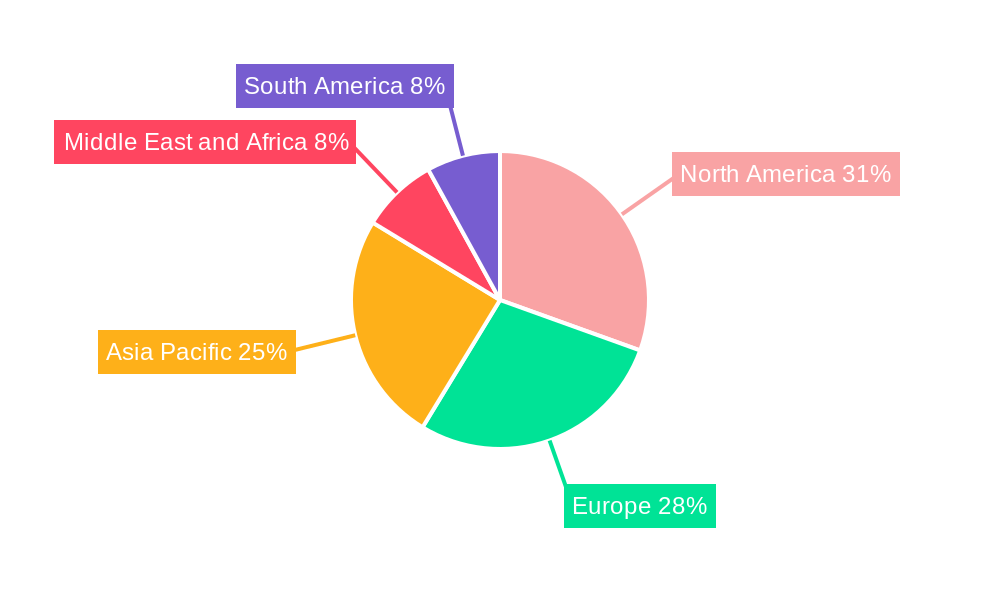
North America currently dominates the global postpartum hemorrhage devices market, driven by advanced healthcare infrastructure, high per capita healthcare spending, and a strong emphasis on maternal healthcare. The United States, in particular, is a significant contributor due to widespread adoption of advanced medical technologies and robust research and development activities. Following closely, Europe represents another key market, with countries like Germany, the UK, and France investing heavily in maternal health initiatives. Asia Pacific is emerging as a high-growth region, fueled by increasing healthcare expenditure, rising birth rates, and a growing awareness of PPH management in countries like China and India.
- Dominant Region: North America, followed by Europe and a rapidly growing Asia Pacific.
- Dominant Country (North America): United States.
- Dominant Product Type: Uterine Tamponade Devices are expected to hold the largest market share, due to their established efficacy and versatility in managing various types of PPH. Non-Pneumatic Anti-Shock Garments are also witnessing significant demand, especially in regions with limited access to advanced medical facilities.
- Uterine Tamponade Devices: Key drivers include their proven effectiveness, ongoing design improvements for better patient outcomes, and broad applicability.
- Non-Pneumatic Anti-Shock Garment (NASG): Driven by affordability, ease of use in emergency situations, and effectiveness in stabilizing patients.
- Prefilled Injection System: Growing adoption due to convenience and rapid drug delivery.
- Dominant End User: Hospitals are the primary end-users, accounting for the largest share of the market. This is attributed to the concentration of critical care facilities, specialized obstetric units, and the higher volume of childbirths.
- Hospitals: Dominant due to specialized obstetric and critical care units, and higher patient volumes.
- Clinics: Increasing role in primary maternal care and initial PPH management.
- Other End Users: Including emergency medical services and remote healthcare facilities.
Global Postpartum Hemorrhage Devices Market Product Developments
Product development in the PPH devices market is centered on enhancing speed of deployment, efficacy, and patient comfort. Innovations include improved designs for uterine balloons offering better anatomical fit and hemostatic pressure, as well as advanced NASG with enhanced material properties for greater breathability and patient compliance. The development of smart, connected devices for remote monitoring and timely alerts is also a key trend. For example, the integration of AI in wearable monitoring devices aims to predict potential PPH events before they occur, offering a significant competitive advantage. These advancements address critical clinical needs, reduce complication rates, and improve maternal survival.
Key Drivers of Global Postpartum Hemorrhage Devices Market Growth
The growth of the global postpartum hemorrhage devices market is propelled by several critical factors. A primary driver is the alarming global prevalence of PPH, which remains a leading cause of maternal mortality worldwide, prompting increased investment in effective management solutions. Technological advancements are continuously introducing more innovative and minimally invasive devices, enhancing treatment outcomes and patient safety. Furthermore, growing awareness campaigns by health organizations and governments are educating healthcare providers and the public about PPH risks and available interventions, leading to higher adoption rates. Favorable reimbursement policies and initiatives aimed at reducing maternal mortality rates in developing economies also contribute significantly to market expansion.
Challenges in the Global Postpartum Hemorrhage Devices Market Market
Despite the promising growth, the global postpartum hemorrhage devices market faces several challenges. Stringent regulatory approvals for new medical devices can be time-consuming and costly, potentially slowing down market entry. Variations in healthcare infrastructure and access to advanced medical technologies across different regions create disparities in device adoption. The cost of some advanced PPH management devices can also be a barrier for healthcare facilities in low- and middle-income countries. Moreover, a lack of skilled healthcare professionals trained in the effective use of specialized PPH devices can hinder their optimal implementation. Ensuring consistent supply chain reliability for critical PPH devices globally also presents an ongoing challenge.
Emerging Opportunities in Global Postpartum Hemorrhage Devices Market
Emerging opportunities in the global postpartum hemorrhage devices market lie in the development of cost-effective and user-friendly solutions tailored for low-resource settings. The integration of artificial intelligence (AI) and machine learning for early PPH prediction and real-time monitoring presents a significant avenue for innovation. Strategic partnerships between device manufacturers, healthcare providers, and research institutions can accelerate product development and clinical validation. Expansion into underserved markets, particularly in developing economies with high maternal mortality rates, offers substantial growth potential. The increasing focus on point-of-care diagnostics and portable PPH management devices is also creating new market niches.
Leading Players in the Global Postpartum Hemorrhage Devices Market Sector
- Becton Dickinson and Company
- Cook Medical
- Organon & Co
- Boen Healthcare Co Ltd
- 3D Stone Design Inc
- Sinapi Biomedical
- Zoex Niasg
- Bactiguard
- Laborie (Clinical Innovations)
- Teleflex Incorporated
- Utah Medical Products Inc
Key Milestones in Global Postpartum Hemorrhage Devices Market Industry
- May 2022: FIGO and the International Confederation of Midwives launched a generic post-paryum hemorrhage protocol to aid the development of national clinical protocols on PPH prevention and treatment.
- March 2022: Baymatob's wearable devices completed capital rise to advance life-saving labor monitoring devices. Baymatob's wearable device Oli uses innovative sensor technology and AI interpretation to detect a Pending PPH during labor before postpartum bleeding starts.
Strategic Outlook for Global Postpartum Hemorrhage Devices Market Market
The strategic outlook for the global postpartum hemorrhage devices market is exceptionally strong, driven by an ongoing commitment to reducing maternal mortality. Future growth will be propelled by continued investment in research and development, focusing on user-centric designs, enhanced diagnostic capabilities, and integrated digital health solutions. Strategic collaborations and geographical expansion will be crucial for market leaders to penetrate emerging economies and address the diverse needs of global healthcare systems. The increasing adoption of AI-powered predictive tools and the development of more affordable and accessible PPH management devices will shape the market's trajectory, creating significant opportunities for innovation and market leadership in the coming years.
Global Postpartum Hemorrhage Devices Market Segmentation
-
1. Product Type
- 1.1. Non-Pneumatic Anti-Shock Garment
- 1.2. Prefilled Injection System
- 1.3. Uterine Tamponade Devices
-
2. End User
- 2.1. Hospitals
- 2.2. Clinics
- 2.3. Other End Users
Global Postpartum Hemorrhage Devices Market Segmentation By Geography
-
1. North America
- 1.1. United States
- 1.2. Canada
- 1.3. Mexico
-
2. Europe
- 2.1. Germany
- 2.2. United Kingdom
- 2.3. France
- 2.4. Italy
- 2.5. Spain
- 2.6. Rest of Europe
-
3. Asia Pacific
- 3.1. China
- 3.2. Japan
- 3.3. India
- 3.4. Australia
- 3.5. South Korea
- 3.6. Rest of Asia Pacific
-
4. Middle East and Africa
- 4.1. GCC
- 4.2. South Africa
- 4.3. Rest of Middle East and Africa
-
5. South America
- 5.1. Brazil
- 5.2. Argentina
- 5.3. Rest of South America
Global Postpartum Hemorrhage Devices Market Regional Market Share
Geographic Coverage of Global Postpartum Hemorrhage Devices Market
Global Postpartum Hemorrhage Devices Market REPORT HIGHLIGHTS
| Aspects | Details |
|---|---|
| Study Period | 2020-2034 |
| Base Year | 2025 |
| Estimated Year | 2026 |
| Forecast Period | 2026-2034 |
| Historical Period | 2020-2025 |
| Growth Rate | CAGR of 5.25% from 2020-2034 |
| Segmentation |
|
Table of Contents
- 1. Introduction
- 1.1. Research Scope
- 1.2. Market Segmentation
- 1.3. Research Methodology
- 1.4. Definitions and Assumptions
- 2. Executive Summary
- 2.1. Introduction
- 3. Market Dynamics
- 3.1. Introduction
- 3.2. Market Drivers
- 3.2.1 Increasing Occurrence of Conditions like Placental Abruption
- 3.2.2 Multiple Pregnancy and Inverted Uterus and other pregnancy complications (Anemia); Inflated Number of Government Initiatives Coupled with Increased Awareness
- 3.3. Market Restrains
- 3.3.1. High Cost of PPH Devices & Lack of Trained Proffesionals
- 3.4. Market Trends
- 3.4.1. Uterine Tamponade Devices are Expected to Witness a Positive Growth Over the Forecast Period
- 4. Market Factor Analysis
- 4.1. Porters Five Forces
- 4.2. Supply/Value Chain
- 4.3. PESTEL analysis
- 4.4. Market Entropy
- 4.5. Patent/Trademark Analysis
- 5. Global Postpartum Hemorrhage Devices Market Analysis, Insights and Forecast, 2020-2032
- 5.1. Market Analysis, Insights and Forecast - by Product Type
- 5.1.1. Non-Pneumatic Anti-Shock Garment
- 5.1.2. Prefilled Injection System
- 5.1.3. Uterine Tamponade Devices
- 5.2. Market Analysis, Insights and Forecast - by End User
- 5.2.1. Hospitals
- 5.2.2. Clinics
- 5.2.3. Other End Users
- 5.3. Market Analysis, Insights and Forecast - by Region
- 5.3.1. North America
- 5.3.2. Europe
- 5.3.3. Asia Pacific
- 5.3.4. Middle East and Africa
- 5.3.5. South America
- 5.1. Market Analysis, Insights and Forecast - by Product Type
- 6. North America Global Postpartum Hemorrhage Devices Market Analysis, Insights and Forecast, 2020-2032
- 6.1. Market Analysis, Insights and Forecast - by Product Type
- 6.1.1. Non-Pneumatic Anti-Shock Garment
- 6.1.2. Prefilled Injection System
- 6.1.3. Uterine Tamponade Devices
- 6.2. Market Analysis, Insights and Forecast - by End User
- 6.2.1. Hospitals
- 6.2.2. Clinics
- 6.2.3. Other End Users
- 6.1. Market Analysis, Insights and Forecast - by Product Type
- 7. Europe Global Postpartum Hemorrhage Devices Market Analysis, Insights and Forecast, 2020-2032
- 7.1. Market Analysis, Insights and Forecast - by Product Type
- 7.1.1. Non-Pneumatic Anti-Shock Garment
- 7.1.2. Prefilled Injection System
- 7.1.3. Uterine Tamponade Devices
- 7.2. Market Analysis, Insights and Forecast - by End User
- 7.2.1. Hospitals
- 7.2.2. Clinics
- 7.2.3. Other End Users
- 7.1. Market Analysis, Insights and Forecast - by Product Type
- 8. Asia Pacific Global Postpartum Hemorrhage Devices Market Analysis, Insights and Forecast, 2020-2032
- 8.1. Market Analysis, Insights and Forecast - by Product Type
- 8.1.1. Non-Pneumatic Anti-Shock Garment
- 8.1.2. Prefilled Injection System
- 8.1.3. Uterine Tamponade Devices
- 8.2. Market Analysis, Insights and Forecast - by End User
- 8.2.1. Hospitals
- 8.2.2. Clinics
- 8.2.3. Other End Users
- 8.1. Market Analysis, Insights and Forecast - by Product Type
- 9. Middle East and Africa Global Postpartum Hemorrhage Devices Market Analysis, Insights and Forecast, 2020-2032
- 9.1. Market Analysis, Insights and Forecast - by Product Type
- 9.1.1. Non-Pneumatic Anti-Shock Garment
- 9.1.2. Prefilled Injection System
- 9.1.3. Uterine Tamponade Devices
- 9.2. Market Analysis, Insights and Forecast - by End User
- 9.2.1. Hospitals
- 9.2.2. Clinics
- 9.2.3. Other End Users
- 9.1. Market Analysis, Insights and Forecast - by Product Type
- 10. South America Global Postpartum Hemorrhage Devices Market Analysis, Insights and Forecast, 2020-2032
- 10.1. Market Analysis, Insights and Forecast - by Product Type
- 10.1.1. Non-Pneumatic Anti-Shock Garment
- 10.1.2. Prefilled Injection System
- 10.1.3. Uterine Tamponade Devices
- 10.2. Market Analysis, Insights and Forecast - by End User
- 10.2.1. Hospitals
- 10.2.2. Clinics
- 10.2.3. Other End Users
- 10.1. Market Analysis, Insights and Forecast - by Product Type
- 11. Competitive Analysis
- 11.1. Market Share Analysis 2025
- 11.2. Company Profiles
- 11.2.1 Becton Dickinson and Company
- 11.2.1.1. Overview
- 11.2.1.2. Products
- 11.2.1.3. SWOT Analysis
- 11.2.1.4. Recent Developments
- 11.2.1.5. Financials (Based on Availability)
- 11.2.2 Boen Healthcare Co Ltd*List Not Exhaustive
- 11.2.2.1. Overview
- 11.2.2.2. Products
- 11.2.2.3. SWOT Analysis
- 11.2.2.4. Recent Developments
- 11.2.2.5. Financials (Based on Availability)
- 11.2.3 Cook Medical
- 11.2.3.1. Overview
- 11.2.3.2. Products
- 11.2.3.3. SWOT Analysis
- 11.2.3.4. Recent Developments
- 11.2.3.5. Financials (Based on Availability)
- 11.2.4 Organon & Co
- 11.2.4.1. Overview
- 11.2.4.2. Products
- 11.2.4.3. SWOT Analysis
- 11.2.4.4. Recent Developments
- 11.2.4.5. Financials (Based on Availability)
- 11.2.5 3D Stone Design Inc
- 11.2.5.1. Overview
- 11.2.5.2. Products
- 11.2.5.3. SWOT Analysis
- 11.2.5.4. Recent Developments
- 11.2.5.5. Financials (Based on Availability)
- 11.2.6 Sinapi Biomedical
- 11.2.6.1. Overview
- 11.2.6.2. Products
- 11.2.6.3. SWOT Analysis
- 11.2.6.4. Recent Developments
- 11.2.6.5. Financials (Based on Availability)
- 11.2.7 Zoex Niasg
- 11.2.7.1. Overview
- 11.2.7.2. Products
- 11.2.7.3. SWOT Analysis
- 11.2.7.4. Recent Developments
- 11.2.7.5. Financials (Based on Availability)
- 11.2.8 Bactiguard
- 11.2.8.1. Overview
- 11.2.8.2. Products
- 11.2.8.3. SWOT Analysis
- 11.2.8.4. Recent Developments
- 11.2.8.5. Financials (Based on Availability)
- 11.2.9 Laborie (Clinical Innovations)
- 11.2.9.1. Overview
- 11.2.9.2. Products
- 11.2.9.3. SWOT Analysis
- 11.2.9.4. Recent Developments
- 11.2.9.5. Financials (Based on Availability)
- 11.2.10 Teleflex Incorporated
- 11.2.10.1. Overview
- 11.2.10.2. Products
- 11.2.10.3. SWOT Analysis
- 11.2.10.4. Recent Developments
- 11.2.10.5. Financials (Based on Availability)
- 11.2.11 Utah Medical Products Inc
- 11.2.11.1. Overview
- 11.2.11.2. Products
- 11.2.11.3. SWOT Analysis
- 11.2.11.4. Recent Developments
- 11.2.11.5. Financials (Based on Availability)
- 11.2.1 Becton Dickinson and Company
List of Figures
- Figure 1: Global Global Postpartum Hemorrhage Devices Market Revenue Breakdown (billion, %) by Region 2025 & 2033
- Figure 2: North America Global Postpartum Hemorrhage Devices Market Revenue (billion), by Product Type 2025 & 2033
- Figure 3: North America Global Postpartum Hemorrhage Devices Market Revenue Share (%), by Product Type 2025 & 2033
- Figure 4: North America Global Postpartum Hemorrhage Devices Market Revenue (billion), by End User 2025 & 2033
- Figure 5: North America Global Postpartum Hemorrhage Devices Market Revenue Share (%), by End User 2025 & 2033
- Figure 6: North America Global Postpartum Hemorrhage Devices Market Revenue (billion), by Country 2025 & 2033
- Figure 7: North America Global Postpartum Hemorrhage Devices Market Revenue Share (%), by Country 2025 & 2033
- Figure 8: Europe Global Postpartum Hemorrhage Devices Market Revenue (billion), by Product Type 2025 & 2033
- Figure 9: Europe Global Postpartum Hemorrhage Devices Market Revenue Share (%), by Product Type 2025 & 2033
- Figure 10: Europe Global Postpartum Hemorrhage Devices Market Revenue (billion), by End User 2025 & 2033
- Figure 11: Europe Global Postpartum Hemorrhage Devices Market Revenue Share (%), by End User 2025 & 2033
- Figure 12: Europe Global Postpartum Hemorrhage Devices Market Revenue (billion), by Country 2025 & 2033
- Figure 13: Europe Global Postpartum Hemorrhage Devices Market Revenue Share (%), by Country 2025 & 2033
- Figure 14: Asia Pacific Global Postpartum Hemorrhage Devices Market Revenue (billion), by Product Type 2025 & 2033
- Figure 15: Asia Pacific Global Postpartum Hemorrhage Devices Market Revenue Share (%), by Product Type 2025 & 2033
- Figure 16: Asia Pacific Global Postpartum Hemorrhage Devices Market Revenue (billion), by End User 2025 & 2033
- Figure 17: Asia Pacific Global Postpartum Hemorrhage Devices Market Revenue Share (%), by End User 2025 & 2033
- Figure 18: Asia Pacific Global Postpartum Hemorrhage Devices Market Revenue (billion), by Country 2025 & 2033
- Figure 19: Asia Pacific Global Postpartum Hemorrhage Devices Market Revenue Share (%), by Country 2025 & 2033
- Figure 20: Middle East and Africa Global Postpartum Hemorrhage Devices Market Revenue (billion), by Product Type 2025 & 2033
- Figure 21: Middle East and Africa Global Postpartum Hemorrhage Devices Market Revenue Share (%), by Product Type 2025 & 2033
- Figure 22: Middle East and Africa Global Postpartum Hemorrhage Devices Market Revenue (billion), by End User 2025 & 2033
- Figure 23: Middle East and Africa Global Postpartum Hemorrhage Devices Market Revenue Share (%), by End User 2025 & 2033
- Figure 24: Middle East and Africa Global Postpartum Hemorrhage Devices Market Revenue (billion), by Country 2025 & 2033
- Figure 25: Middle East and Africa Global Postpartum Hemorrhage Devices Market Revenue Share (%), by Country 2025 & 2033
- Figure 26: South America Global Postpartum Hemorrhage Devices Market Revenue (billion), by Product Type 2025 & 2033
- Figure 27: South America Global Postpartum Hemorrhage Devices Market Revenue Share (%), by Product Type 2025 & 2033
- Figure 28: South America Global Postpartum Hemorrhage Devices Market Revenue (billion), by End User 2025 & 2033
- Figure 29: South America Global Postpartum Hemorrhage Devices Market Revenue Share (%), by End User 2025 & 2033
- Figure 30: South America Global Postpartum Hemorrhage Devices Market Revenue (billion), by Country 2025 & 2033
- Figure 31: South America Global Postpartum Hemorrhage Devices Market Revenue Share (%), by Country 2025 & 2033
List of Tables
- Table 1: Global Postpartum Hemorrhage Devices Market Revenue billion Forecast, by Product Type 2020 & 2033
- Table 2: Global Postpartum Hemorrhage Devices Market Revenue billion Forecast, by End User 2020 & 2033
- Table 3: Global Postpartum Hemorrhage Devices Market Revenue billion Forecast, by Region 2020 & 2033
- Table 4: Global Postpartum Hemorrhage Devices Market Revenue billion Forecast, by Product Type 2020 & 2033
- Table 5: Global Postpartum Hemorrhage Devices Market Revenue billion Forecast, by End User 2020 & 2033
- Table 6: Global Postpartum Hemorrhage Devices Market Revenue billion Forecast, by Country 2020 & 2033
- Table 7: United States Global Postpartum Hemorrhage Devices Market Revenue (billion) Forecast, by Application 2020 & 2033
- Table 8: Canada Global Postpartum Hemorrhage Devices Market Revenue (billion) Forecast, by Application 2020 & 2033
- Table 9: Mexico Global Postpartum Hemorrhage Devices Market Revenue (billion) Forecast, by Application 2020 & 2033
- Table 10: Global Postpartum Hemorrhage Devices Market Revenue billion Forecast, by Product Type 2020 & 2033
- Table 11: Global Postpartum Hemorrhage Devices Market Revenue billion Forecast, by End User 2020 & 2033
- Table 12: Global Postpartum Hemorrhage Devices Market Revenue billion Forecast, by Country 2020 & 2033
- Table 13: Germany Global Postpartum Hemorrhage Devices Market Revenue (billion) Forecast, by Application 2020 & 2033
- Table 14: United Kingdom Global Postpartum Hemorrhage Devices Market Revenue (billion) Forecast, by Application 2020 & 2033
- Table 15: France Global Postpartum Hemorrhage Devices Market Revenue (billion) Forecast, by Application 2020 & 2033
- Table 16: Italy Global Postpartum Hemorrhage Devices Market Revenue (billion) Forecast, by Application 2020 & 2033
- Table 17: Spain Global Postpartum Hemorrhage Devices Market Revenue (billion) Forecast, by Application 2020 & 2033
- Table 18: Rest of Europe Global Postpartum Hemorrhage Devices Market Revenue (billion) Forecast, by Application 2020 & 2033
- Table 19: Global Postpartum Hemorrhage Devices Market Revenue billion Forecast, by Product Type 2020 & 2033
- Table 20: Global Postpartum Hemorrhage Devices Market Revenue billion Forecast, by End User 2020 & 2033
- Table 21: Global Postpartum Hemorrhage Devices Market Revenue billion Forecast, by Country 2020 & 2033
- Table 22: China Global Postpartum Hemorrhage Devices Market Revenue (billion) Forecast, by Application 2020 & 2033
- Table 23: Japan Global Postpartum Hemorrhage Devices Market Revenue (billion) Forecast, by Application 2020 & 2033
- Table 24: India Global Postpartum Hemorrhage Devices Market Revenue (billion) Forecast, by Application 2020 & 2033
- Table 25: Australia Global Postpartum Hemorrhage Devices Market Revenue (billion) Forecast, by Application 2020 & 2033
- Table 26: South Korea Global Postpartum Hemorrhage Devices Market Revenue (billion) Forecast, by Application 2020 & 2033
- Table 27: Rest of Asia Pacific Global Postpartum Hemorrhage Devices Market Revenue (billion) Forecast, by Application 2020 & 2033
- Table 28: Global Postpartum Hemorrhage Devices Market Revenue billion Forecast, by Product Type 2020 & 2033
- Table 29: Global Postpartum Hemorrhage Devices Market Revenue billion Forecast, by End User 2020 & 2033
- Table 30: Global Postpartum Hemorrhage Devices Market Revenue billion Forecast, by Country 2020 & 2033
- Table 31: GCC Global Postpartum Hemorrhage Devices Market Revenue (billion) Forecast, by Application 2020 & 2033
- Table 32: South Africa Global Postpartum Hemorrhage Devices Market Revenue (billion) Forecast, by Application 2020 & 2033
- Table 33: Rest of Middle East and Africa Global Postpartum Hemorrhage Devices Market Revenue (billion) Forecast, by Application 2020 & 2033
- Table 34: Global Postpartum Hemorrhage Devices Market Revenue billion Forecast, by Product Type 2020 & 2033
- Table 35: Global Postpartum Hemorrhage Devices Market Revenue billion Forecast, by End User 2020 & 2033
- Table 36: Global Postpartum Hemorrhage Devices Market Revenue billion Forecast, by Country 2020 & 2033
- Table 37: Brazil Global Postpartum Hemorrhage Devices Market Revenue (billion) Forecast, by Application 2020 & 2033
- Table 38: Argentina Global Postpartum Hemorrhage Devices Market Revenue (billion) Forecast, by Application 2020 & 2033
- Table 39: Rest of South America Global Postpartum Hemorrhage Devices Market Revenue (billion) Forecast, by Application 2020 & 2033
Frequently Asked Questions
1. What is the projected Compound Annual Growth Rate (CAGR) of the Global Postpartum Hemorrhage Devices Market?
The projected CAGR is approximately 5.25%.
2. Which companies are prominent players in the Global Postpartum Hemorrhage Devices Market?
Key companies in the market include Becton Dickinson and Company, Boen Healthcare Co Ltd*List Not Exhaustive, Cook Medical, Organon & Co, 3D Stone Design Inc, Sinapi Biomedical, Zoex Niasg, Bactiguard, Laborie (Clinical Innovations), Teleflex Incorporated, Utah Medical Products Inc.
3. What are the main segments of the Global Postpartum Hemorrhage Devices Market?
The market segments include Product Type, End User.
4. Can you provide details about the market size?
The market size is estimated to be USD 1.03 billion as of 2022.
5. What are some drivers contributing to market growth?
Increasing Occurrence of Conditions like Placental Abruption. Multiple Pregnancy and Inverted Uterus and other pregnancy complications (Anemia); Inflated Number of Government Initiatives Coupled with Increased Awareness.
6. What are the notable trends driving market growth?
Uterine Tamponade Devices are Expected to Witness a Positive Growth Over the Forecast Period.
7. Are there any restraints impacting market growth?
High Cost of PPH Devices & Lack of Trained Proffesionals.
8. Can you provide examples of recent developments in the market?
In May 2022 FIGO and the International Confederation of Midwives launched a generic post-paryum hemorrhage protocol to aid the development of national clinical protocols on PPH prevention and treatment.
9. What pricing options are available for accessing the report?
Pricing options include single-user, multi-user, and enterprise licenses priced at USD 4750, USD 5250, and USD 8750 respectively.
10. Is the market size provided in terms of value or volume?
The market size is provided in terms of value, measured in billion.
11. Are there any specific market keywords associated with the report?
Yes, the market keyword associated with the report is "Global Postpartum Hemorrhage Devices Market," which aids in identifying and referencing the specific market segment covered.
12. How do I determine which pricing option suits my needs best?
The pricing options vary based on user requirements and access needs. Individual users may opt for single-user licenses, while businesses requiring broader access may choose multi-user or enterprise licenses for cost-effective access to the report.
13. Are there any additional resources or data provided in the Global Postpartum Hemorrhage Devices Market report?
While the report offers comprehensive insights, it's advisable to review the specific contents or supplementary materials provided to ascertain if additional resources or data are available.
14. How can I stay updated on further developments or reports in the Global Postpartum Hemorrhage Devices Market?
To stay informed about further developments, trends, and reports in the Global Postpartum Hemorrhage Devices Market, consider subscribing to industry newsletters, following relevant companies and organizations, or regularly checking reputable industry news sources and publications.
Methodology
Step 1 - Identification of Relevant Samples Size from Population Database



Step 2 - Approaches for Defining Global Market Size (Value, Volume* & Price*)

Note*: In applicable scenarios
Step 3 - Data Sources
Primary Research
- Web Analytics
- Survey Reports
- Research Institute
- Latest Research Reports
- Opinion Leaders
Secondary Research
- Annual Reports
- White Paper
- Latest Press Release
- Industry Association
- Paid Database
- Investor Presentations

Step 4 - Data Triangulation
Involves using different sources of information in order to increase the validity of a study
These sources are likely to be stakeholders in a program - participants, other researchers, program staff, other community members, and so on.
Then we put all data in single framework & apply various statistical tools to find out the dynamic on the market.
During the analysis stage, feedback from the stakeholder groups would be compared to determine areas of agreement as well as areas of divergence