

Key Insights
The probiotic cosmetics market, valued at $16.42 billion in 2025, is experiencing robust growth, projected to expand at a Compound Annual Growth Rate (CAGR) of 5.71% from 2025 to 2033. This growth is fueled by several key drivers. Increasing consumer awareness of the benefits of probiotics for skin and hair health, coupled with a rising demand for natural and organic beauty products, is significantly boosting market expansion. The growing prevalence of skin conditions like acne and eczema, alongside a desire for gentler, less harsh skincare solutions, further fuels this market. The market segmentation reveals a strong preference for skincare products, followed by hair care, with online retail emerging as a dominant distribution channel, reflecting the increasing e-commerce penetration in the beauty sector. The competitive landscape is dynamic, featuring established players like Estée Lauder and Unilever alongside smaller, specialized brands focused on probiotic formulations. Geographical analysis indicates strong market presence across North America and Europe, driven by high consumer spending on personal care and readily available distribution networks. However, the Asia-Pacific region presents significant growth potential due to its expanding middle class and increasing adoption of western beauty trends.
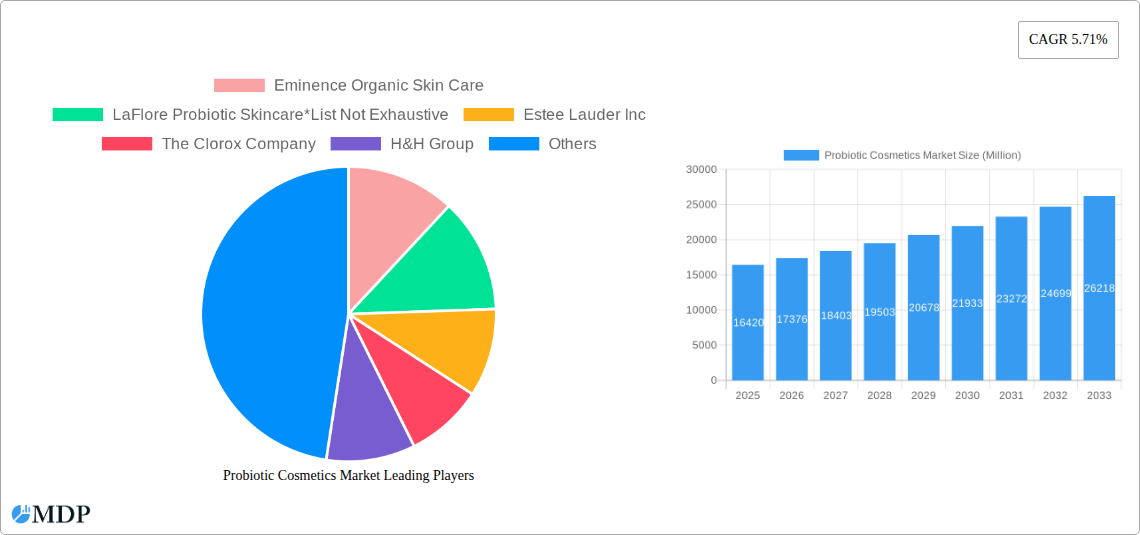
Probiotic Cosmetics Market Market Size (In Billion)

The continued market expansion is likely to be influenced by several factors. Innovation in probiotic formulations, incorporating advanced delivery systems and targeted active ingredients, will remain crucial for sustained growth. Furthermore, the rise of personalized beauty, allowing consumers to tailor their skincare routines based on individual needs, is creating new opportunities. However, challenges remain, including the need for robust scientific evidence supporting the efficacy of probiotic cosmetics, potential regulatory hurdles related to ingredient approvals, and price sensitivity in certain market segments. Companies will need to focus on educating consumers about the benefits of probiotic cosmetics, ensuring product quality and safety, and building strong brand loyalty to maintain competitiveness in this rapidly evolving market.
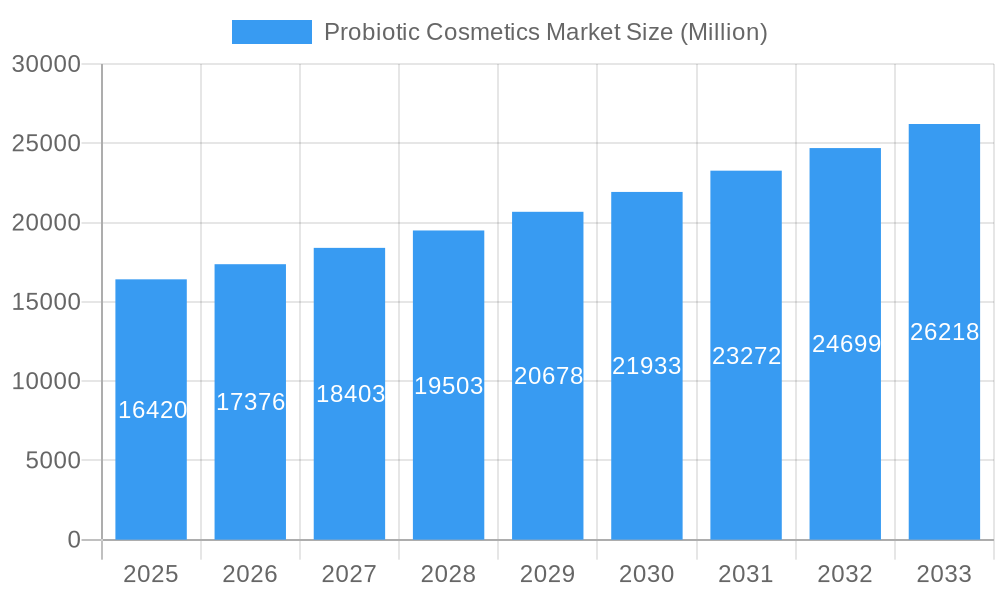
Probiotic Cosmetics Market Company Market Share
Probiotic Cosmetics Market: A Comprehensive Report (2019-2033)
This comprehensive report provides a detailed analysis of the Probiotic Cosmetics Market, offering invaluable insights for industry stakeholders, investors, and strategic decision-makers. With a study period spanning 2019-2033, a base year of 2025, and a forecast period of 2025-2033, this report offers a complete picture of the market's historical performance, current state, and future trajectory. The market is projected to reach xx Million by 2033, exhibiting a compelling CAGR of xx% during the forecast period. This report delves into market dynamics, industry trends, leading segments, key players, and emerging opportunities, providing actionable intelligence to navigate this rapidly evolving landscape.
Probiotic Cosmetics Market Market Dynamics & Concentration
The Probiotic Cosmetics Market is characterized by a dynamic interplay of factors influencing its growth and concentration. Market concentration is currently moderate, with several key players holding significant market share, while numerous smaller companies contribute to the overall market volume. However, ongoing mergers and acquisitions (M&A) activity, alongside the emergence of innovative brands, is likely to reshape the competitive landscape in the coming years. We estimate xx M&A deals occurred in the historical period (2019-2024).
- Innovation Drivers: The market is driven by continuous innovation in probiotic strains, delivery systems, and product formulations, catering to diverse consumer needs and preferences. This includes advancements in microencapsulation technologies to enhance probiotic stability and efficacy.
- Regulatory Frameworks: Varying regulatory landscapes across different regions pose both challenges and opportunities. Compliance with safety and efficacy standards influences product development and market entry strategies.
- Product Substitutes: While the market shows strong growth, it faces competition from traditional cosmetics and skincare products with alternative active ingredients. However, the unique benefits of probiotics are driving market differentiation.
- End-User Trends: Growing consumer awareness of the benefits of probiotics for skin and hair health, coupled with increasing demand for natural and organic cosmetics, fuels market growth.
- M&A Activities: Consolidation is expected to increase as larger players seek to expand their product portfolios and market reach. The acquistion of smaller, specialized probiotic cosmetic brands is an ongoing trend. The market share of top 5 players is estimated at xx% in 2025.
Probiotic Cosmetics Market Industry Trends & Analysis
The Probiotic Cosmetics Market is experiencing robust growth, driven by a confluence of factors. The market is witnessing a significant shift towards natural and sustainable products, fueling demand for probiotic-based solutions. Technological advancements in probiotic strain development and formulation are enhancing product efficacy and consumer appeal. Changing consumer preferences, particularly a growing focus on microbiome health, are creating favorable market conditions. Intense competition among established players and emerging brands further propels innovation and market expansion. The market size is estimated at xx Million in 2025.
- Market Growth Drivers: Increasing consumer awareness of skin microbiome importance, demand for natural and organic cosmetics, rising disposable incomes in developing economies, and expansion of e-commerce channels are driving robust growth.
- Technological Disruptions: Advancements in microencapsulation, targeted delivery systems, and personalized probiotic formulations are revolutionizing product development and consumer experience.
- Consumer Preferences: The preference for clean beauty, sustainable sourcing, and cruelty-free products aligns well with the attributes of many probiotic cosmetic brands.
- Competitive Dynamics: The market is becoming increasingly competitive, with both established players and new entrants vying for market share through product innovation, branding, and marketing strategies.
Leading Markets & Segments in Probiotic Cosmetics Market
The Probiotic Cosmetics Market exhibits diverse segment dynamics across product types and distribution channels. Skin care currently holds the largest market share among product types, followed by hair care and other product types. Online retail is witnessing significant growth, although specialty stores continue to be important distribution channels. The North American region currently dominates the global market, followed by Europe.
By Product Type:
- Skin Care: This segment dominates due to heightened consumer awareness of probiotics' benefits for skin health (e.g., acne reduction, improved skin barrier function).
- Hair Care: This segment is growing rapidly as consumers seek natural solutions for hair health and scalp issues.
- Other Product Types: This category includes products like makeup and sunscreens, gradually gaining market presence.
By Distribution Channel:
- Specialty Stores: These stores cater to consumers seeking high-quality, specialized skincare and haircare products.
- Supermarkets/Hypermarkets: Increasing availability in supermarkets and hypermarkets improves accessibility for a broader consumer base.
- Online Retail: The online channel offers convenience and allows for wider reach compared to traditional channels.
- Other Distribution Channels: This includes direct-to-consumer sales via brand websites and other channels.
Key Drivers for Dominant Regions:
- North America: High disposable incomes, strong consumer awareness of health and wellness, and a well-established beauty industry are driving market growth.
- Europe: A growing focus on natural and organic products, along with stringent regulations, fosters development and demand.
Probiotic Cosmetics Market Product Developments
Recent product innovations focus on enhancing probiotic stability, improving delivery systems (e.g., microencapsulation), and developing targeted formulations addressing specific skin concerns. The use of patented probiotic strains, clinically proven efficacy, and integration of other beneficial ingredients (e.g., prebiotics, antioxidants) are key competitive advantages. The trend towards personalized skincare solutions incorporating probiotic technology is gaining traction.
Key Drivers of Probiotic Cosmetics Market Growth
Several key factors are accelerating the growth of the Probiotic Cosmetics Market. Technological advancements are enabling the development of more effective and stable probiotic formulations. Growing consumer interest in natural, sustainable, and scientifically-backed beauty products aligns perfectly with the benefits of probiotic cosmetics. Positive regulatory changes in some regions are also facilitating market expansion.
Challenges in the Probiotic Cosmetics Market Market
The market faces several challenges. Maintaining probiotic viability and stability in cosmetic formulations presents a key technical hurdle. Stringent regulatory requirements and varying standards across different countries can hinder product launches and market penetration. Competition from established players and the emergence of new entrants create a challenging market environment.
Emerging Opportunities in Probiotic Cosmetics Market
Significant opportunities lie ahead. Strategic partnerships between cosmetic companies and probiotic research institutions can facilitate innovation. Expansion into new geographical markets with growing consumer interest in natural beauty products presents substantial growth potential. Developing innovative personalized probiotic skincare solutions tailored to specific skin types and concerns is a compelling opportunity.
Leading Players in the Probiotic Cosmetics Market Sector
- Eminence Organic Skin Care
- LaFlore Probiotic Skincare
- Estee Lauder Inc
- The Clorox Company
- H&H Group
- Tula Life Inc
- Andalou Naturals
- Unilever PLC
- Esse Skincare
- L'Oreal S A
Key Milestones in Probiotic Cosmetics Market Industry
- August 2021: Launch of Unconditional Skincare Co. in New Zealand and Australia, featuring a patented probiotic strain.
- September 2021: Lac2Biome launches InfiniteSkin Microbiome Serum, a white-label skincare blend with live probiotics and hyaluronic acid.
- November 2022: Soufflé Beauty, a PETA-certified cruelty-free probiotic skincare brand, enters the Chinese market.
Strategic Outlook for Probiotic Cosmetics Market Market
The future of the Probiotic Cosmetics Market appears promising. Continued innovation in probiotic strains and formulation technologies, coupled with growing consumer demand for natural and effective skincare solutions, will drive significant market growth. Strategic partnerships and market expansion strategies will play crucial roles in shaping the future of this dynamic sector. The market presents significant opportunities for companies willing to invest in research and development, build strong brands, and adapt to evolving consumer preferences.
Probiotic Cosmetics Market Segmentation
-
1. Product Type
- 1.1. Skin Care
- 1.2. Hair Care
- 1.3. Other Product Types
-
2. Distribution Channel
- 2.1. Speciality Stores
- 2.2. Supermarkets/Hypermarkets
- 2.3. Convenience Stores
- 2.4. Online Retail
- 2.5. Other Distribution Channels
Probiotic Cosmetics Market Segmentation By Geography
-
1. North America
- 1.1. United States
- 1.2. Canada
- 1.3. Mexico
- 1.4. Rest of North America
-
2. Europe
- 2.1. Spain
- 2.2. United Kingdom
- 2.3. Germany
- 2.4. France
- 2.5. Italy
- 2.6. Russia
- 2.7. Rest of Europe
-
3. Asia Pacific
- 3.1. China
- 3.2. Japan
- 3.3. India
- 3.4. Australia
- 3.5. Rest of Asia Pacific
-
4. South America
- 4.1. Brazil
- 4.2. Argentina
- 4.3. Rest of South America
-
5. Middle East and Africa
- 5.1. South Africa
- 5.2. Saudi Arabia
- 5.3. Rest of Middle East and Africa
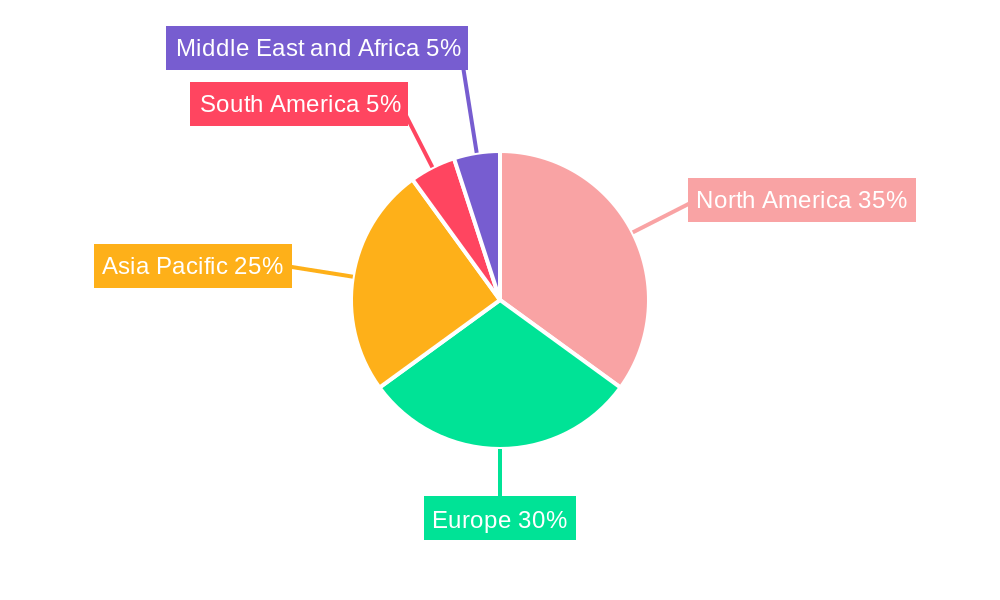
Probiotic Cosmetics Market Regional Market Share
Geographic Coverage of Probiotic Cosmetics Market
Probiotic Cosmetics Market REPORT HIGHLIGHTS
| Aspects | Details |
|---|---|
| Study Period | 2020-2034 |
| Base Year | 2025 |
| Estimated Year | 2026 |
| Forecast Period | 2026-2034 |
| Historical Period | 2020-2025 |
| Growth Rate | CAGR of 5.71% from 2020-2034 |
| Segmentation |
|
Table of Contents
- 1. Introduction
- 1.1. Research Scope
- 1.2. Market Segmentation
- 1.3. Research Methodology
- 1.4. Definitions and Assumptions
- 2. Executive Summary
- 2.1. Introduction
- 3. Market Dynamics
- 3.1. Introduction
- 3.2. Market Drivers
- 3.2.1. Increasing Demand for Vegan and Organic Cosmetic Products; Growing Consumer Inclination Towards Grooming and Appearance
- 3.3. Market Restrains
- 3.3.1. High Import Dependency Leading to High Price of the Final Products
- 3.4. Market Trends
- 3.4.1. Increasing Demand For Multi-functionality products
- 4. Market Factor Analysis
- 4.1. Porters Five Forces
- 4.2. Supply/Value Chain
- 4.3. PESTEL analysis
- 4.4. Market Entropy
- 4.5. Patent/Trademark Analysis
- 5. Global Probiotic Cosmetics Market Analysis, Insights and Forecast, 2020-2032
- 5.1. Market Analysis, Insights and Forecast - by Product Type
- 5.1.1. Skin Care
- 5.1.2. Hair Care
- 5.1.3. Other Product Types
- 5.2. Market Analysis, Insights and Forecast - by Distribution Channel
- 5.2.1. Speciality Stores
- 5.2.2. Supermarkets/Hypermarkets
- 5.2.3. Convenience Stores
- 5.2.4. Online Retail
- 5.2.5. Other Distribution Channels
- 5.3. Market Analysis, Insights and Forecast - by Region
- 5.3.1. North America
- 5.3.2. Europe
- 5.3.3. Asia Pacific
- 5.3.4. South America
- 5.3.5. Middle East and Africa
- 5.1. Market Analysis, Insights and Forecast - by Product Type
- 6. North America Probiotic Cosmetics Market Analysis, Insights and Forecast, 2020-2032
- 6.1. Market Analysis, Insights and Forecast - by Product Type
- 6.1.1. Skin Care
- 6.1.2. Hair Care
- 6.1.3. Other Product Types
- 6.2. Market Analysis, Insights and Forecast - by Distribution Channel
- 6.2.1. Speciality Stores
- 6.2.2. Supermarkets/Hypermarkets
- 6.2.3. Convenience Stores
- 6.2.4. Online Retail
- 6.2.5. Other Distribution Channels
- 6.1. Market Analysis, Insights and Forecast - by Product Type
- 7. Europe Probiotic Cosmetics Market Analysis, Insights and Forecast, 2020-2032
- 7.1. Market Analysis, Insights and Forecast - by Product Type
- 7.1.1. Skin Care
- 7.1.2. Hair Care
- 7.1.3. Other Product Types
- 7.2. Market Analysis, Insights and Forecast - by Distribution Channel
- 7.2.1. Speciality Stores
- 7.2.2. Supermarkets/Hypermarkets
- 7.2.3. Convenience Stores
- 7.2.4. Online Retail
- 7.2.5. Other Distribution Channels
- 7.1. Market Analysis, Insights and Forecast - by Product Type
- 8. Asia Pacific Probiotic Cosmetics Market Analysis, Insights and Forecast, 2020-2032
- 8.1. Market Analysis, Insights and Forecast - by Product Type
- 8.1.1. Skin Care
- 8.1.2. Hair Care
- 8.1.3. Other Product Types
- 8.2. Market Analysis, Insights and Forecast - by Distribution Channel
- 8.2.1. Speciality Stores
- 8.2.2. Supermarkets/Hypermarkets
- 8.2.3. Convenience Stores
- 8.2.4. Online Retail
- 8.2.5. Other Distribution Channels
- 8.1. Market Analysis, Insights and Forecast - by Product Type
- 9. South America Probiotic Cosmetics Market Analysis, Insights and Forecast, 2020-2032
- 9.1. Market Analysis, Insights and Forecast - by Product Type
- 9.1.1. Skin Care
- 9.1.2. Hair Care
- 9.1.3. Other Product Types
- 9.2. Market Analysis, Insights and Forecast - by Distribution Channel
- 9.2.1. Speciality Stores
- 9.2.2. Supermarkets/Hypermarkets
- 9.2.3. Convenience Stores
- 9.2.4. Online Retail
- 9.2.5. Other Distribution Channels
- 9.1. Market Analysis, Insights and Forecast - by Product Type
- 10. Middle East and Africa Probiotic Cosmetics Market Analysis, Insights and Forecast, 2020-2032
- 10.1. Market Analysis, Insights and Forecast - by Product Type
- 10.1.1. Skin Care
- 10.1.2. Hair Care
- 10.1.3. Other Product Types
- 10.2. Market Analysis, Insights and Forecast - by Distribution Channel
- 10.2.1. Speciality Stores
- 10.2.2. Supermarkets/Hypermarkets
- 10.2.3. Convenience Stores
- 10.2.4. Online Retail
- 10.2.5. Other Distribution Channels
- 10.1. Market Analysis, Insights and Forecast - by Product Type
- 11. Competitive Analysis
- 11.1. Global Market Share Analysis 2025
- 11.2. Company Profiles
- 11.2.1 Eminence Organic Skin Care
- 11.2.1.1. Overview
- 11.2.1.2. Products
- 11.2.1.3. SWOT Analysis
- 11.2.1.4. Recent Developments
- 11.2.1.5. Financials (Based on Availability)
- 11.2.2 LaFlore Probiotic Skincare*List Not Exhaustive
- 11.2.2.1. Overview
- 11.2.2.2. Products
- 11.2.2.3. SWOT Analysis
- 11.2.2.4. Recent Developments
- 11.2.2.5. Financials (Based on Availability)
- 11.2.3 Estee Lauder Inc
- 11.2.3.1. Overview
- 11.2.3.2. Products
- 11.2.3.3. SWOT Analysis
- 11.2.3.4. Recent Developments
- 11.2.3.5. Financials (Based on Availability)
- 11.2.4 The Clorox Company
- 11.2.4.1. Overview
- 11.2.4.2. Products
- 11.2.4.3. SWOT Analysis
- 11.2.4.4. Recent Developments
- 11.2.4.5. Financials (Based on Availability)
- 11.2.5 H&H Group
- 11.2.5.1. Overview
- 11.2.5.2. Products
- 11.2.5.3. SWOT Analysis
- 11.2.5.4. Recent Developments
- 11.2.5.5. Financials (Based on Availability)
- 11.2.6 Tula Life Inc
- 11.2.6.1. Overview
- 11.2.6.2. Products
- 11.2.6.3. SWOT Analysis
- 11.2.6.4. Recent Developments
- 11.2.6.5. Financials (Based on Availability)
- 11.2.7 Andalou Naturals
- 11.2.7.1. Overview
- 11.2.7.2. Products
- 11.2.7.3. SWOT Analysis
- 11.2.7.4. Recent Developments
- 11.2.7.5. Financials (Based on Availability)
- 11.2.8 Unilever PLC
- 11.2.8.1. Overview
- 11.2.8.2. Products
- 11.2.8.3. SWOT Analysis
- 11.2.8.4. Recent Developments
- 11.2.8.5. Financials (Based on Availability)
- 11.2.9 Esse Skincare
- 11.2.9.1. Overview
- 11.2.9.2. Products
- 11.2.9.3. SWOT Analysis
- 11.2.9.4. Recent Developments
- 11.2.9.5. Financials (Based on Availability)
- 11.2.10 L'Oreal S A
- 11.2.10.1. Overview
- 11.2.10.2. Products
- 11.2.10.3. SWOT Analysis
- 11.2.10.4. Recent Developments
- 11.2.10.5. Financials (Based on Availability)
- 11.2.1 Eminence Organic Skin Care
List of Figures
- Figure 1: Global Probiotic Cosmetics Market Revenue Breakdown (Million, %) by Region 2025 & 2033
- Figure 2: North America Probiotic Cosmetics Market Revenue (Million), by Product Type 2025 & 2033
- Figure 3: North America Probiotic Cosmetics Market Revenue Share (%), by Product Type 2025 & 2033
- Figure 4: North America Probiotic Cosmetics Market Revenue (Million), by Distribution Channel 2025 & 2033
- Figure 5: North America Probiotic Cosmetics Market Revenue Share (%), by Distribution Channel 2025 & 2033
- Figure 6: North America Probiotic Cosmetics Market Revenue (Million), by Country 2025 & 2033
- Figure 7: North America Probiotic Cosmetics Market Revenue Share (%), by Country 2025 & 2033
- Figure 8: Europe Probiotic Cosmetics Market Revenue (Million), by Product Type 2025 & 2033
- Figure 9: Europe Probiotic Cosmetics Market Revenue Share (%), by Product Type 2025 & 2033
- Figure 10: Europe Probiotic Cosmetics Market Revenue (Million), by Distribution Channel 2025 & 2033
- Figure 11: Europe Probiotic Cosmetics Market Revenue Share (%), by Distribution Channel 2025 & 2033
- Figure 12: Europe Probiotic Cosmetics Market Revenue (Million), by Country 2025 & 2033
- Figure 13: Europe Probiotic Cosmetics Market Revenue Share (%), by Country 2025 & 2033
- Figure 14: Asia Pacific Probiotic Cosmetics Market Revenue (Million), by Product Type 2025 & 2033
- Figure 15: Asia Pacific Probiotic Cosmetics Market Revenue Share (%), by Product Type 2025 & 2033
- Figure 16: Asia Pacific Probiotic Cosmetics Market Revenue (Million), by Distribution Channel 2025 & 2033
- Figure 17: Asia Pacific Probiotic Cosmetics Market Revenue Share (%), by Distribution Channel 2025 & 2033
- Figure 18: Asia Pacific Probiotic Cosmetics Market Revenue (Million), by Country 2025 & 2033
- Figure 19: Asia Pacific Probiotic Cosmetics Market Revenue Share (%), by Country 2025 & 2033
- Figure 20: South America Probiotic Cosmetics Market Revenue (Million), by Product Type 2025 & 2033
- Figure 21: South America Probiotic Cosmetics Market Revenue Share (%), by Product Type 2025 & 2033
- Figure 22: South America Probiotic Cosmetics Market Revenue (Million), by Distribution Channel 2025 & 2033
- Figure 23: South America Probiotic Cosmetics Market Revenue Share (%), by Distribution Channel 2025 & 2033
- Figure 24: South America Probiotic Cosmetics Market Revenue (Million), by Country 2025 & 2033
- Figure 25: South America Probiotic Cosmetics Market Revenue Share (%), by Country 2025 & 2033
- Figure 26: Middle East and Africa Probiotic Cosmetics Market Revenue (Million), by Product Type 2025 & 2033
- Figure 27: Middle East and Africa Probiotic Cosmetics Market Revenue Share (%), by Product Type 2025 & 2033
- Figure 28: Middle East and Africa Probiotic Cosmetics Market Revenue (Million), by Distribution Channel 2025 & 2033
- Figure 29: Middle East and Africa Probiotic Cosmetics Market Revenue Share (%), by Distribution Channel 2025 & 2033
- Figure 30: Middle East and Africa Probiotic Cosmetics Market Revenue (Million), by Country 2025 & 2033
- Figure 31: Middle East and Africa Probiotic Cosmetics Market Revenue Share (%), by Country 2025 & 2033
List of Tables
- Table 1: Global Probiotic Cosmetics Market Revenue Million Forecast, by Product Type 2020 & 2033
- Table 2: Global Probiotic Cosmetics Market Revenue Million Forecast, by Distribution Channel 2020 & 2033
- Table 3: Global Probiotic Cosmetics Market Revenue Million Forecast, by Region 2020 & 2033
- Table 4: Global Probiotic Cosmetics Market Revenue Million Forecast, by Product Type 2020 & 2033
- Table 5: Global Probiotic Cosmetics Market Revenue Million Forecast, by Distribution Channel 2020 & 2033
- Table 6: Global Probiotic Cosmetics Market Revenue Million Forecast, by Country 2020 & 2033
- Table 7: United States Probiotic Cosmetics Market Revenue (Million) Forecast, by Application 2020 & 2033
- Table 8: Canada Probiotic Cosmetics Market Revenue (Million) Forecast, by Application 2020 & 2033
- Table 9: Mexico Probiotic Cosmetics Market Revenue (Million) Forecast, by Application 2020 & 2033
- Table 10: Rest of North America Probiotic Cosmetics Market Revenue (Million) Forecast, by Application 2020 & 2033
- Table 11: Global Probiotic Cosmetics Market Revenue Million Forecast, by Product Type 2020 & 2033
- Table 12: Global Probiotic Cosmetics Market Revenue Million Forecast, by Distribution Channel 2020 & 2033
- Table 13: Global Probiotic Cosmetics Market Revenue Million Forecast, by Country 2020 & 2033
- Table 14: Spain Probiotic Cosmetics Market Revenue (Million) Forecast, by Application 2020 & 2033
- Table 15: United Kingdom Probiotic Cosmetics Market Revenue (Million) Forecast, by Application 2020 & 2033
- Table 16: Germany Probiotic Cosmetics Market Revenue (Million) Forecast, by Application 2020 & 2033
- Table 17: France Probiotic Cosmetics Market Revenue (Million) Forecast, by Application 2020 & 2033
- Table 18: Italy Probiotic Cosmetics Market Revenue (Million) Forecast, by Application 2020 & 2033
- Table 19: Russia Probiotic Cosmetics Market Revenue (Million) Forecast, by Application 2020 & 2033
- Table 20: Rest of Europe Probiotic Cosmetics Market Revenue (Million) Forecast, by Application 2020 & 2033
- Table 21: Global Probiotic Cosmetics Market Revenue Million Forecast, by Product Type 2020 & 2033
- Table 22: Global Probiotic Cosmetics Market Revenue Million Forecast, by Distribution Channel 2020 & 2033
- Table 23: Global Probiotic Cosmetics Market Revenue Million Forecast, by Country 2020 & 2033
- Table 24: China Probiotic Cosmetics Market Revenue (Million) Forecast, by Application 2020 & 2033
- Table 25: Japan Probiotic Cosmetics Market Revenue (Million) Forecast, by Application 2020 & 2033
- Table 26: India Probiotic Cosmetics Market Revenue (Million) Forecast, by Application 2020 & 2033
- Table 27: Australia Probiotic Cosmetics Market Revenue (Million) Forecast, by Application 2020 & 2033
- Table 28: Rest of Asia Pacific Probiotic Cosmetics Market Revenue (Million) Forecast, by Application 2020 & 2033
- Table 29: Global Probiotic Cosmetics Market Revenue Million Forecast, by Product Type 2020 & 2033
- Table 30: Global Probiotic Cosmetics Market Revenue Million Forecast, by Distribution Channel 2020 & 2033
- Table 31: Global Probiotic Cosmetics Market Revenue Million Forecast, by Country 2020 & 2033
- Table 32: Brazil Probiotic Cosmetics Market Revenue (Million) Forecast, by Application 2020 & 2033
- Table 33: Argentina Probiotic Cosmetics Market Revenue (Million) Forecast, by Application 2020 & 2033
- Table 34: Rest of South America Probiotic Cosmetics Market Revenue (Million) Forecast, by Application 2020 & 2033
- Table 35: Global Probiotic Cosmetics Market Revenue Million Forecast, by Product Type 2020 & 2033
- Table 36: Global Probiotic Cosmetics Market Revenue Million Forecast, by Distribution Channel 2020 & 2033
- Table 37: Global Probiotic Cosmetics Market Revenue Million Forecast, by Country 2020 & 2033
- Table 38: South Africa Probiotic Cosmetics Market Revenue (Million) Forecast, by Application 2020 & 2033
- Table 39: Saudi Arabia Probiotic Cosmetics Market Revenue (Million) Forecast, by Application 2020 & 2033
- Table 40: Rest of Middle East and Africa Probiotic Cosmetics Market Revenue (Million) Forecast, by Application 2020 & 2033
Frequently Asked Questions
1. What is the projected Compound Annual Growth Rate (CAGR) of the Probiotic Cosmetics Market?
The projected CAGR is approximately 5.71%.
2. Which companies are prominent players in the Probiotic Cosmetics Market?
Key companies in the market include Eminence Organic Skin Care, LaFlore Probiotic Skincare*List Not Exhaustive, Estee Lauder Inc, The Clorox Company, H&H Group, Tula Life Inc, Andalou Naturals, Unilever PLC, Esse Skincare, L'Oreal S A.
3. What are the main segments of the Probiotic Cosmetics Market?
The market segments include Product Type, Distribution Channel.
4. Can you provide details about the market size?
The market size is estimated to be USD 16.42 Million as of 2022.
5. What are some drivers contributing to market growth?
Increasing Demand for Vegan and Organic Cosmetic Products; Growing Consumer Inclination Towards Grooming and Appearance.
6. What are the notable trends driving market growth?
Increasing Demand For Multi-functionality products.
7. Are there any restraints impacting market growth?
High Import Dependency Leading to High Price of the Final Products.
8. Can you provide examples of recent developments in the market?
November 2022: A new probiotic skincare brand called Soufflé Beauty, made in Singapore, was launched into the Chinese market and introduced a wide range of products. According to Soufflé Beauty, the company does not use animal testing and is a PETA-certified cruelty-free brand. All goods are securely produced in a Singapore-based GMP-certified lab in accordance with stringent legal requirements.
9. What pricing options are available for accessing the report?
Pricing options include single-user, multi-user, and enterprise licenses priced at USD 4750, USD 5250, and USD 8750 respectively.
10. Is the market size provided in terms of value or volume?
The market size is provided in terms of value, measured in Million.
11. Are there any specific market keywords associated with the report?
Yes, the market keyword associated with the report is "Probiotic Cosmetics Market," which aids in identifying and referencing the specific market segment covered.
12. How do I determine which pricing option suits my needs best?
The pricing options vary based on user requirements and access needs. Individual users may opt for single-user licenses, while businesses requiring broader access may choose multi-user or enterprise licenses for cost-effective access to the report.
13. Are there any additional resources or data provided in the Probiotic Cosmetics Market report?
While the report offers comprehensive insights, it's advisable to review the specific contents or supplementary materials provided to ascertain if additional resources or data are available.
14. How can I stay updated on further developments or reports in the Probiotic Cosmetics Market?
To stay informed about further developments, trends, and reports in the Probiotic Cosmetics Market, consider subscribing to industry newsletters, following relevant companies and organizations, or regularly checking reputable industry news sources and publications.
Methodology
Step 1 - Identification of Relevant Samples Size from Population Database



Step 2 - Approaches for Defining Global Market Size (Value, Volume* & Price*)

Note*: In applicable scenarios
Step 3 - Data Sources
Primary Research
- Web Analytics
- Survey Reports
- Research Institute
- Latest Research Reports
- Opinion Leaders
Secondary Research
- Annual Reports
- White Paper
- Latest Press Release
- Industry Association
- Paid Database
- Investor Presentations

Step 4 - Data Triangulation
Involves using different sources of information in order to increase the validity of a study
These sources are likely to be stakeholders in a program - participants, other researchers, program staff, other community members, and so on.
Then we put all data in single framework & apply various statistical tools to find out the dynamic on the market.
During the analysis stage, feedback from the stakeholder groups would be compared to determine areas of agreement as well as areas of divergence
