

Key Insights
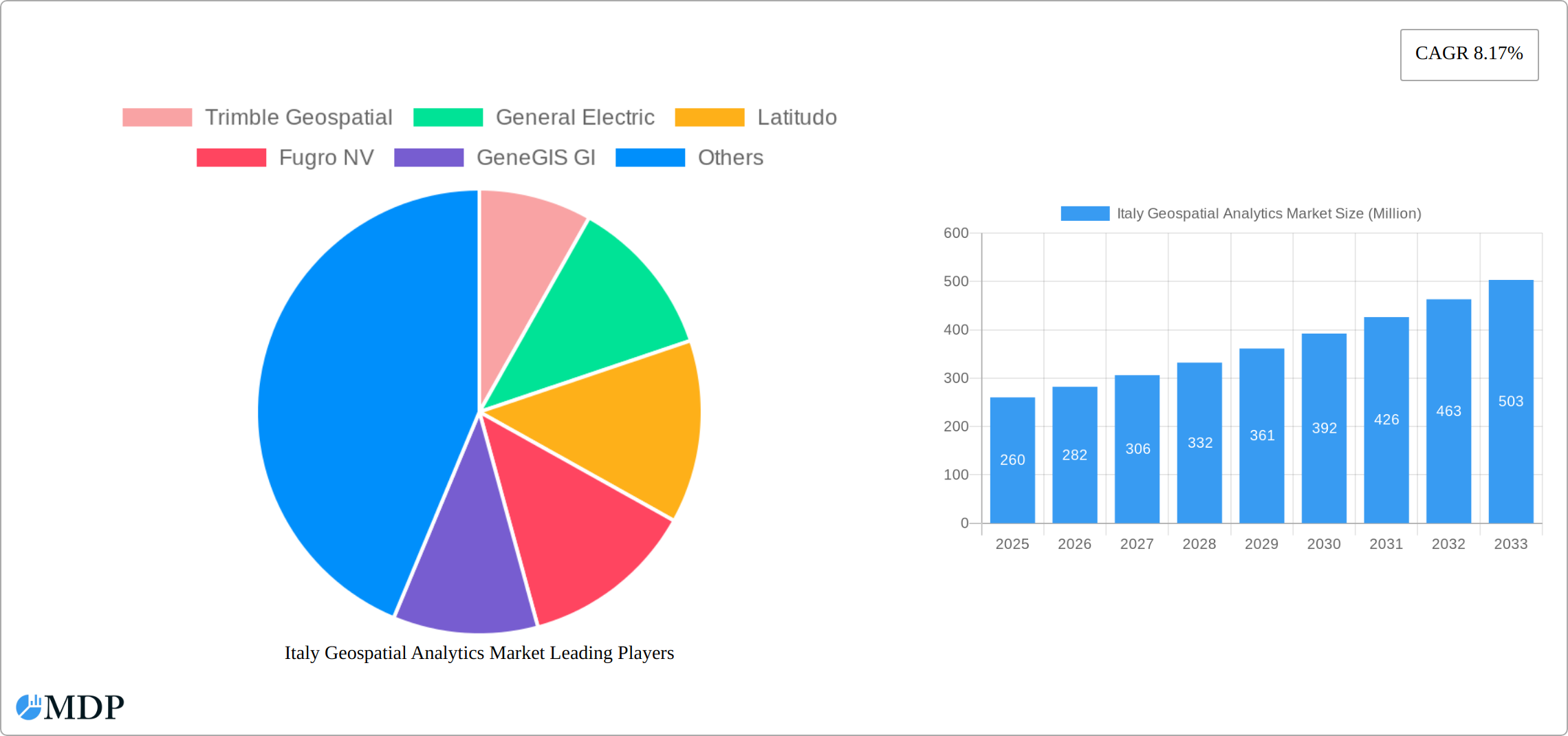
The Italy Geospatial Analytics market, valued at €260 million in 2025, is projected to experience robust growth, exhibiting a compound annual growth rate (CAGR) of 8.17% from 2025 to 2033. This expansion is driven by increasing adoption of geospatial technologies across diverse sectors, particularly in agriculture for precision farming, within the utility and communication industries for network optimization and infrastructure management, and in the defense and intelligence sectors for strategic planning and surveillance. Furthermore, the rising availability of high-resolution satellite imagery, coupled with advancements in data analytics and artificial intelligence, fuels market growth. The market is segmented by type (Surface Analysis, Network Analysis, Geo-Visualization) and end-user vertical (Agriculture, Utility & Communication, Defense & Intelligence, Government, Mining & Natural Resources, Automotive & Transportation, Healthcare, Real Estate & Construction, Others). While data privacy concerns and the need for skilled professionals pose challenges, the overall market outlook remains positive, fueled by continuous technological advancements and increasing government investments in infrastructure development and smart city initiatives.
The market's growth is significantly influenced by government initiatives promoting digital transformation and the adoption of smart city technologies in Italy. The agriculture sector, a major contributor, is driving demand for precise land management and yield optimization solutions. Similarly, the expansion of telecommunications networks and the increasing need for efficient infrastructure management are boosting the adoption of geospatial analytics within the utility and communication sectors. The robust growth trajectory is further bolstered by the emergence of new applications within the healthcare and real estate sectors, utilizing geospatial data for improved resource allocation and informed decision-making. However, the market's growth may be slightly moderated by the high initial investment costs associated with implementing geospatial analytics solutions and the need for specialized expertise to effectively utilize the technology. Despite these challenges, the long-term prospects for the Italy Geospatial Analytics market remain promising.
Italy Geospatial Analytics Market: A Comprehensive Report (2019-2033)
This in-depth report provides a comprehensive analysis of the Italy Geospatial Analytics Market, offering valuable insights for stakeholders, investors, and industry professionals. Covering the period 2019-2033, with a focus on 2025, this report delves into market dynamics, trends, leading players, and future growth potential. The market is projected to reach xx Million by 2033, exhibiting a robust CAGR of xx% during the forecast period (2025-2033).
Italy Geospatial Analytics Market Market Dynamics & Concentration
The Italy Geospatial Analytics market exhibits a moderately concentrated landscape, with key players like Trimble Geospatial, General Electric, and Esri Inc. holding significant market share. However, the market is witnessing increased competition from emerging players and innovative solutions. Market concentration is further influenced by factors such as:
- Innovation Drivers: Advancements in AI, Machine Learning, and remote sensing technologies are driving market growth by enhancing data analysis capabilities and offering new applications.
- Regulatory Frameworks: Government initiatives promoting digitalization and infrastructure development positively impact market adoption. Conversely, data privacy regulations pose certain challenges.
- Product Substitutes: The availability of alternative data analysis methods presents a degree of substitutability, although the unique capabilities of geospatial analytics maintain its market relevance.
- End-User Trends: Increasing demand for precise location-based insights across various sectors, including agriculture, utilities, and government, fuels market growth. The rising adoption of cloud-based solutions is also a significant trend.
- M&A Activities: The past five years have witnessed xx M&A deals in the Italian geospatial analytics sector, indicating consolidation and expansion strategies among key players. The average market share held by the top 5 players is approximately xx%.
Italy Geospatial Analytics Market Industry Trends & Analysis
The Italian geospatial analytics market is experiencing robust and dynamic growth, propelled by a confluence of technological advancements, strategic investments, and evolving industry demands. The increasing integration of cutting-edge technologies like Artificial Intelligence (AI), the Internet of Things (IoT), and advanced cloud computing platforms is fundamentally transforming how geospatial data is processed and analyzed. This synergy enables more precise, real-time insights, thereby accelerating adoption across a diverse range of sectors, from urban planning to environmental monitoring.
Key market growth drivers include the ever-increasing availability of high-resolution geospatial data, often from satellite imagery and drone technology, coupled with substantial government investments in national infrastructure modernization and widespread digitalization initiatives. Furthermore, a growing organizational and governmental awareness of the profound benefits derived from data-driven decision-making is a significant catalyst for market expansion. Consumer preferences are increasingly leaning towards flexible, scalable cloud-based solutions and intuitive, user-friendly software interfaces. This is prompting market players to prioritize the development of accessible platforms designed to attract and retain a broader user base.
The competitive landscape is characterized by intense innovation, compelling companies to channel significant resources into research and development (R&D) to enhance their product offerings and elevate customer service standards. Strategic alliances and collaborative partnerships are becoming increasingly common as companies seek to leverage complementary strengths and expand their market reach. The Italian geospatial analytics market is projected to expand at a Compound Annual Growth Rate (CAGR) of approximately 15-18% from 2025 to 2033, with an estimated market value reaching around €500-€600 Million by 2033. Current market penetration is estimated at roughly 25-30%, indicating substantial untapped potential for future growth across various critical sectors.
Leading Markets & Segments in Italy Geospatial Analytics Market
The Real Estate and Construction segment currently commands the largest market share within Italy's geospatial analytics landscape. This dominance is primarily attributed to the critical and persistent need for precise location-based data for sophisticated urban planning, large-scale infrastructure development projects, and efficient asset management. However, other segments are demonstrating significant growth trajectories and are poised to capture increasing market attention.
- By Type:
- Geo Visualization: The burgeoning demand for effective data visualization tools that facilitate clear communication and understanding of complex spatial information is a significant growth driver.
- Surface Analysis: Applications in detailed surveying, comprehensive mapping, and rigorous environmental monitoring are contributing substantially to market expansion.
- Network Analysis: The increasing reliance on optimized logistics, efficient transportation systems, and robust utility management is fueling substantial demand in this segment.
- By End-user Vertical:
- Government: Proactive government initiatives focused on comprehensive digital transformation, smart city development, and critical infrastructure enhancement are creating substantial demand.
- Agriculture: The adoption of precision farming techniques, advanced land management strategies, and sustainable agricultural practices is driving considerable popularity and growth.
- Utility and Communication: Strategic network planning, optimized asset management, and enhanced service delivery across utility and communication networks are key contributors to robust market growth.
Key Drivers for Segmental Growth:
- Robust Economic Growth: Italy's consistent economic development provides a strong foundation for increased private sector investments and public spending on infrastructure.
- Government Investments in Digital Infrastructure: Dedicated government funding and strategic policies aimed at enhancing the nation's digital infrastructure are directly bolstering the geospatial analytics market.
- Technological Advancements: Continuous innovation in Geographic Information System (GIS) technology, coupled with advancements in remote sensing and data processing tools, are significantly enhancing market capabilities and driving wider adoption.
Dominance Analysis: While the Real Estate and Construction segment currently leads, the Government and Agriculture sectors are exhibiting particularly high growth potential, largely due to targeted policy support, increasing environmental awareness, and the adoption of innovative technologies. The enduring dominance of the Real Estate and Construction segment is a direct consequence of the escalating complexity of modern construction projects and the imperative for highly efficient resource allocation and management.
Italy Geospatial Analytics Market Product Developments
Recent product innovations focus on integrating AI and machine learning for improved data analysis, enhanced visualization tools for better communication, and cloud-based solutions for accessibility and scalability. The emphasis is on developing user-friendly platforms with advanced analytical capabilities, addressing specific market needs for efficiency, accuracy, and cost-effectiveness. These improvements enhance the market fit by providing tailored solutions across diverse sectors.
Key Drivers of Italy Geospatial Analytics Market Growth
The sustained expansion of the Italian geospatial analytics market is primarily fueled by a potent combination of technological innovation, supportive governmental policies, and positive economic indicators.
- Technological Advancements: Continuous improvements in sensor technology (e.g., LiDAR, high-resolution cameras), sophisticated data processing algorithms, and the application of AI and machine learning are dramatically enhancing the accuracy, efficiency, and predictive capabilities of geospatial analytics solutions.
- Government Initiatives: Forward-thinking government policies, strategic regulations that promote digitalization, and a strong emphasis on sustainable development and smart city initiatives are creating a favorable environment and actively boosting market adoption across various public and private sectors.
- Economic Growth: The overall positive trajectory of the Italian economy is a significant enabler, driving substantial investment in new infrastructure projects, urban regeneration, and the modernization of existing systems, all of which create a substantial and ongoing demand for advanced geospatial data and analytics.
Challenges in the Italy Geospatial Analytics Market Market
The market faces challenges such as:
- Data security and privacy concerns: The sensitive nature of geospatial data necessitates robust security measures to comply with regulations.
- High implementation costs: The cost of implementing geospatial analytics solutions can be prohibitive for small and medium-sized businesses.
- Data integration complexities: Combining data from various sources can be complex, requiring significant technical expertise. This adds to the cost and time required for implementation.
Emerging Opportunities in Italy Geospatial Analytics Market
The Italian geospatial analytics market is ripe with emerging opportunities, largely driven by rapid technological advancements and evolving market demands:
- Technological Synergies: Breakthroughs in AI and machine learning are exponentially expanding the application scope of geospatial analytics, enabling more sophisticated predictive modeling, anomaly detection, and automated analysis across diverse industries. The synergistic integration of IoT data with geospatial platforms offers real-time insights for dynamic decision-making.
- Strategic Partnerships and Collaborations: The formation of strategic alliances between leading technology providers, data vendors, and end-user industries is crucial for developing tailored solutions and fostering market penetration. Such collaborations facilitate the co-creation of innovative applications and broaden market access.
- Market Expansion and New Geographies: Opportunities exist to expand the reach of geospatial analytics into currently underserved sectors and regions within Italy. Furthermore, leveraging existing expertise to explore international markets presents significant growth potential.
- Integration into Broader Decision-Making Frameworks: The increasing recognition of geospatial data as a fundamental component of strategic decision-making across various sectors—including sustainability reporting, climate change adaptation, supply chain optimization, and smart city governance—promises substantial long-term growth and value creation.
Leading Players in the Italy Geospatial Analytics Market Sector
- Trimble Geospatial
- General Electric
- Latitudo
- Fugro NV
- GeneGIS GI
- Hexagon AB
- GEODATA SpA
- ESRI Inc
- Bentley Systems Inc
Key Milestones in Italy Geospatial Analytics Market Industry
- March 2023: Launch of the Multi-Angle Imager for Aerosols mission, a joint initiative between the Italian space agency and NASA, boosting demand for air quality monitoring and analysis.
- January 2023: Partnership between EDB and Esri, enhancing the accessibility and usability of geospatial data for Italian users, particularly in the public sector.
Strategic Outlook for Italy Geospatial Analytics Market Market
The Italian geospatial analytics market is poised for significant growth, driven by technological advancements, government support, and the increasing demand for location-based intelligence across various sectors. Strategic opportunities exist in developing innovative solutions that address specific market needs, forging strategic partnerships, and expanding into emerging segments. Focusing on user-friendly interfaces and integrating AI-driven capabilities will be crucial for success in this dynamic market.
Italy Geospatial Analytics Market Segmentation
-
1. Type
- 1.1. Surface Analysis
- 1.2. Network Analysis
- 1.3. Geo Visualization
-
2. End-user Vertical
- 2.1. Agriculture
- 2.2. Utility and Communication
- 2.3. Defense and Intelligence
- 2.4. Government
- 2.5. Mining and Natural Resources
- 2.6. Automotive and Transportation
- 2.7. Healthcare
- 2.8. Real Estate and Construction
- 2.9. Other End-user Verticals
Italy Geospatial Analytics Market Segmentation By Geography
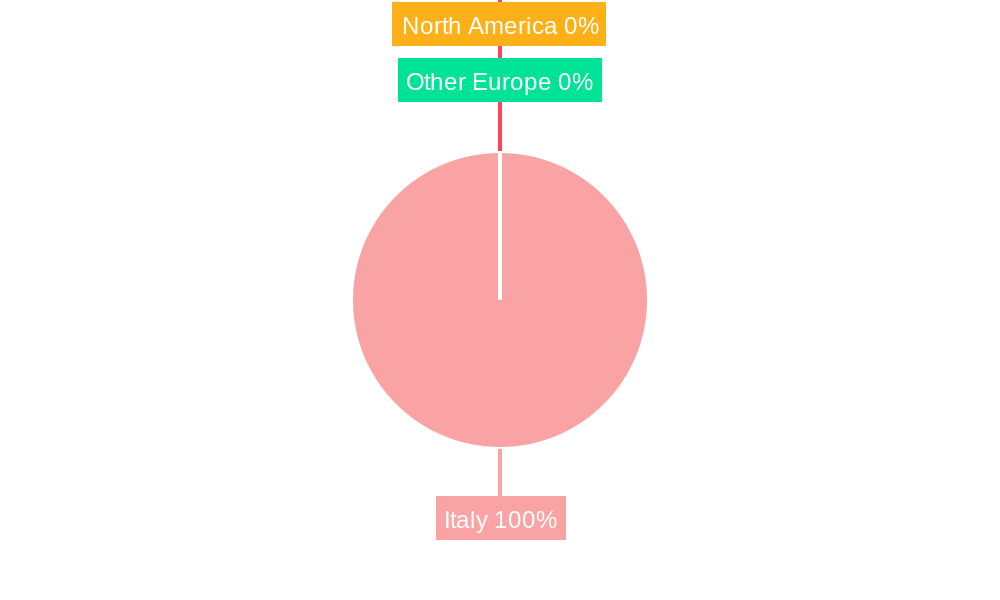
- 1. Italy
Italy Geospatial Analytics Market REPORT HIGHLIGHTS
| Aspects | Details |
|---|---|
| Study Period | 2019-2033 |
| Base Year | 2024 |
| Estimated Year | 2025 |
| Forecast Period | 2025-2033 |
| Historical Period | 2019-2024 |
| Growth Rate | CAGR of 8.17% from 2019-2033 |
| Segmentation |
|
Table of Contents
- 1. Introduction
- 1.1. Research Scope
- 1.2. Market Segmentation
- 1.3. Research Methodology
- 1.4. Definitions and Assumptions
- 2. Executive Summary
- 2.1. Introduction
- 3. Market Dynamics
- 3.1. Introduction
- 3.2. Market Drivers
- 3.2.1. Increase in the number of Smart Cities in The Country; The Implementation of analytics Software in the Country's Public Transportation
- 3.3. Market Restrains
- 3.3.1. High Costs and Operational Concerns; Lack of Standardization for Data Integration
- 3.4. Market Trends
- 3.4.1. The Increase in the Number of Smart Cities in The Country Fuels the Market Growth
- 4. Market Factor Analysis
- 4.1. Porters Five Forces
- 4.2. Supply/Value Chain
- 4.3. PESTEL analysis
- 4.4. Market Entropy
- 4.5. Patent/Trademark Analysis
- 5. Italy Geospatial Analytics Market Analysis, Insights and Forecast, 2019-2031
- 5.1. Market Analysis, Insights and Forecast - by Type
- 5.1.1. Surface Analysis
- 5.1.2. Network Analysis
- 5.1.3. Geo Visualization
- 5.2. Market Analysis, Insights and Forecast - by End-user Vertical
- 5.2.1. Agriculture
- 5.2.2. Utility and Communication
- 5.2.3. Defense and Intelligence
- 5.2.4. Government
- 5.2.5. Mining and Natural Resources
- 5.2.6. Automotive and Transportation
- 5.2.7. Healthcare
- 5.2.8. Real Estate and Construction
- 5.2.9. Other End-user Verticals
- 5.3. Market Analysis, Insights and Forecast - by Region
- 5.3.1. Italy
- 5.1. Market Analysis, Insights and Forecast - by Type
- 6. Competitive Analysis
- 6.1. Market Share Analysis 2024
- 6.2. Company Profiles
- 6.2.1 Trimble Geospatial
- 6.2.1.1. Overview
- 6.2.1.2. Products
- 6.2.1.3. SWOT Analysis
- 6.2.1.4. Recent Developments
- 6.2.1.5. Financials (Based on Availability)
- 6.2.2 General Electric
- 6.2.2.1. Overview
- 6.2.2.2. Products
- 6.2.2.3. SWOT Analysis
- 6.2.2.4. Recent Developments
- 6.2.2.5. Financials (Based on Availability)
- 6.2.3 Latitudo
- 6.2.3.1. Overview
- 6.2.3.2. Products
- 6.2.3.3. SWOT Analysis
- 6.2.3.4. Recent Developments
- 6.2.3.5. Financials (Based on Availability)
- 6.2.4 Fugro NV
- 6.2.4.1. Overview
- 6.2.4.2. Products
- 6.2.4.3. SWOT Analysis
- 6.2.4.4. Recent Developments
- 6.2.4.5. Financials (Based on Availability)
- 6.2.5 GeneGIS GI
- 6.2.5.1. Overview
- 6.2.5.2. Products
- 6.2.5.3. SWOT Analysis
- 6.2.5.4. Recent Developments
- 6.2.5.5. Financials (Based on Availability)
- 6.2.6 Hexagon AB
- 6.2.6.1. Overview
- 6.2.6.2. Products
- 6.2.6.3. SWOT Analysis
- 6.2.6.4. Recent Developments
- 6.2.6.5. Financials (Based on Availability)
- 6.2.7 GEODATA SpA
- 6.2.7.1. Overview
- 6.2.7.2. Products
- 6.2.7.3. SWOT Analysis
- 6.2.7.4. Recent Developments
- 6.2.7.5. Financials (Based on Availability)
- 6.2.8 ESRI Inc
- 6.2.8.1. Overview
- 6.2.8.2. Products
- 6.2.8.3. SWOT Analysis
- 6.2.8.4. Recent Developments
- 6.2.8.5. Financials (Based on Availability)
- 6.2.9 Bentley Systems Inc
- 6.2.9.1. Overview
- 6.2.9.2. Products
- 6.2.9.3. SWOT Analysis
- 6.2.9.4. Recent Developments
- 6.2.9.5. Financials (Based on Availability)
- 6.2.1 Trimble Geospatial
List of Figures
- Figure 1: Italy Geospatial Analytics Market Revenue Breakdown (Million, %) by Product 2024 & 2032
- Figure 2: Italy Geospatial Analytics Market Share (%) by Company 2024
List of Tables
- Table 1: Italy Geospatial Analytics Market Revenue Million Forecast, by Region 2019 & 2032
- Table 2: Italy Geospatial Analytics Market Revenue Million Forecast, by Type 2019 & 2032
- Table 3: Italy Geospatial Analytics Market Revenue Million Forecast, by End-user Vertical 2019 & 2032
- Table 4: Italy Geospatial Analytics Market Revenue Million Forecast, by Region 2019 & 2032
- Table 5: Italy Geospatial Analytics Market Revenue Million Forecast, by Country 2019 & 2032
- Table 6: Italy Geospatial Analytics Market Revenue Million Forecast, by Type 2019 & 2032
- Table 7: Italy Geospatial Analytics Market Revenue Million Forecast, by End-user Vertical 2019 & 2032
- Table 8: Italy Geospatial Analytics Market Revenue Million Forecast, by Country 2019 & 2032
Frequently Asked Questions
1. What is the projected Compound Annual Growth Rate (CAGR) of the Italy Geospatial Analytics Market?
The projected CAGR is approximately 8.17%.
2. Which companies are prominent players in the Italy Geospatial Analytics Market?
Key companies in the market include Trimble Geospatial, General Electric, Latitudo, Fugro NV, GeneGIS GI, Hexagon AB, GEODATA SpA, ESRI Inc, Bentley Systems Inc.
3. What are the main segments of the Italy Geospatial Analytics Market?
The market segments include Type, End-user Vertical.
4. Can you provide details about the market size?
The market size is estimated to be USD 0.26 Million as of 2022.
5. What are some drivers contributing to market growth?
Increase in the number of Smart Cities in The Country; The Implementation of analytics Software in the Country's Public Transportation.
6. What are the notable trends driving market growth?
The Increase in the Number of Smart Cities in The Country Fuels the Market Growth.
7. Are there any restraints impacting market growth?
High Costs and Operational Concerns; Lack of Standardization for Data Integration.
8. Can you provide examples of recent developments in the market?
March 2023: The Italian space agency and NASA have collaborated to build and launch the Multi-Angle Imager for Aerosols mission, an effort to investigate the health impacts of tiny airborne particles polluting the cities through analyzing data by collecting data from the satellite-based observatories, which would fuel the demand for geospatial analytics market in the country.
9. What pricing options are available for accessing the report?
Pricing options include single-user, multi-user, and enterprise licenses priced at USD 3800, USD 4500, and USD 5800 respectively.
10. Is the market size provided in terms of value or volume?
The market size is provided in terms of value, measured in Million.
11. Are there any specific market keywords associated with the report?
Yes, the market keyword associated with the report is "Italy Geospatial Analytics Market," which aids in identifying and referencing the specific market segment covered.
12. How do I determine which pricing option suits my needs best?
The pricing options vary based on user requirements and access needs. Individual users may opt for single-user licenses, while businesses requiring broader access may choose multi-user or enterprise licenses for cost-effective access to the report.
13. Are there any additional resources or data provided in the Italy Geospatial Analytics Market report?
While the report offers comprehensive insights, it's advisable to review the specific contents or supplementary materials provided to ascertain if additional resources or data are available.
14. How can I stay updated on further developments or reports in the Italy Geospatial Analytics Market?
To stay informed about further developments, trends, and reports in the Italy Geospatial Analytics Market, consider subscribing to industry newsletters, following relevant companies and organizations, or regularly checking reputable industry news sources and publications.
Methodology
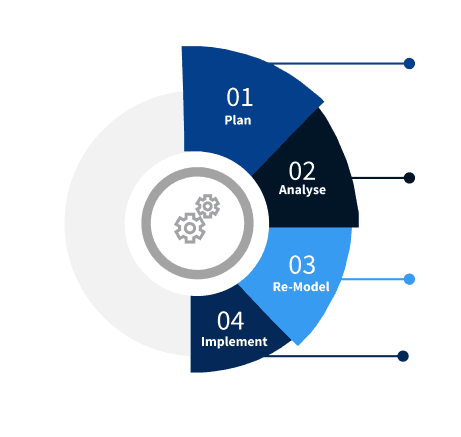
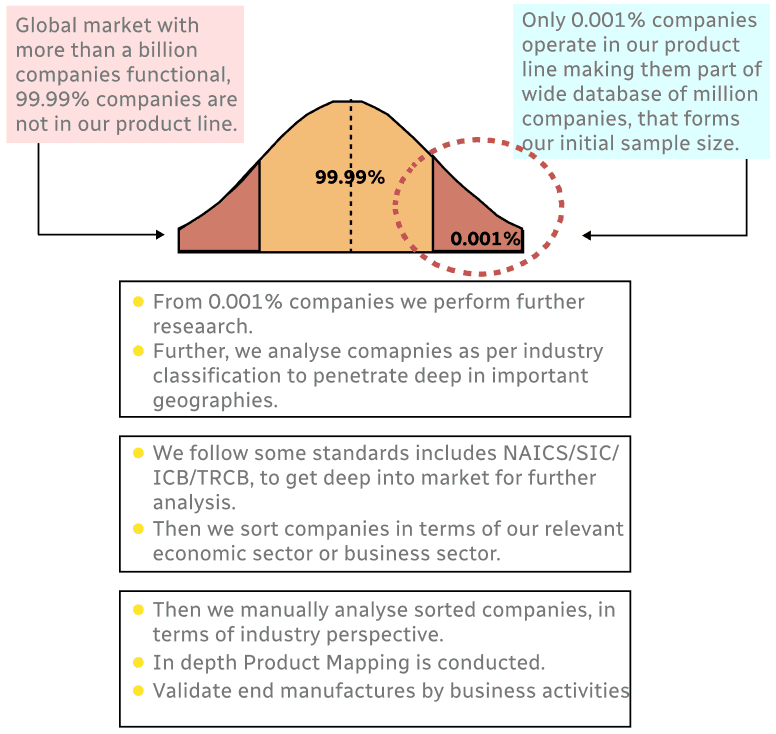
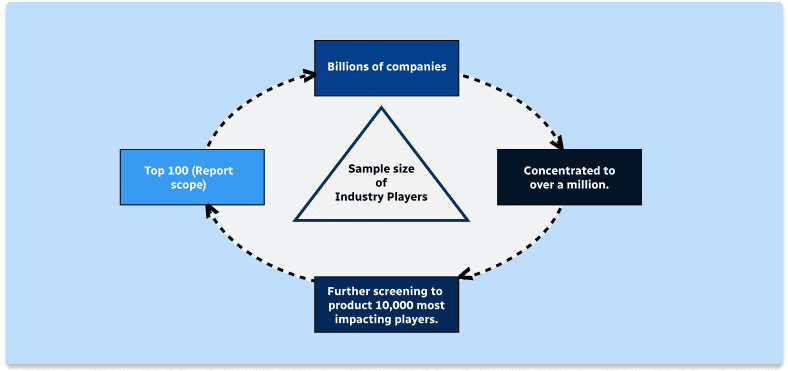
Step 1 - Identification of Relevant Samples Size from Population Database
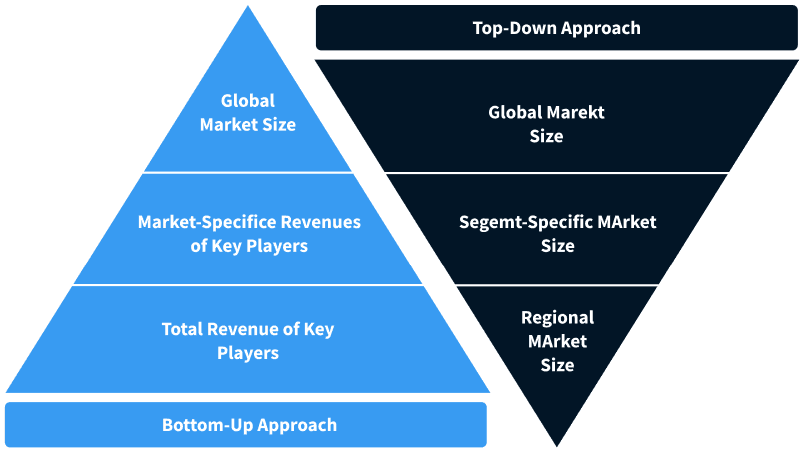
Step 2 - Approaches for Defining Global Market Size (Value, Volume* & Price*)
Note*: In applicable scenarios
Step 3 - Data Sources
Primary Research
- Web Analytics
- Survey Reports
- Research Institute
- Latest Research Reports
- Opinion Leaders
Secondary Research
- Annual Reports
- White Paper
- Latest Press Release
- Industry Association
- Paid Database
- Investor Presentations
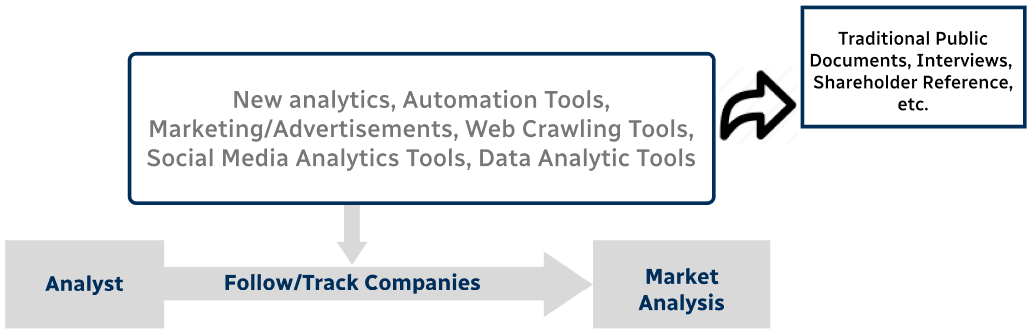
Step 4 - Data Triangulation
Involves using different sources of information in order to increase the validity of a study
These sources are likely to be stakeholders in a program - participants, other researchers, program staff, other community members, and so on.
Then we put all data in single framework & apply various statistical tools to find out the dynamic on the market.
During the analysis stage, feedback from the stakeholder groups would be compared to determine areas of agreement as well as areas of divergence